


1. Record-breaking Retatrutide
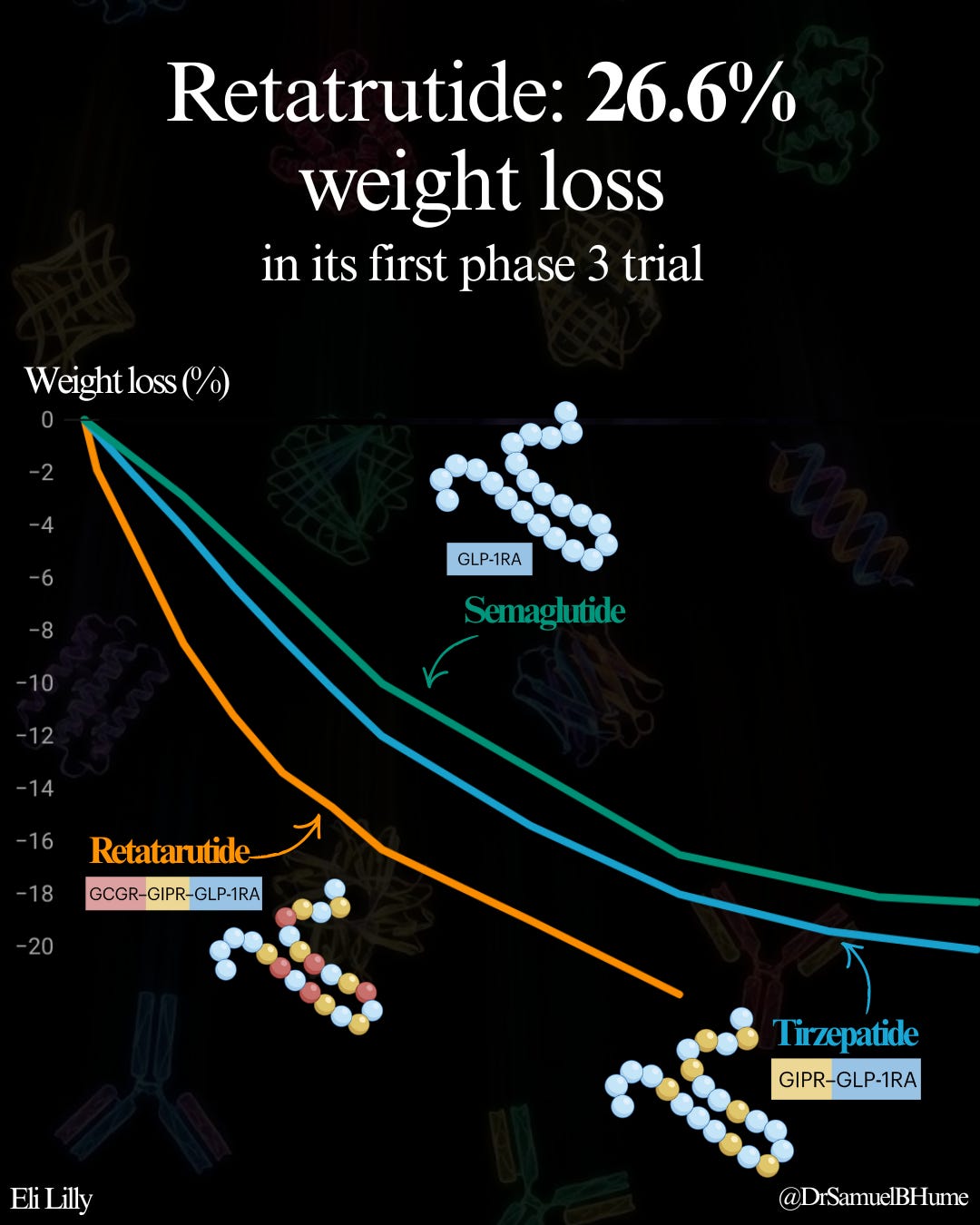
Back in 2023 we saw truly unprecedented data for a new drug called ‘Retatrutide’, which binds to — and activates — 3 receptors: the GLP1 receptor (like Semaglutide), the GIP receptor (like Tirzepatide) but also the glucagon receptor. In its phase 2 trial, Retatrutide hit higher efficacy than any other obesity drug:
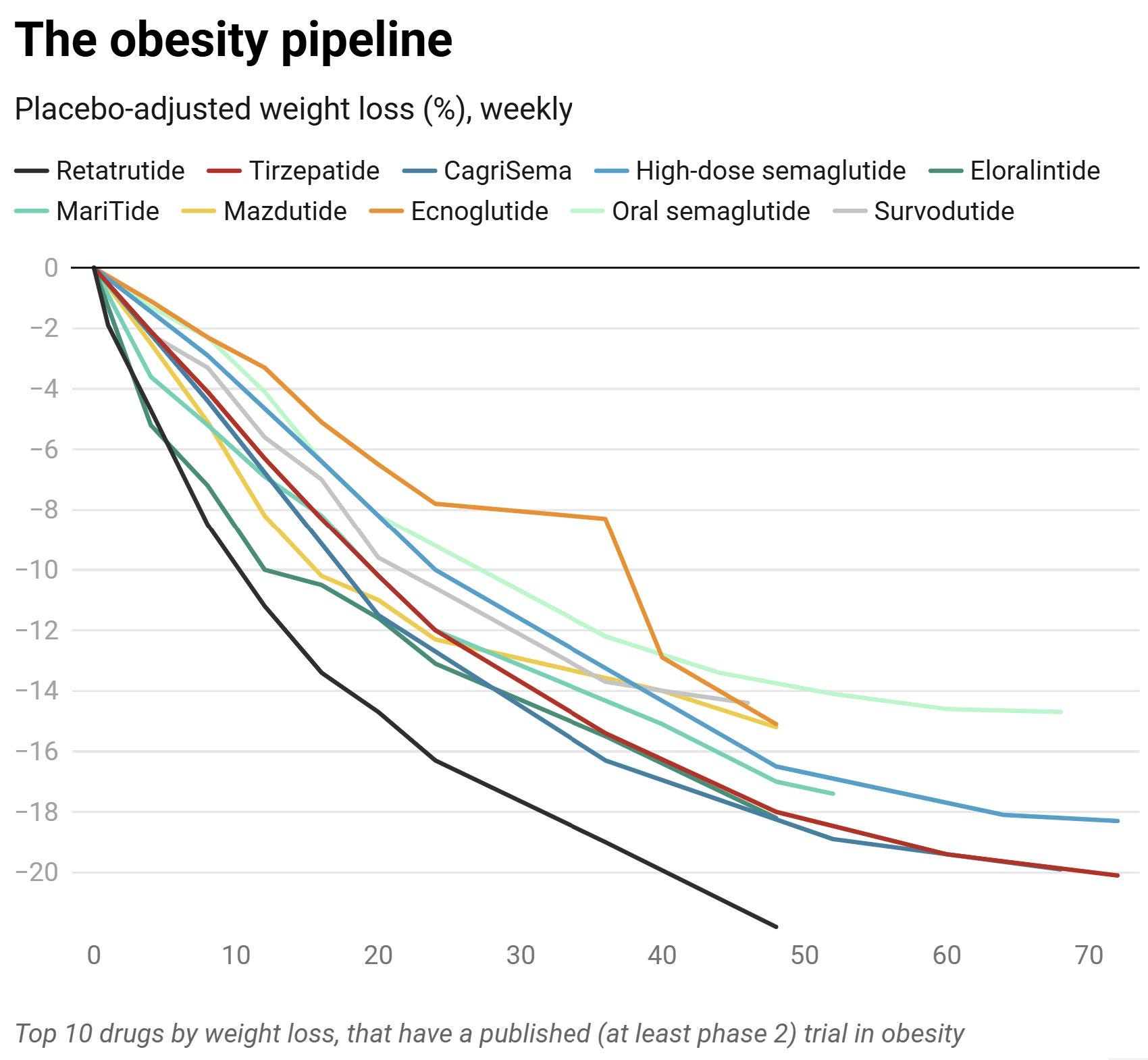
This week Eli Lilly announced the phase 3 data — not only for weight loss, but also for knee osteoarthritis, a complication of obesity for which there are currently no disease-modifying treatments. It’s expected 1 billion of us will be affected by osteoarthritis by 2050.
The headline weight loss number was 26.6% (placebo-adjusted) with the high dose of Retatrutide, and a 27.5 placebo-adjusted percentage point improvement in osteoarthritis (measured by the WOMAC pain score).
This means the updated obesity leader board looks like this:
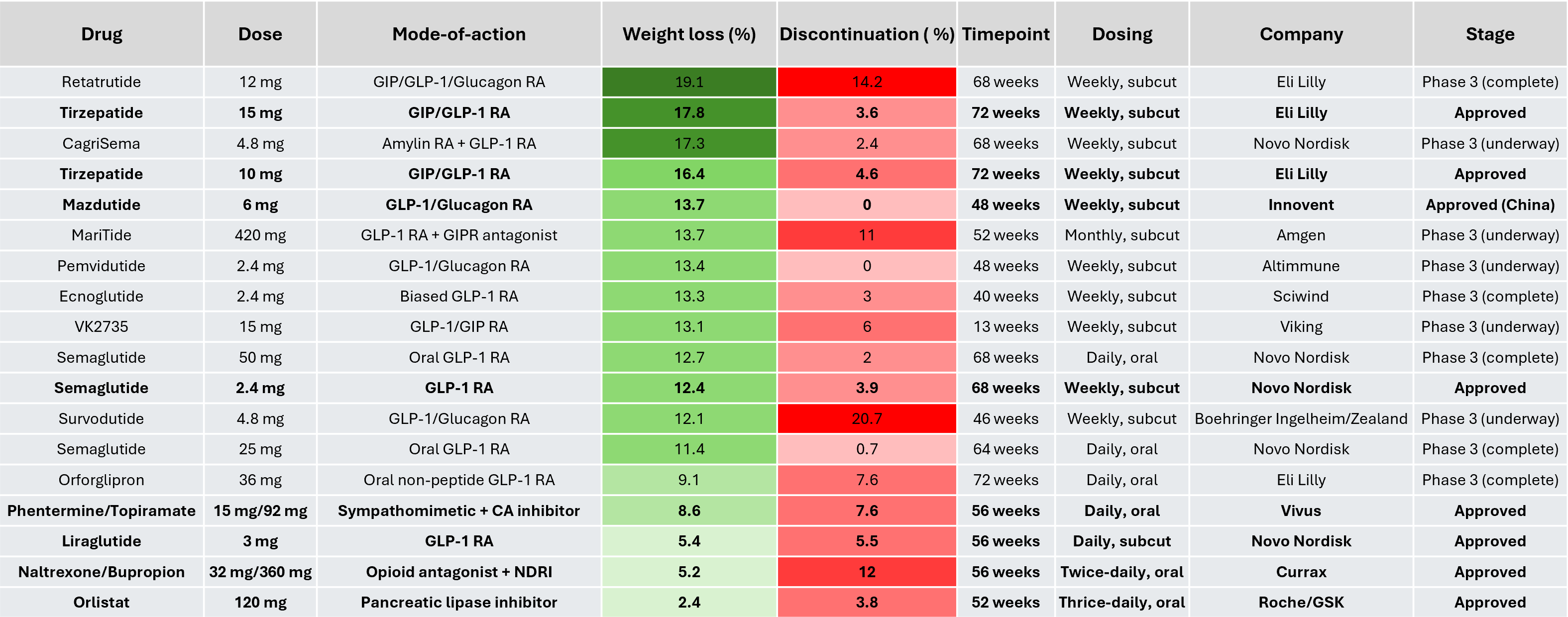
The slight concern with Retatrutide is the adverse event profile: at 12 mg, 14.2% of patients who dropped out due to adverse events. Drop the dose to 9 mg and this comes down to 8.2% — but the weight loss drops too, to 15.4% (all numbers placebo-adjusted).
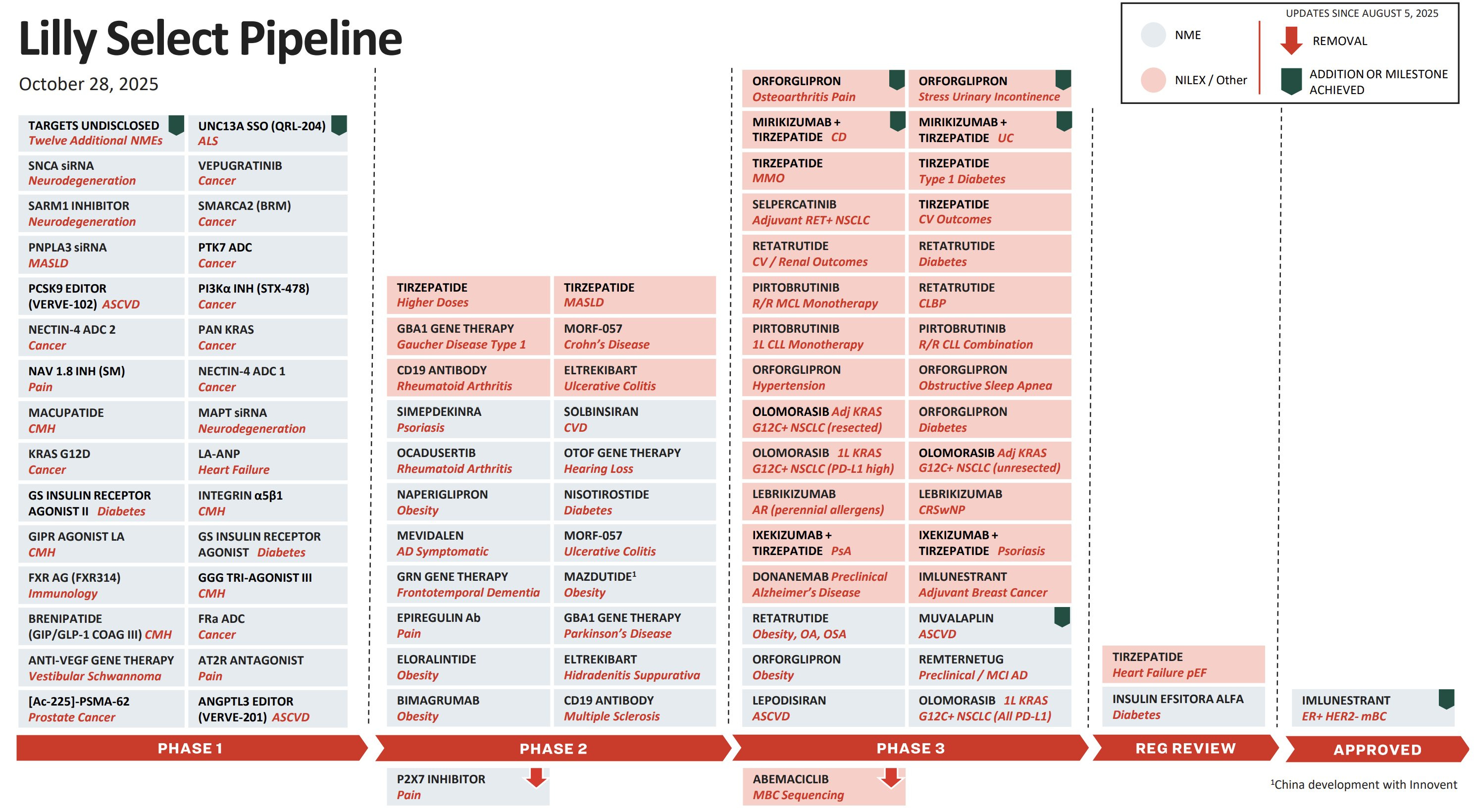
The exciting thing about the pipeline of GLP1s (exemplified here by Eli Lilly’s investor deck) is quite how many major phase 3 trials they’re running, in such a range of conditions: inflammatory bowel disease, lower back pain, psoriasis, hypertension, stress urinary incontinence, osteoarthritis, sleep apnea...
Lilly’s Tirzepatide is already the fastest-launching (non-infectious diseases) drug of all time, and this week we saw new analysis that 1/3 of Americans are affected by metabolic syndrome — a prevalence that hasn’t shifted in the last 10 years. These drugs aren’t going anywhere.
2. Unprecedented data in multiple myeloma
This week was the annual American Society of Haematology, so we saw new breakthroughs in haematology. This was probably the biggest.
It’s a phase 3 trial, in the NEJM, in patients with relapsed multiple myeloma — a malignancy of the antibody-producing plasma cells. These cells infiltrate bone (raising calcium levels and causing bone pain), produce abnormal antibodies that damage the kidneys (causing renal dysfunction), and suppress normal haematopoiesis (causing anemia).
The standard therapy following relapse is ‘triple therapy’ with daratumumab (a CD38 antibody that depletes malignant plasma cells), a steroid (dexamethasone) and either an immunomodulatory drug (pomalidomide) or a proteasome inhibitor (bortezomib).
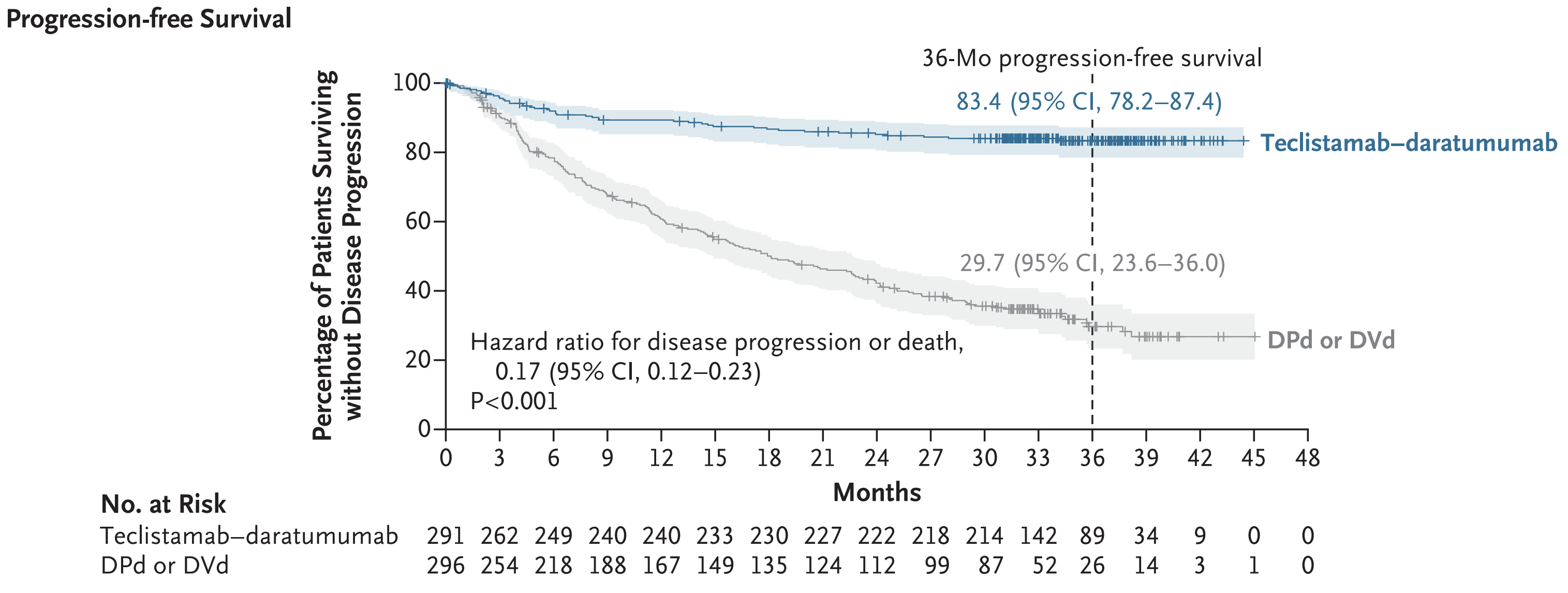
This trial pits triple therapy against dual therapy with daratumumab and teclistamab, a bispecific antibody that binds CD3 on T cells and BCMA on multiple myeloma cells, bringing them together and helping the T cells kill the cancer cells. Teclistamab already has FDA-approval in multiple myeloma, but only after 4+ lines of previous therapy — this trial moves it way forward, testing it as second-line therapy.
The Kaplan Meier curve will need to go in the hall of fame:
So, what do the experts think?
Haematologists, Dr. Vincent Rajkumar and Dr. Gareth Morgan praised the trial as unprecedented, confirming it would change practice — and may represent a cure for many patients.
But they also raised concerns about ensuring the safety of the regimen, given the risks of cytokine release syndrome and hypogammaglobulinemia: close monitoring, routine monthly intravenous immunoglobulins, and infection prevention measures.

3. Two new approved antibiotics for gonorrhoea
Antibiotic-resistant gonorrhoea is spreading rapidly, and some strains have become resistant to most known antibiotics. The WHO lists it as one of its priority pathogens, and there are more than 80,000,000 new cases of gonorrhoea every year. Yikes.
So, it’s good news that two new medicines for gonorrhoea were just FDA-approved. Both are oral meds (unlike the current first-line treatment, injected ceftriaxone), both have novel modes-of-action, and both kill resistant bacteria.
The first is gepotidacin (made by GSK), which was also approved earlier this year for urinary tract infection.

The second is Zoliflodacin, made by Innoviva Specialty Therapeutics, the first-time this has been approved.

Gepotidacin is a dual-acting type II topoisomerase inhibitor — it targets DNA gyrase and topoisomerase IV, at a binding site distinct from other antibiotics. Zoliflodacin inhibits bacterial DNA gyrase (also via a unique binding site).
These should help simplify care, enable faster treatment, help break transmission chains — and prevent the complications of gonorrhoea (which are worse for women): pelvic inflammatory disease, infertility, and ectopic pregnancy.
4. Eradication of malaria parasites
Deaths from malaria have been cut in half since the turn of the century, but progress has plateaued recently:
