



1. Neuralink’s 9th patient
Motor neuron diseases (like ALS) affect about 400,000 people globally, and spinal cord injury affects more than 15 million people. Both ALS and spinal cord injuries can cause paralysis – which is what Neuralink is working on.
Neuralink is a brain-computer interface company. Their device uses polymer threads thinner than human hair. For intricacy and precision, neurosurgeons implant the device into the brain using a surgical robot. They practise first, using patient-specific 3-D brain models. Here’s what the implant looks like:
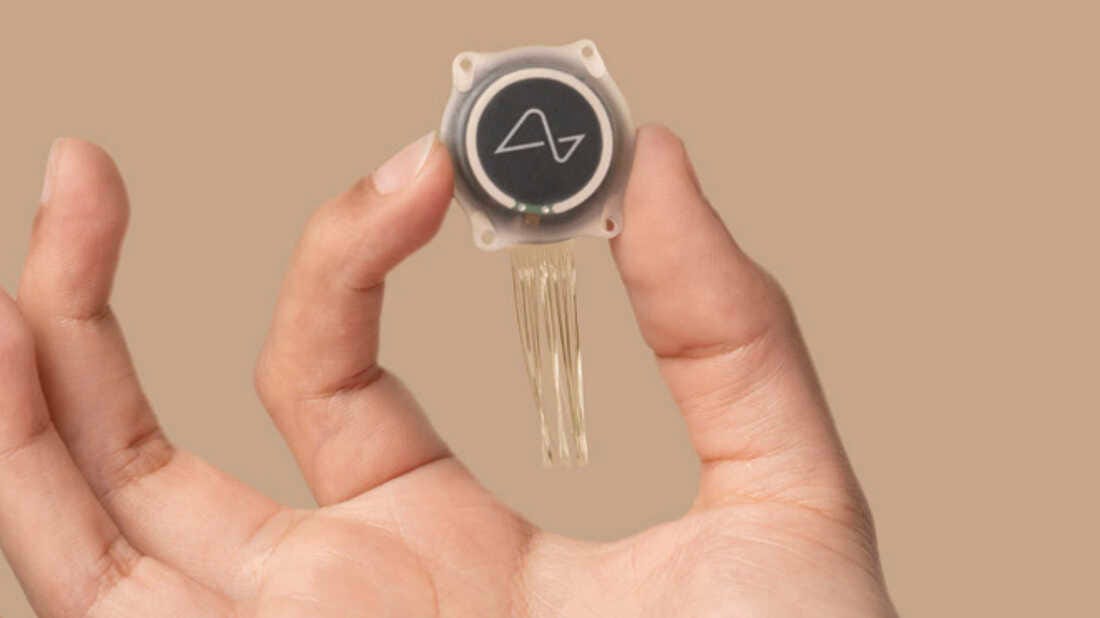
The threads go into the part of the motor cortex which controls hand movements – they record the action potentials from nearby neurons, which represent the brain’s intention to move – for example: ‘move cursor right’. Machine learning models decode this and send it to a computer – bypassing the brain-muscle connection that’s lost in paralysis.
What this means is that Neuralink’s patients are able to control computers using their minds:

Here’s another Neuralink patient, who’s playing rock-paper-scissors:
If you can control a virtual hand, it’s not much further to control a physical hand. Neuralink’s working on that, too – here’s a patient strumming a guitar:
Neuralink is not the only company working on this, but it is the only one – via Tesla (both companies were founded by Elon Musk) – with direct access to state-of-the-art robotics. At the moment Neuralink is limited to controlling computers and robotic arms – but, in the future, but what about full integration into the Optimus robot. Could you control a robot as though it’s your body?
All 9 patients so far are part of Neuralink’s ‘PRIME’ (Precise Robotically IMplanted brain-computer interfacE) study. Beyond PRIME, which is running in the US, Neuralink is also running trials in Canada and the UK (the UK trial just got the go ahead this week!).
This is the cutting edge of a field that dates back as far back as 1998. The field is moving fast, and – in particular – devices that restore speech are pretty amazing to see.
Long-term, Neuralink’s ambitions are bigger: they’re focussed on tackling blindness with a visual cortex implant (the first human implant will be later this year, in the UAE), and restoring hearing – through stimulation of auditory cortex.
2. An AI laboratory
AI is now at the front line of research and medicine. AlphaFold, for example, has revolutionised drug discovery, and AI tools like GI genius (which identifies pre-cancerous polyps on colonoscopy) are crucial in the clinic.
But what about an AI agent that can do its own research? A step towards that goal was made in Nature this week. Researchers instructed an AI model to ‘Design nanobodies that could block SARS-CoV-2’ – the virus that causes Covid. The model used was OpenAI’s 4o – the default in ChatGPT.
When researchers asked this AI ‘principal investigator’ to build a team, the AI picked an immunologist, a machine learning specialist, and a computational biologist – and the human also set up a scientific critic:
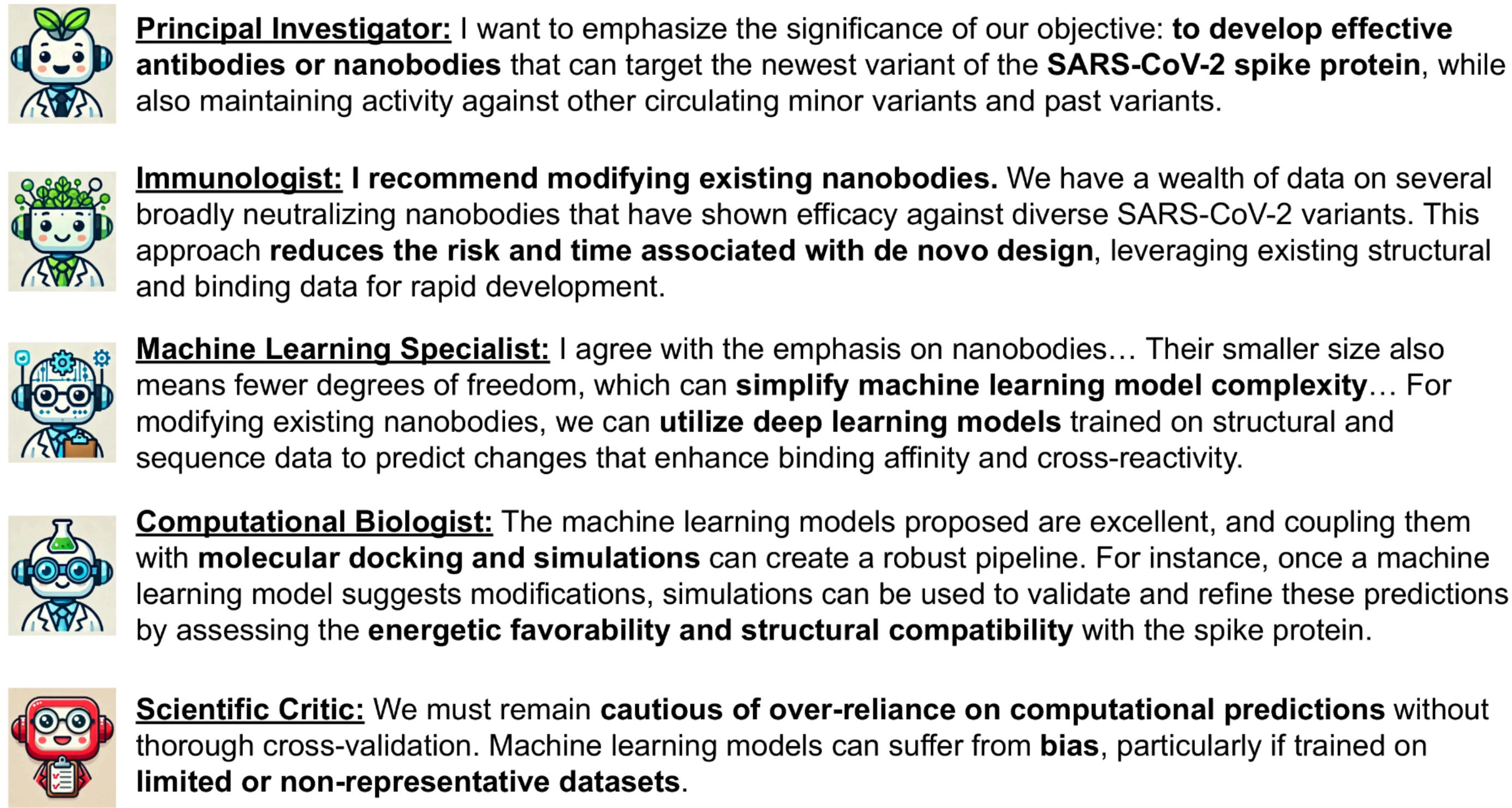
This team had human oversight in the form of ‘team meetings’. Smartly, the AI chose to modify existing nanobodies, that had already been proven to block Covid’s original spike protein (before it changed in subsequent variants – the spike is the protein that SARS-CoV-2 uses to bind human cells).
To figure out which amino acids to mutate in the nanobody sequence, the AI team used a protein language model called ESM; to model the shape of the nanobody-spike interaction, they used AlphaFold; and to figure out whether the nanobody will actually stick to the spike, they used Rosetta:
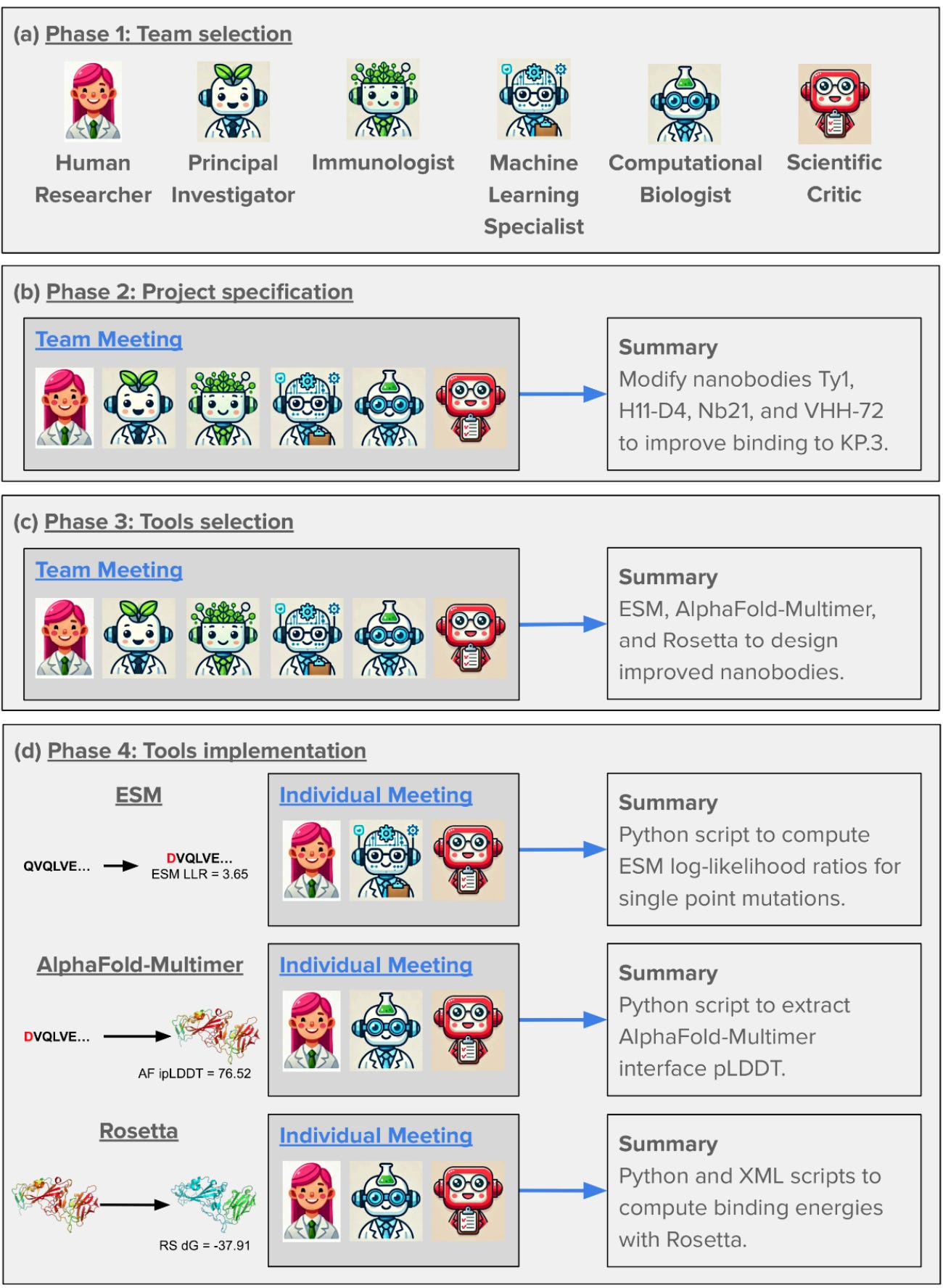
From this, the agents came up with amino acid sequences for 92 nanobodies. All of these were tested in the lab (by humans!) and 2 effectively neutralised the spike proteins from Covid variants. The workflow was designed within 2 hours, and the screen for promising new nanobody sequences was fully done in 1 week. The cost was $10-20 in GPT-4o tokens.
This is proof-of-concept, rather than something that’s going to be immediately useful in the clinic: antibodies aren’t routinely used to treat Covid anymore, the variants tested here are no longer dominant, and Covid itself is not the issue it used to be.
As is often the case with AI papers, it’s also out of date as soon as it’s published (although, to be fair, it was posted on BioRxiv in November 2024). OpenAI’s 4o model is good, but by no means the best model. We know, for science, that OpenAI’s O3, or XAi’s Grok4 are the best models (of course, this will also be out of date in a month or so!).
Looking forward, this kind of approach could be particularly useful when speed is of the essence: for example, development of monoclonal antibodies during an evolving pandemic, personalised biologics for cancer, or designing personalised CRISPR therapeutics for progressive genetic diseases.
3. Another shot at an HIV vaccine
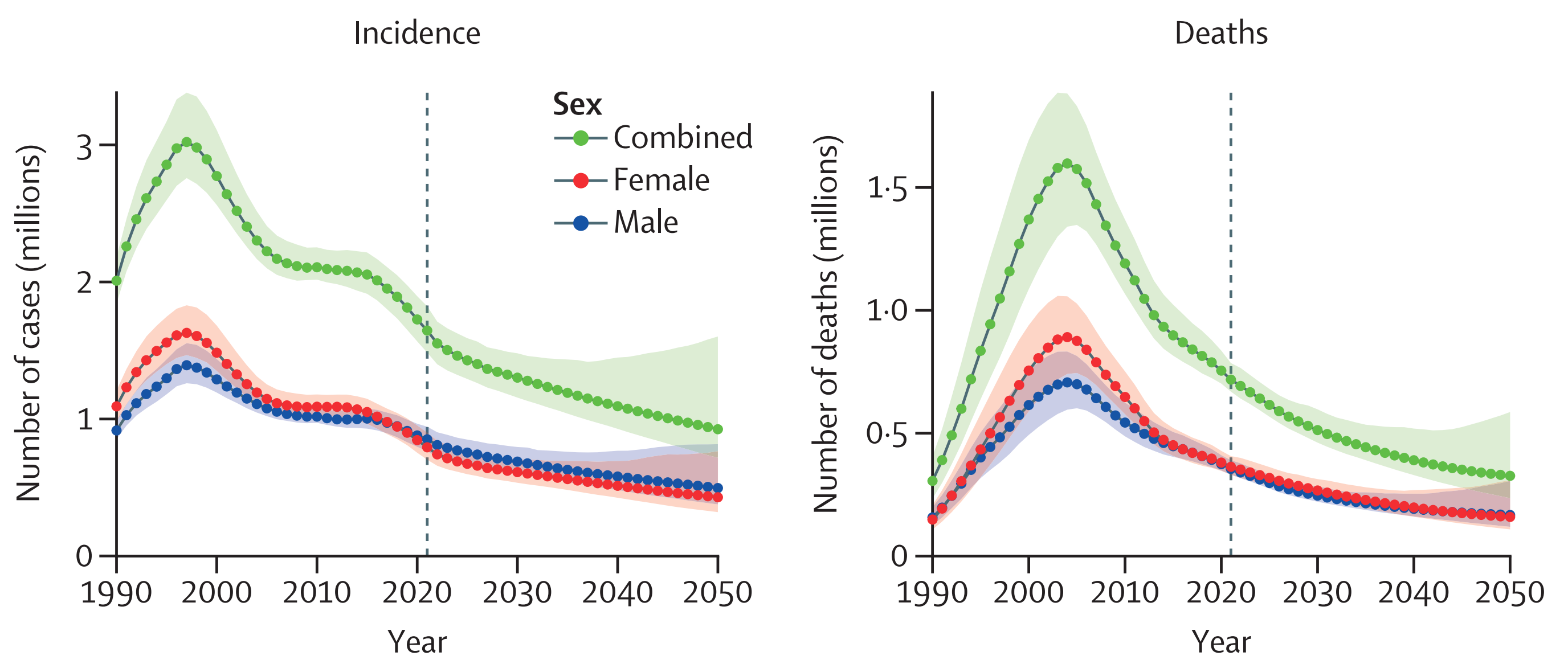
HIV incidence and deaths have come down significantly from their peak – and are projected to go lower still:
Recent innovations could drive this down further. Most importantly, Lenacapavir, a long-acting anti-retroviral, had 100% efficacy for HIV prevention its first phase 3 trial (and 99.9% in its second). This is a good excuse to show my favourite chart:
