



1. Discovery of a novel type of diabetes
Diabetes causes high blood sugar. The full name is ‘diabetes mellitus’ – mellitus is Latin for honey, because doctors used to diagnose it by tasting the sugary urine…
The main subtypes of diabetes are type 1 diabetes, where there’s a lack of insulin production – caused by autoantibodies that destroy the insulin-producing (islet) cells in the pancreas. Type 2 diabetes is usually associated with obesity – it’s caused by insulin resistance rather than deficiency. Both of these have a genetic component, but another subtype, monogenic diabetes, is exclusively caused by mutations – in individual genes.
Most of the evidence for these subtypes come from white European populations – with very little data from African populations. Aiming to solve that, this study – published this week in The Lancet Diabetes and Endocrinology – looks at patients with recently-diagnosed type 1 diabetes in sub-Saharan Africa.
If these patients had classic type 1 diabetes, they would have the associated autoantibodies. In type 1 diabetics from Europe, in white Americans, and Asians, autoantibody positivity is about 80-90%, but in this cohort from Sub-Saharan Africa, only about 35% of people diagnosed with type 1 diabetes had autoantibodies:
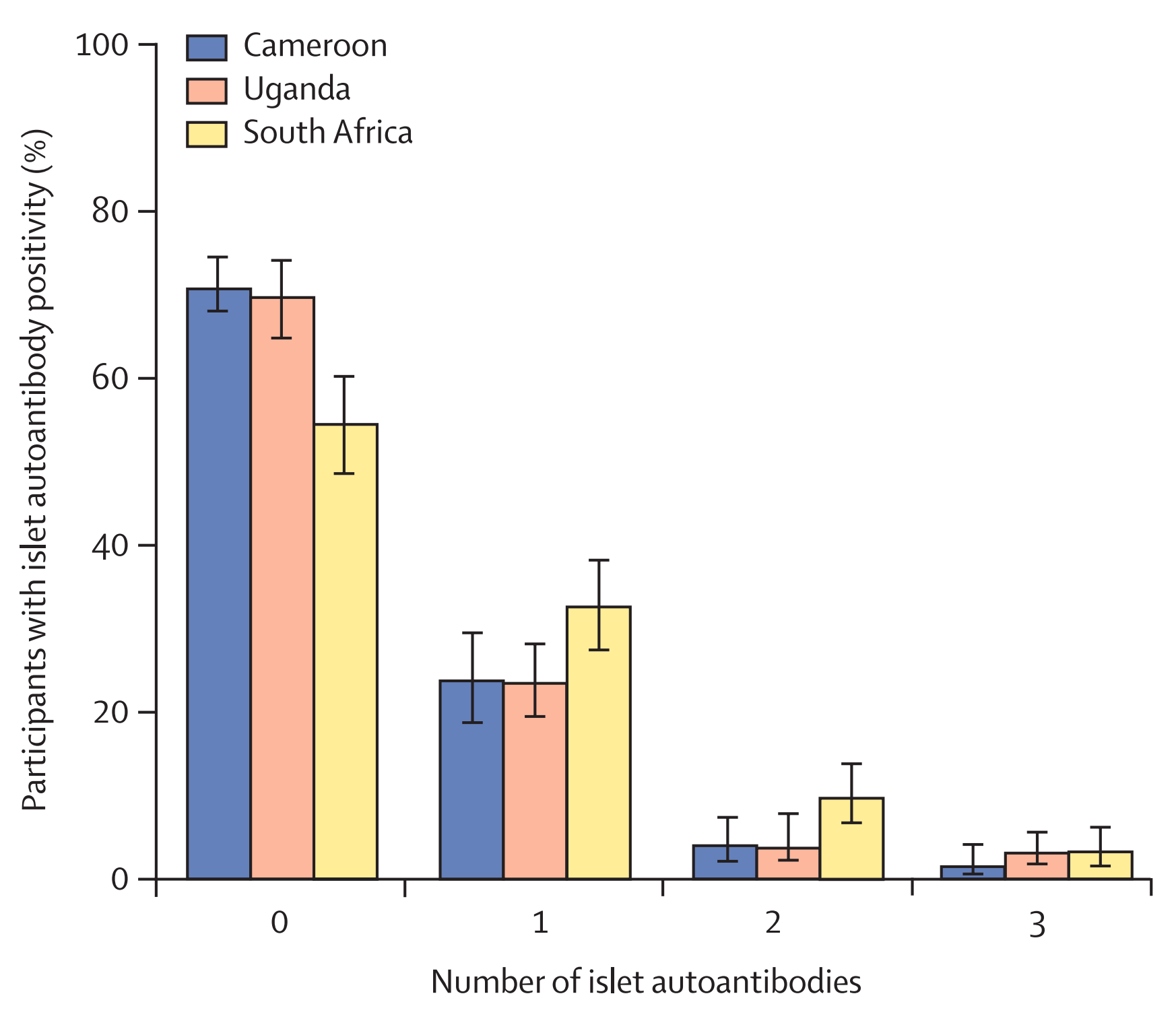
The average age of these patients is 15, and they do not have features of the other types of diabetes – like obesity or genetic features. All had very low (or deficient) insulin, but they do not carry the classic genetic risk score associated with autoimmune type 1 diabetes.
So, what causes this novel subtype of insulin-deficient diabetes?
There is probably a genetic component, but environmental factors might be more important, because there’s evidence that this subtype also affects black (but not white) Americans – but at a much lower rate than in sub-Saharan Africa.
What these environmental factors are isn’t clear, but there are some hypotheses. Some viruses, like Coxsackie B, can infect insulin-producing β‑cells and trigger cell death. Malaria can damage β‑cells. too, as can early‑life malnutrition and toxins, like zinc or arsenic.
This probably doesn’t change the management of these patients – it still comes down (in the first instance) to exogenous insulin. But it may change diagnosis and prevention strategies. For example, some countries now screen for autoantibodies for type 1 diabetes (to make sure it’s picked up early) – but this won’t work for this subtype. There are also anti-inflammatory therapies that are approved for autoimmune type 1 diabetes – again, these are unlikely work. Figuring out the precise aetiology will be key.
This is a very very important study – that shows how important it is to study patients from all geographies and demographics.
2. Mass distribution of ivermectin cuts malaria transmission
Deaths from malaria have more than halved since the turn of the century. This is great news, but progress has slowed down recently:
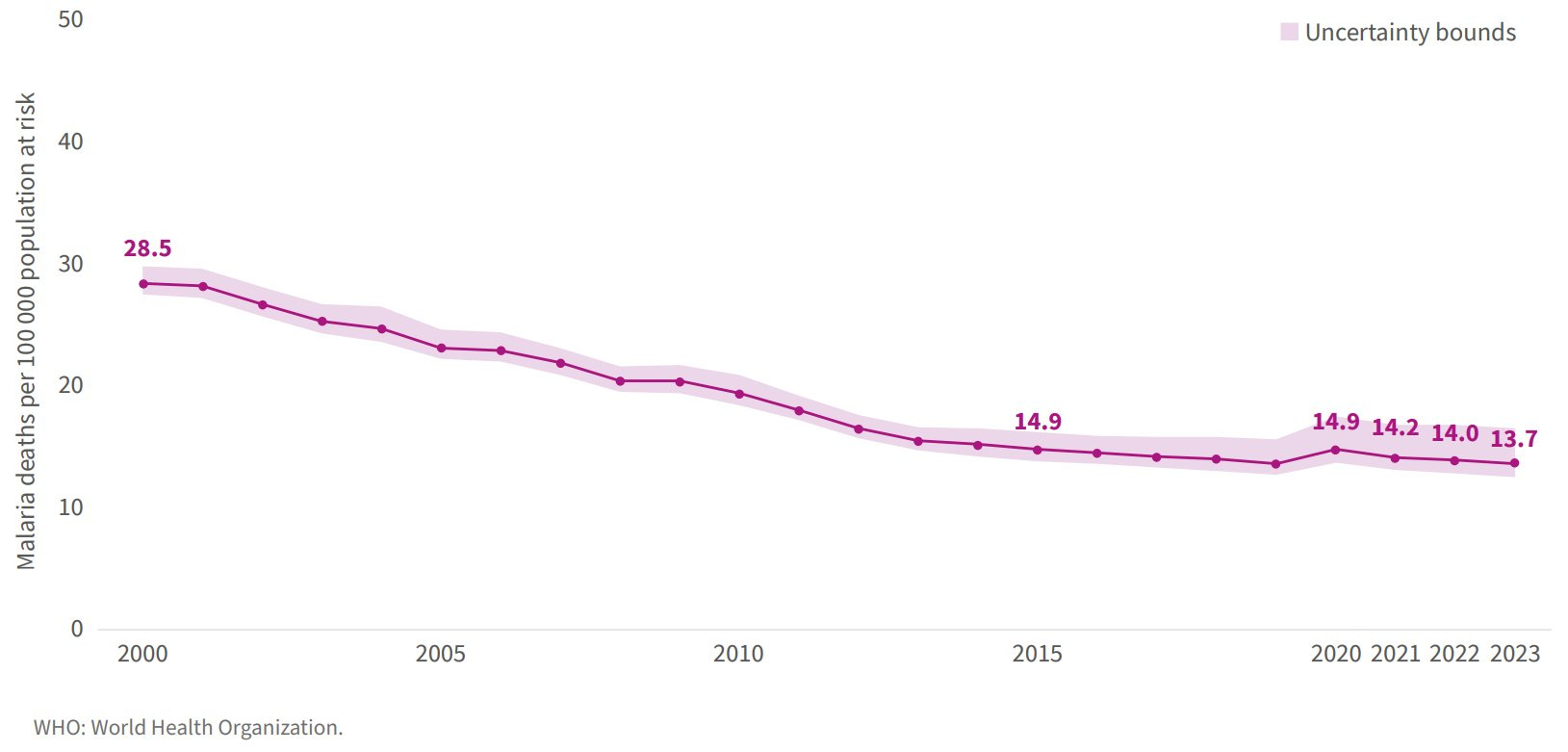
This is partly due to behavioural adaptations by mosquitoes. They typically bite inside buildings, and at night (between 22.00 - 04.00, when people are protected by nets) but they’re now biting more outside - and at dusk and at dawn. Mosquitoes are also generating intrinsic resistance to the insecticides used in nets – which is scuppering an extremely effective anti-malarial measure.
To tackle this, there have been huge anti-malarial efforts recently.
Vaccines are approved or in development that target the malaria parasite, Plasmodium falciparum, in its early liver stage, late liver stage, and blood stage. Long-acting monoclonal antibodies that target P. falciparum are being developed, too. Spatial repellents – releasing a volatile chemical that’s harmless to humans but repellent to mosquitoes – are being rolled out, and, as well as insecticide nets (which kill misquotes), nets that kill the parasite itself.
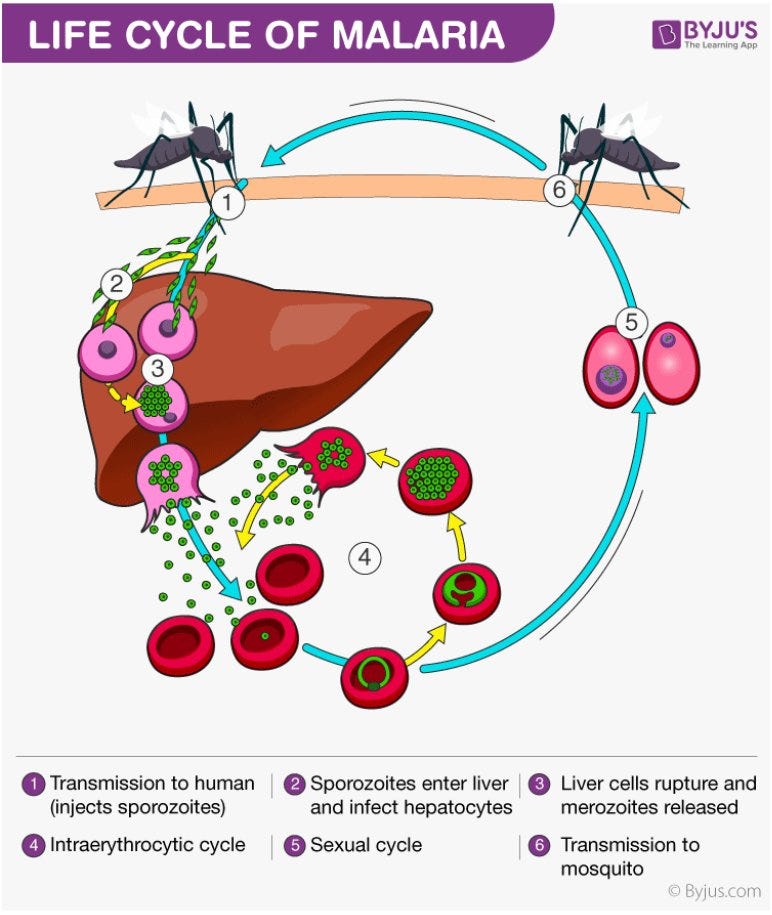
This week, the results from another method were published in the New England Journal of Medicine: mass distribution of Ivermectin, which was tested in a massive cluster-randomized trial in Kenya.
It’s an easy strategy – 3 doses of Ivermectin given to everyone (apart from pregnant women and those weighing <15 kg) once a month for 3 months. Adherence was 62 % for the first (directly‑observed) dose, 68.8 % for the second and 67.7 % for the third.
Ivermectin was compared to Albendazole because this population still needs protection against other infections (like lymphatic filariasis), and Albendazole does this without killing mosquitoes:
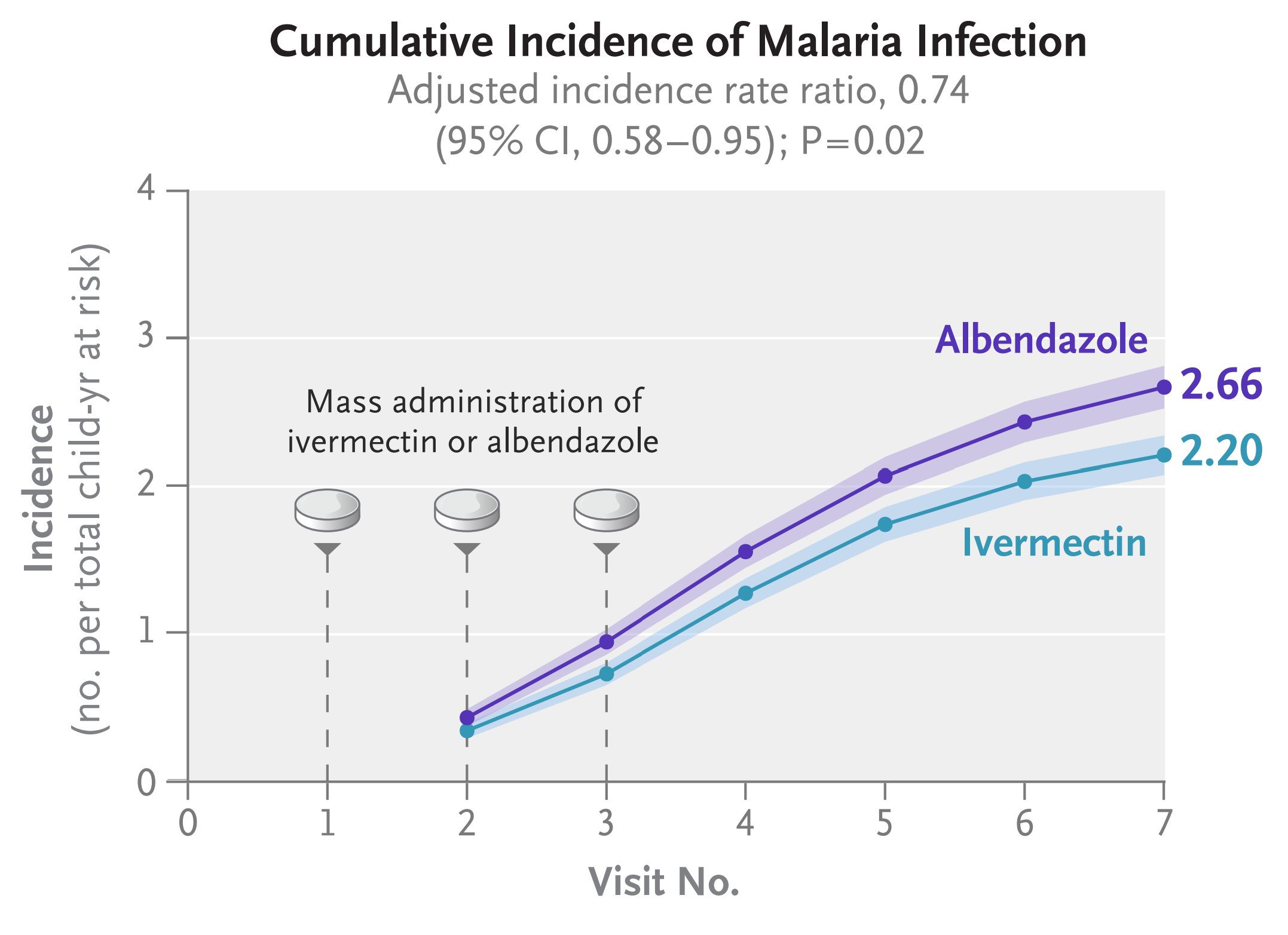
Mosquitoes are exposed to ivermectin when they take a blood‑meal – this kills the mosquito (not the parasite inside) – and halts onward transmission.
With innovations like this, we can get back towards the WHO’s target: 90% reduction in both malaria incidence and mortality by 2030 (relative to 2015 levels), and elimination of malaria in 35 countries.
