


1. GLP1 receptor agonist, Semaglutide, approved for severe fatty liver disease (MASH)
The most common chronic liver condition is non-alcoholic fatty liver disease. The technical name for this is a bit of a bit of a mouthful: ‘metabolic dysfunction-associated steatotic liver disease’. This is one of the most common medical conditions there is: it affects about 40% of adults. As the name suggests, it’s caused by metabolic dysfunction: obesity, type 2 diabetes, high lipids.
It progresses through stages - the severe form is where there’s inflammation in the liver (called MASH - metabolic dysfunction-associated steatohepatitis) which can cause fibrosis, cirrhosis, and even liver cancer. Cirrhosis is mostly irreversible, but fibrosis isn’t - which is why it’s so important to intervene early.

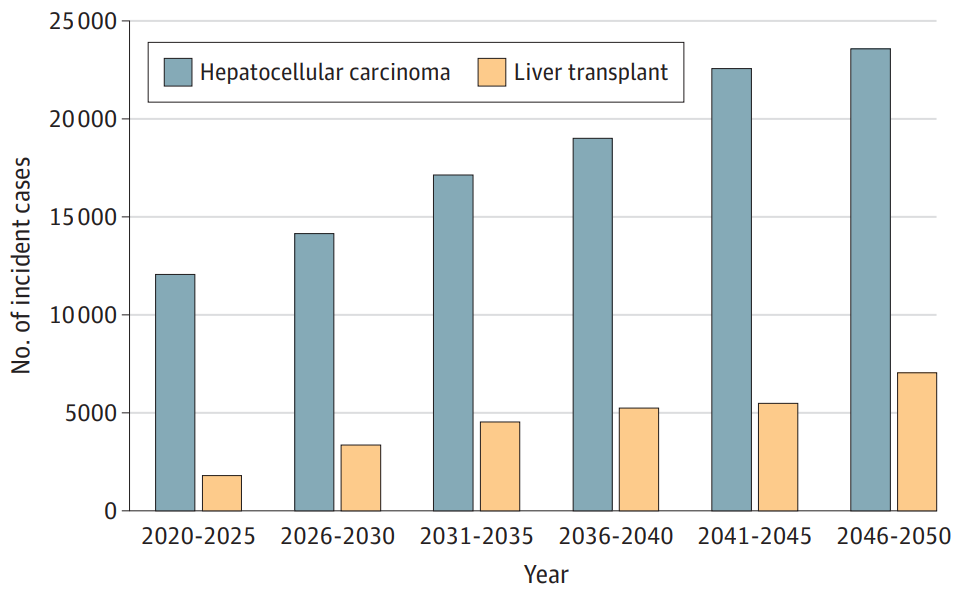
Rates of MASH are rising - as are the number of liver cancers caused by MASH, and liver transplants for end stage liver disease caused by MASH:
Despite its importance, it took until 2024 for a drug to get approved for MASH, resmetirom, which reduces hepatic fat by mimicking the action of the thyroid hormone in the liver. The absolute key in MASH is 1) to reduce inflammation of the liver and 2) to regress fibrosis: Resmetirom does both.
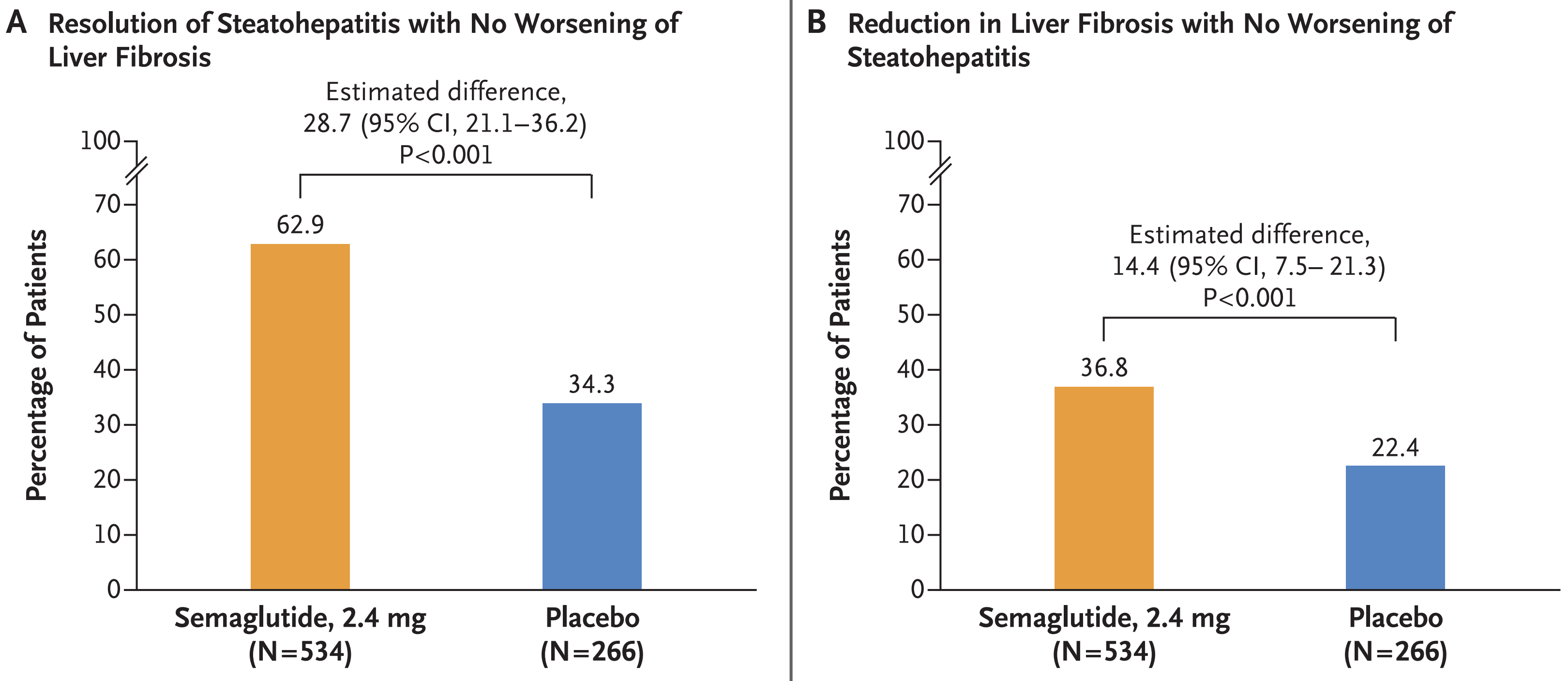
But resmetirom has no impact on weight or type 2 diabetes - the two main drivers of MASH. That’s where the blockbuster GLP1 receptor agonist, semaglutide, comes in. In the phase 3 trial in patients with MASH it lowered weight, lowered sugars, lowered cholesterol, lowered blood pressure - and lowered liver inflammation and regressed fibrosis:
As a result, Semaglutide (under the Wegovy label) just got FDA approval this week for MASH.
This marks the 6th approval for semaglutide - it’s also approved for treating obesity, type 2 diabetes, to reduce progression of chronic kidney disease (in type 2 diabetes) and to reduce heart attack/stroke risk in obesity and type 2 diabetes.
The pipeline for MASH, as we look forward, is looking very promising. The dual GLP1/GIP agonist, Tirzepatide, is one to watch, as is the FGF21 agonist, Efruxifermin. And if one therapy isn’t enough, combination therapy is being tested, too.
2. Slowing down type 1 diabetes
There’s been some pretty amazing progress towards curing type 1 diabetes recently - with stem cell-derived islets and even islet transplants without immunosuppression. But prevention beats cure, so what about prevention efforts?
Type 1 diabetes starts long before diagnosis. In stage 1, autoantibodies are present but glucose control is normal. In stage 2, glucose control starts to go awry. Stage 3 is established (diagnosed) diabetes - but there's still a window to intervene in the 'honeymoon phase', where there are still β cells (which make insulin) to rescue:
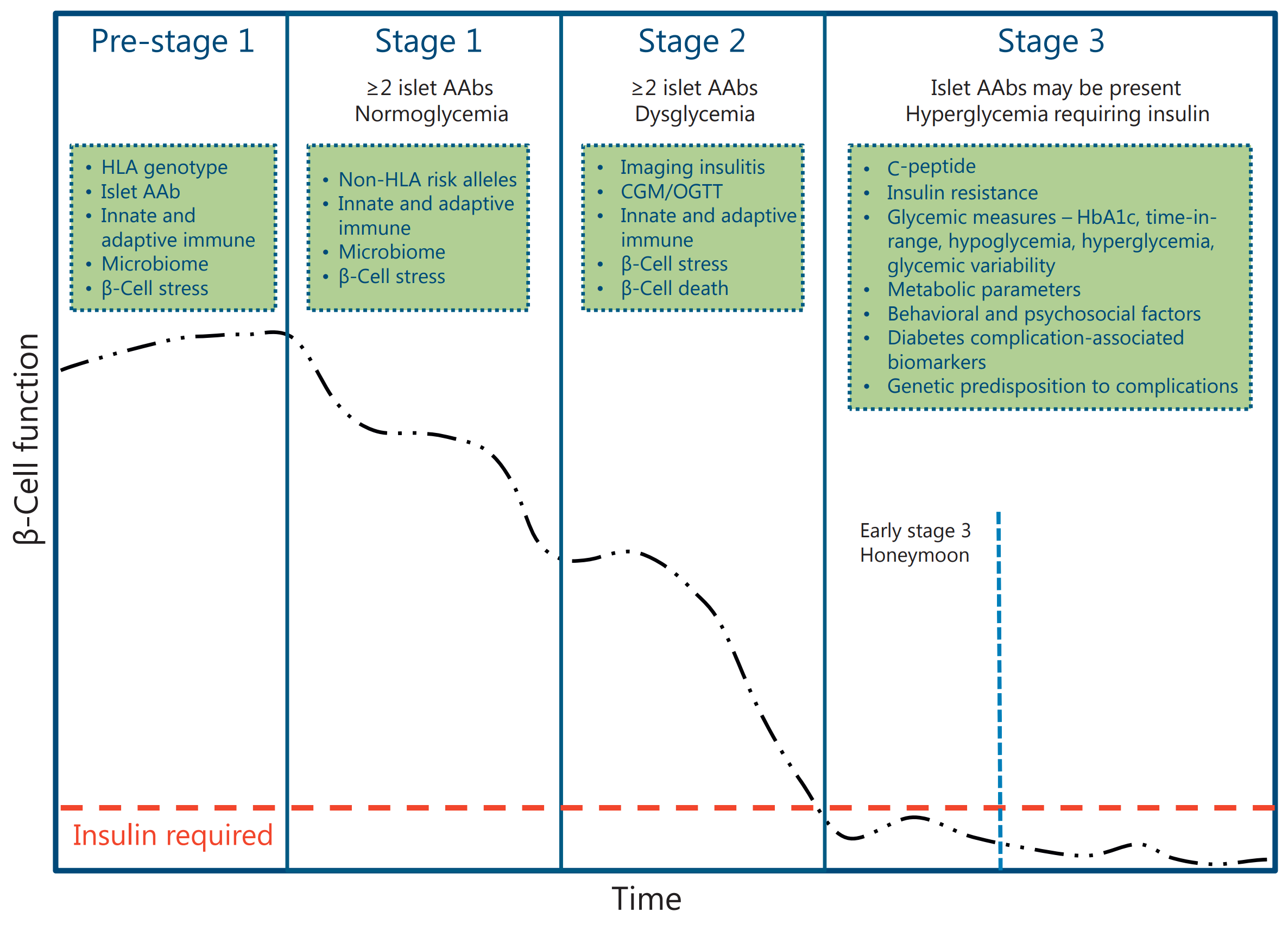
The most logical place to intervene would be stage 2 - where it’s easy to make diagnosis because of detectable autoantibodies and high glucose - and there are plenty of β cells left.
Teplizumab aims to do exactly this. It’s an anti-CD3 therapy, which means it binds to the CD3 expressed on the surface of T cells and stops them from attacking insulin-producing islets. In trials, it’s pretty effective to delay type 1 diabetes!
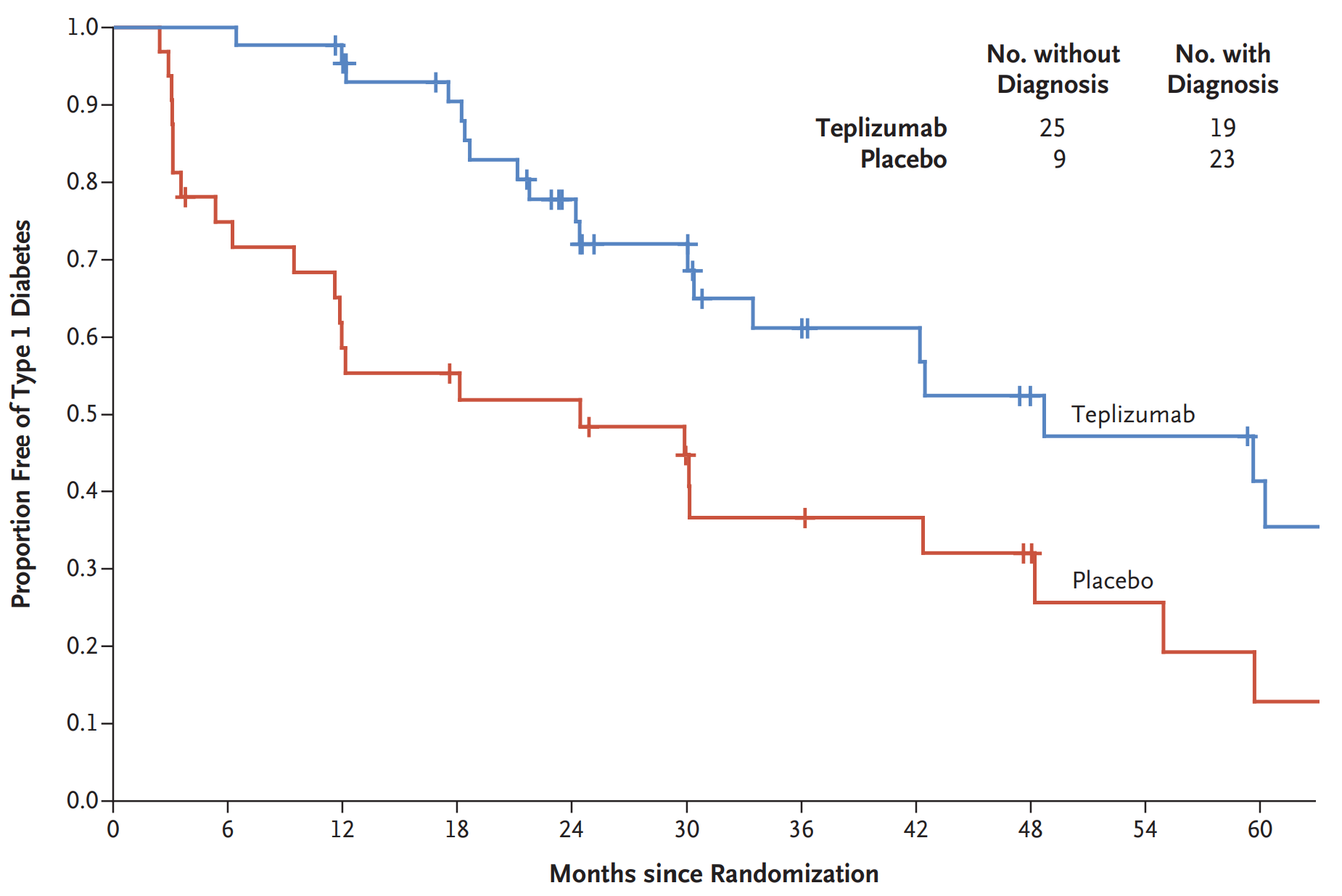
Based on this trial, this week the UK just joined the US, Canada, Saudi Arabia, and a few others in approving Teplizumab - for those with stage 2 disease, to delay progression to stage 3 (the trial was was done in 2019 - it took a while!).
