


1. Low lithium might start the Alzheimer’s cascade
Alzheimer’s disease starts long before symptoms do - and even longer before diagnosis. The Alzheimer’s cascade works like this:
1) Misfolded amyloid β oligomers accumulate first 2) These oligomers trigger the phosphorylation of Tau 3) Phosphorylated Tau is prone to misfolding and aggregation 4) Tau aggregates trigger toxic signalling that kills neurons 5) Neuronal death leads to loss of hippocampal volume 6) which leads to cognitive decline (measured by ‘CDR-SB’) 7) Finally, diagnosis is made.
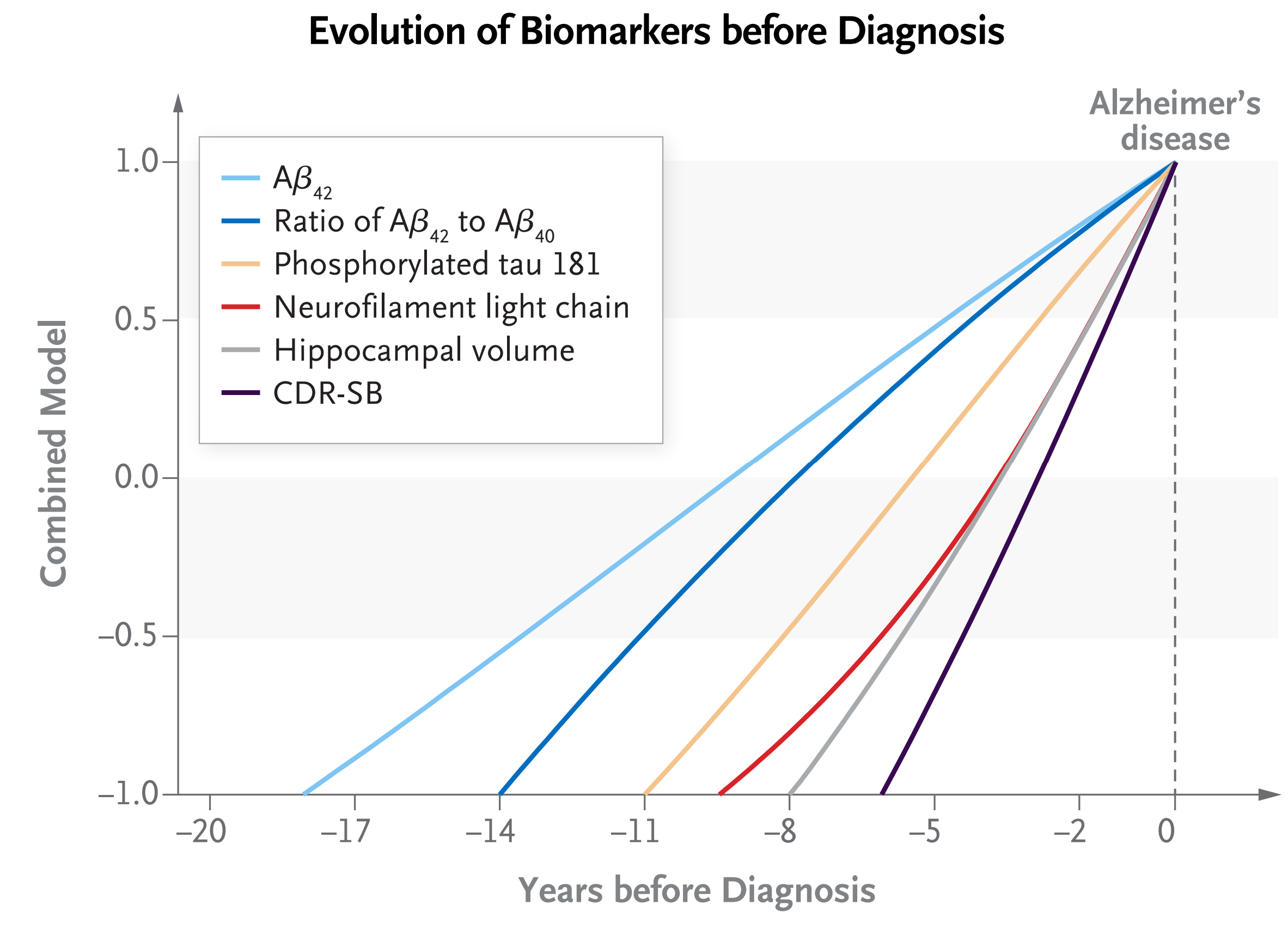
This means there’s a decades-long time window to intervene before symptoms start. The only therapy we have at the moment that directly targets the pathology in Alzheimer’s is Lecanemab, a monoclonal antibody that clears amyloid beta. This has a modest slowing effect on the decline in cognition, and doesn’t reverse cognitive decline (there’s also issue of microbleeds and edema).
Upstream of both amyloid and tau pathology is a kinase called GSK3 - it increases the production of amyloid β, reduces its clearance, and it’s the kinase that phosphorylates Tau. But the trials that have been done with GSK3 inhibitors have not been successful for slowing Alzheimer’s disease - partly because this is an important kinase, so fully inhibiting it causes toxicity, and partly because treatment was started late (mild-moderate established Alzheimer’s).
This study, in this week’s Nature, searched for metals found at different levels in healthy brains, those with early cognitive impairment, and those with Alzheimer’s disease. The top hit - by far - was Lithium. Lithium, an established medicine for bipolar disorder, is a chemical element we get from diet and the tap water. Lithium levels in the tap water fluctuate a lot, and it turns out that high levels of lithium correlate with low levels of dementia.
The study finds that lithium is low in the post-mortem brains of people with early cognitive decline or Alzheimer’s disease, and - in mice - inducing lithium deficiency by removing it from diet increases the levels of amyloid β plaque.
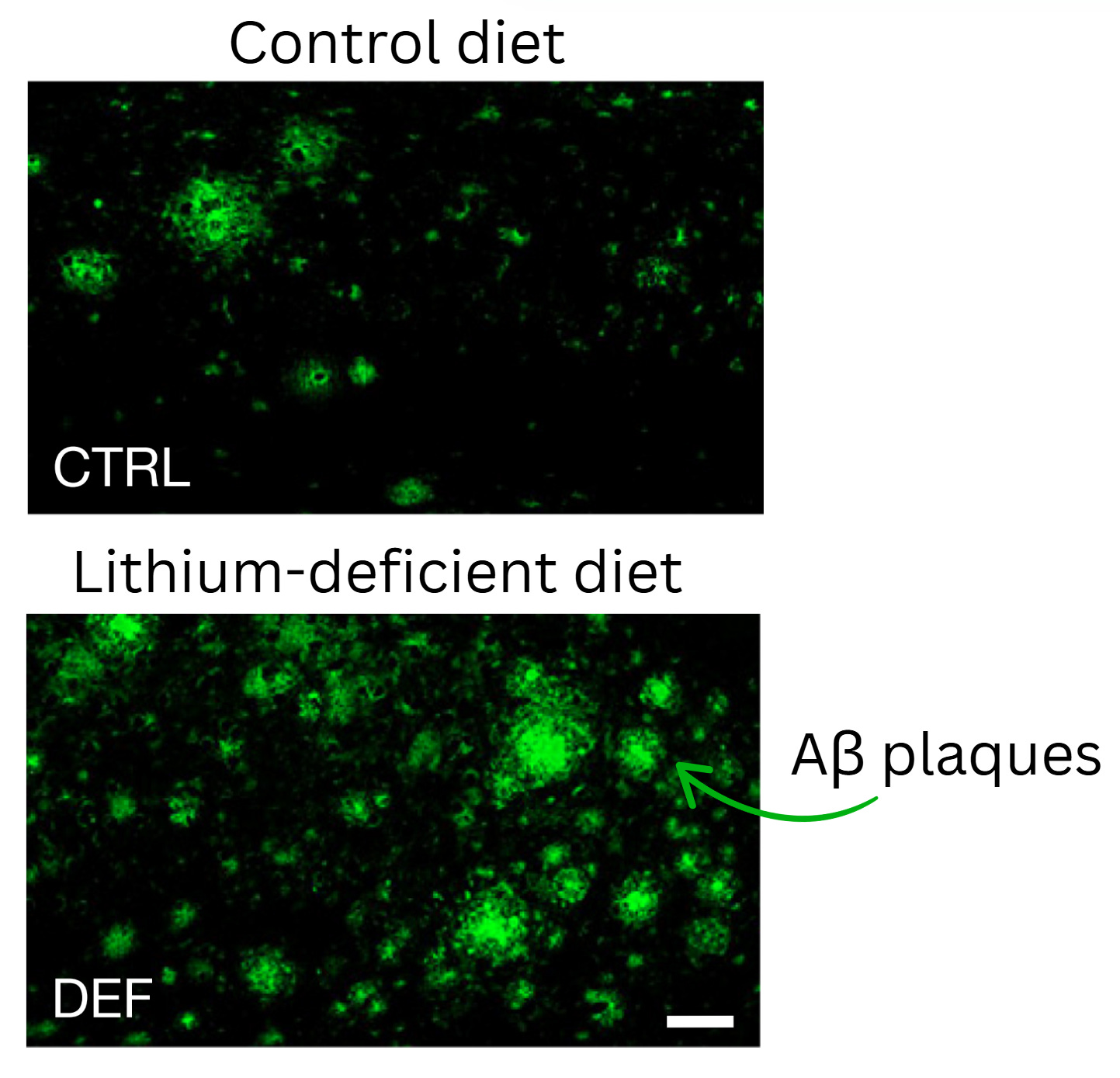
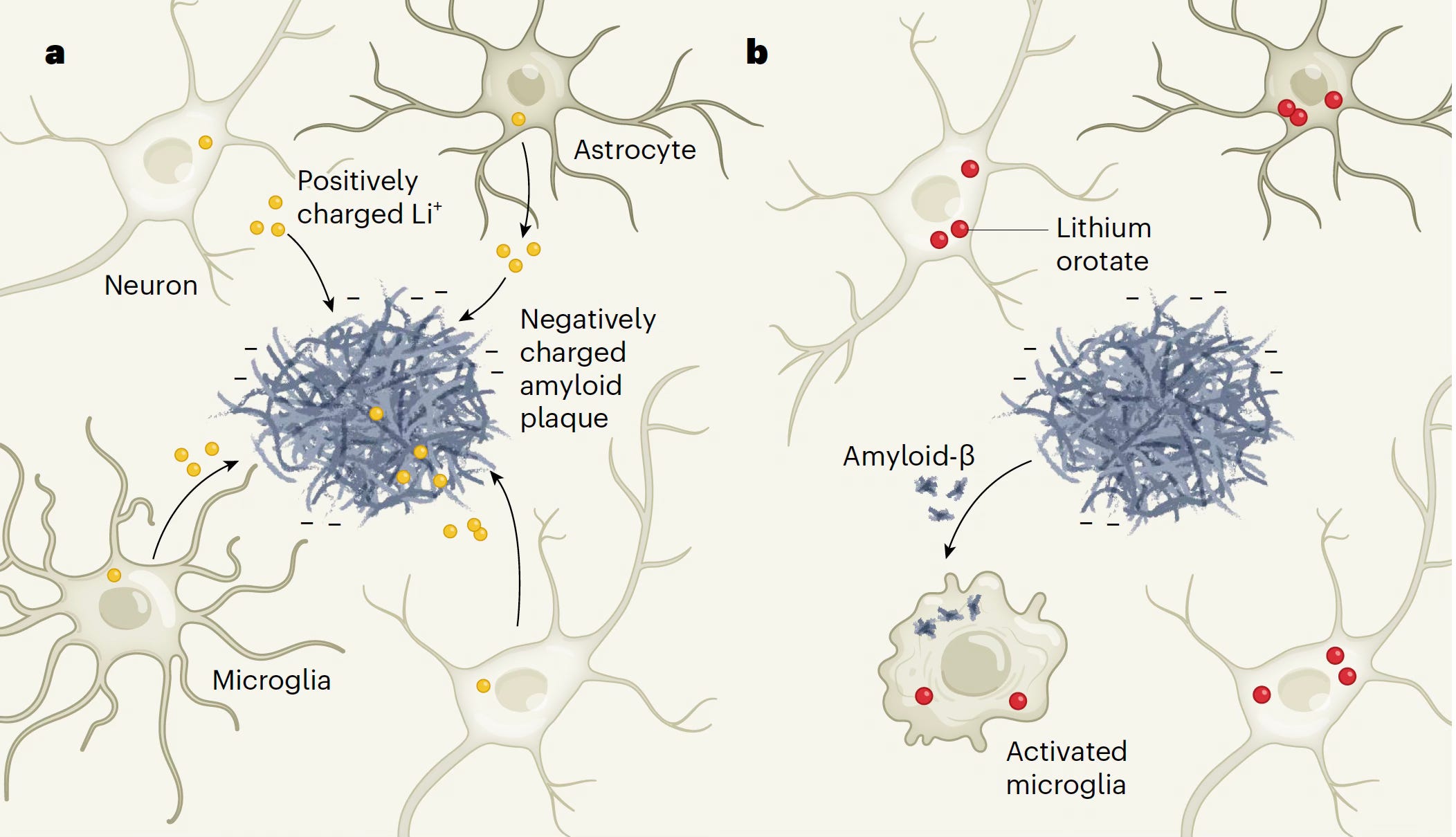
So lithium deficiency leads to accumulation of amyloid plaque - suggesting that lithium deficiency is upstream. But it works the other, way, too. Amyloid plaque sequesters lithium, which means there’s less free lithium in the brain - which leads to more amyloid plaque accumulation. This vicious cycle might partly underpin the relentlessly progressive nature of Alzheimer’s.
Lithium has been tested before in randomized trials for Alzheimer’s - with mixed results. The issue with these trials is 1) Treatment starts after the onset of cognitive decline 2) All of them used lithium carbonate.
A key discovery in this paper is that it’s a different lithium salt - lithium orotate - that’s key. This is because lithium orotate isn’t sequestered by amyloid β plaque like lithium carbonate is, so lithium orotate can be more active in the brain, and it’s much more effective:
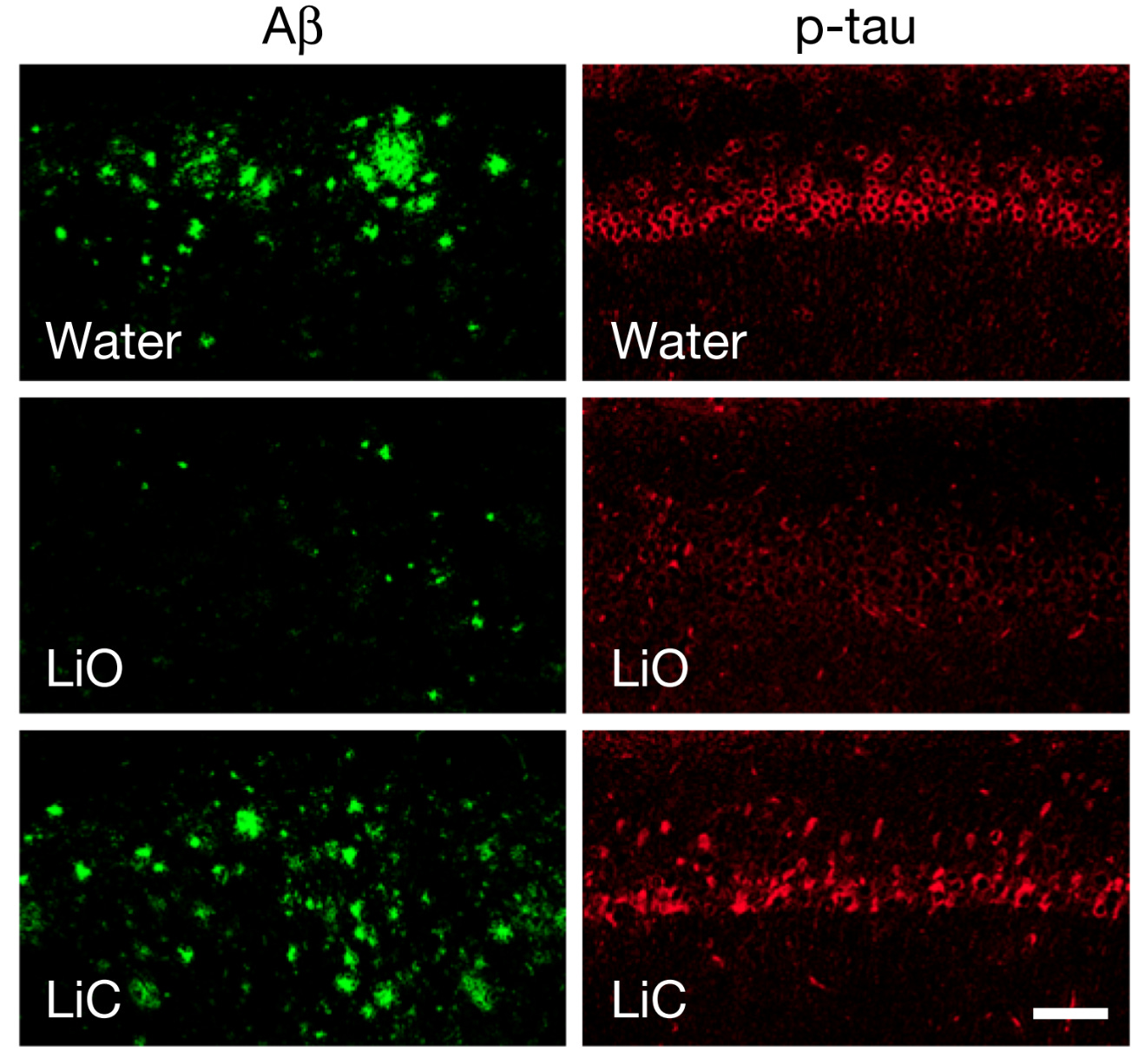
The lithium carbonate dose used for bipolar disorder is 200 - 600 mg daily - equivalent to a dose in the blood of 0.6-1.2 mEq/L. This is about 1000X the protective dose of lithium required here - this is good news, because kidney and thyroid toxicities are known risks of high dose lithium.
So, how does it work?
It’s been known for a long time that lithium can inhibit GSK3 - the kinase behind both amyloid and tau pathology. Consistent with this, in mouse models, lithium orotate 1) helps microglia clear amyloid β plaque and 2) prevents the GSK3-mediated Tau phosphorylation that induces Tau aggregates.
This is a seriously fascinating study, that gives rise to three major questions.
First, if decline in lithium is the first event in the Alzheimer’s cascade, why does this happen and who’s worst affected?
Second, lithium was lower in the brain of those with Alzheimer’s, but there was no difference in the blood. This means it’s not going to be a practical biomarker - unless it’s also detectable in the cerebrospinal fluid (CSF), which isn’t yet known.
Third, is lithium orotate safe and effective in humans? This is the big one. From what I an tell, so far there’s only been one small trial looking to see whether the supplement can cross the blood-brain barrier and get into the brain. The answer is yes, and - over the short term - it's safe, but clearly big, high quality preventative and treatment trials are needed.
So, it’s early days, but is lithium orotate the long-sought ‘statin for the brain’?
2. Transplant of islet cells for type 1 diabetes without immunosuppression
Type 1 diabetes causes insulin deficiency due to autoimmune destruction of the insulin-producing beta cells in the pancreas. Beta cells, themselves, are within a cluster of cells called islets. Usually type 1 diabetes is treated with injections of exogenous insulin (or an ‘artificial pancreas’) but these approaches often don’t achieve good glucose control, and they are not a cure.
Two recent breakthroughs for type 1 diabetes have achieved potential cure - defined as good glucose control, with no need to inject insulin. The first: adipocytes (fat cells) of a patient with type 1 diabetes were induced to form pluripotent stem cells - that can form any cell type - and then differentiated into islets, and transplanted. This achieved insulin independence that lasted for at least a year. The second: transplant of stem cell-derived islets (this is much more scalable - you can just grow stem cells in the lab) which also achieved insulin independence in 10 patients.
But the very clear drawback to both approaches is the need for lifelong immunosuppression. On discussing these breakthroughs, a good take from someone with type 1 diabetes was ‘If I have to take lifelong immunosuppression, it’s not a cure’.
Aiming to solve these problems, this study, in NEJM this week, transplants islets for type 1 diabetes with no immunosuppression.
