


Welcome! Every week I analyze the most important stories in medicine — trials, approvals, papers. It has been a quiet summer so far, but we are back. This one is a good one!
This article is brought to you by my partners at Consensus, the AI agent for literature research and medical questions. Get a free trial with my link!

1. Daraxonrasib gets FDA-approved!
The first RAS-targeted drug for pancreatic cancer has been FDA-approved! Revolution Medicines’ daraxonrasib is a once-daily oral drug that inhibits RAS in its active, “ON” state — including several of the RAS mutations that drive the vast majority of pancreatic cancers.
The label is very broad: it’s approved “for the treatment of adult patients with metastatic pancreatic adenocarcinoma who have received at least one prior systemic therapy or who are not candidates for multiagent systemic therapy”. Though the trial was done in the second (or later) line, some have said this soft label could also allow daraxonrasib to be used even in the first-line setting.
The approval comes just over two months after Revolution Medicines presented the full phase 3 data at ASCO, where daraxonrasib increased median overall survival to 13.2 months, compared with 6.7 months with chemotherapy. I was lucky enough to be in the room for the presentation — and recorded the standing ovation it received here.
Rasonque — “RAZ-on-cue” — will be the name. It becomes the 34th new medicine FDA-approved this year. It took 135 days from the data to the approval — by far the fastest of the year.
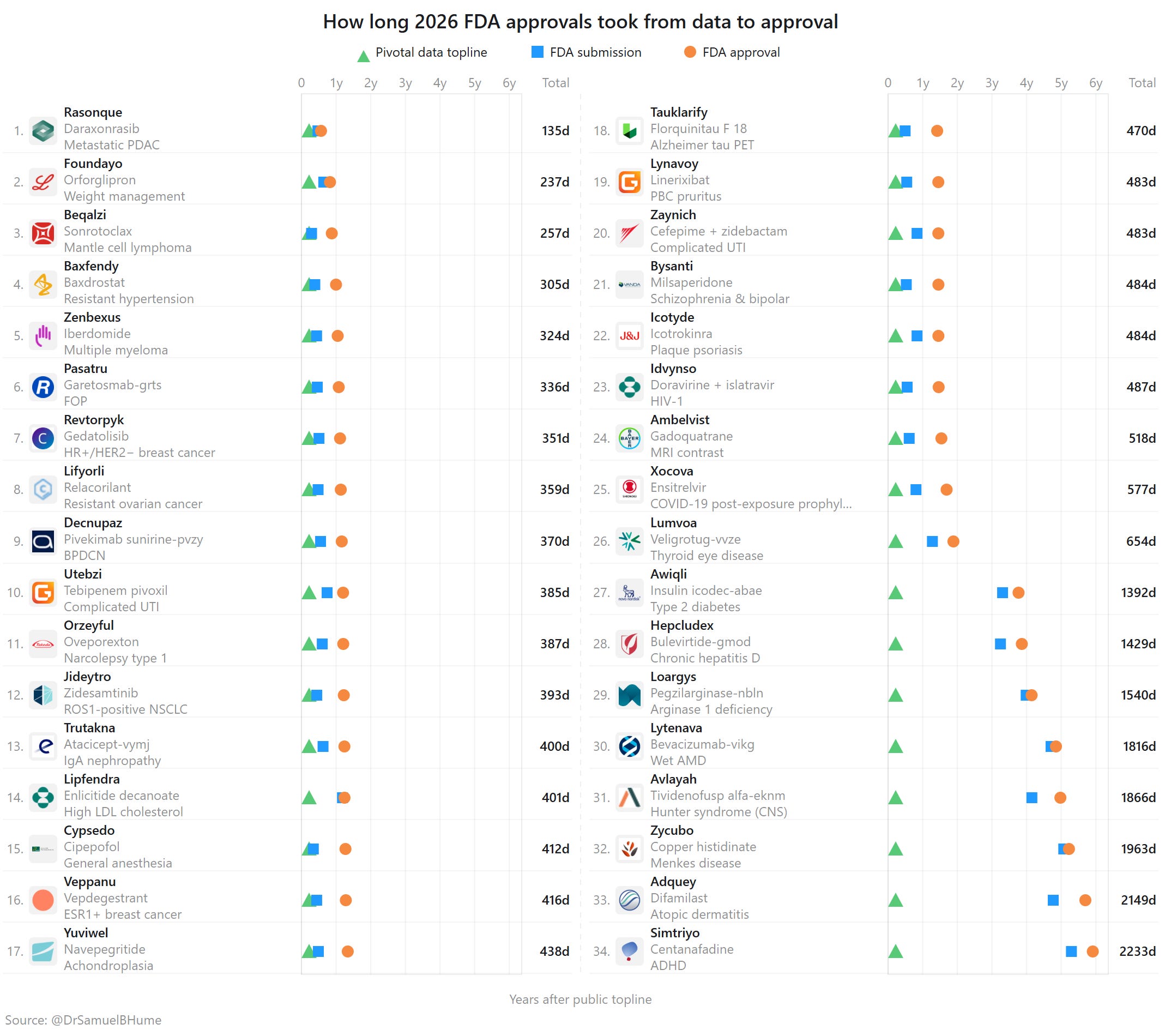
Source: Revolution Medicines in the New England Journal of Medicine and the FDA.
2. Success for a personalized cancer vaccine
Moderna’s personalized mRNA vaccine was successful at extending recurrence-free and metastasis-free survival in a phase 3 trial, in patients with resectable melanoma (specifically, completely resected stage IIB–IV melanoma). This is the first ever phase 3 success for an mRNA cancer vaccine.
Patients had surgery, then vaccines made with up to 34 personalized neoantigens — this was dosed 9 times alongside immune-stimulating pembrolizumab.
There is no actual efficacy data yet, and no overall survival data, either, so the results below are from the phase 2b trial.
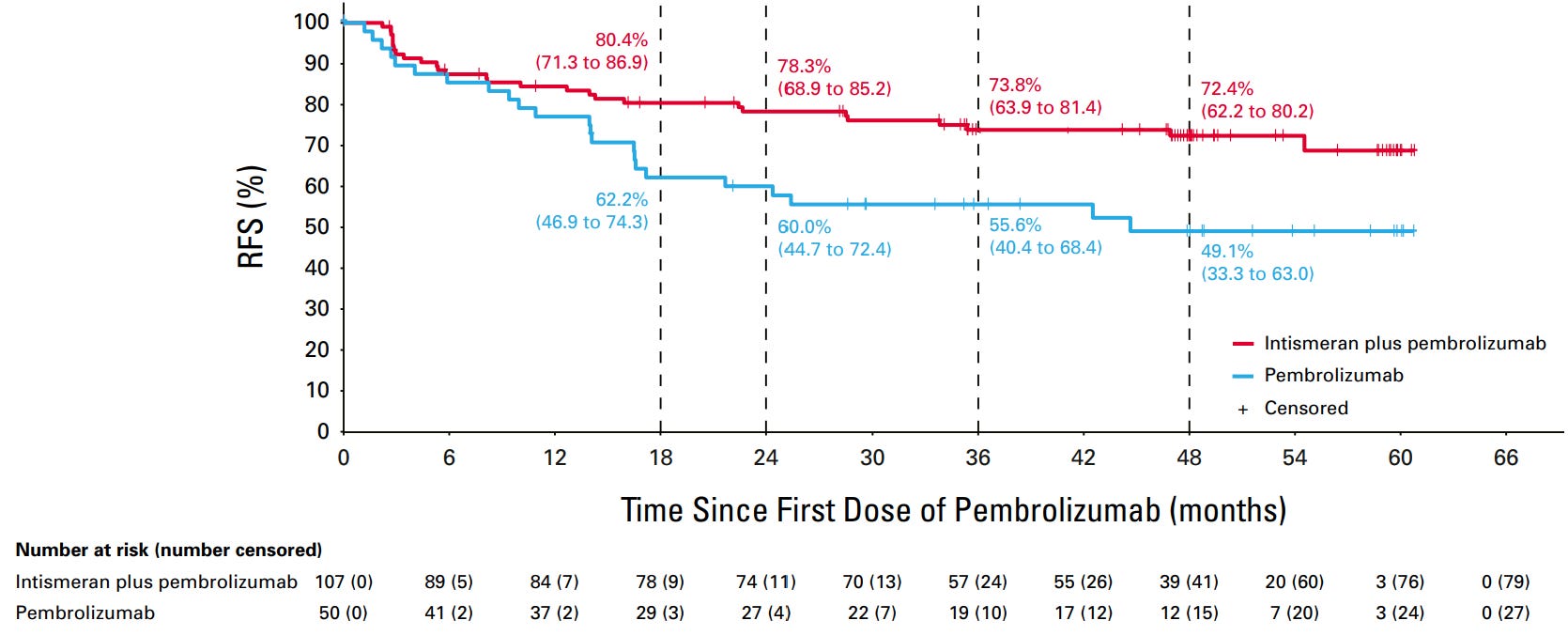
Moderna are running this same personalized vaccine in other cancer types: resected and metastatic non-small cell lung cancer, renal cell carcinoma, bladder cancer, and metastatic melanoma. Beyond this, there are 494(!) therapeutic cancer vaccines in development: 241 in phase 1, 220 in phase 2, 33 in phase 3, and 11 approved globally (only two in the US). If you are interested, here is a comprehensive map of the landscape.
In other cancer vaccine news, Biontech also had a trial readout this week, which was, unfortunately, resoundingly negative. The indication they picked was microsatellite stable colorectal cancer. This is a very immune-cold cancer type, so maybe not so surprising to see the failure.
I spoke about all of this with a cancer vaccine scientist this week, check it out here!
Source: Moderna.
3. Activating Tregs treats eczema
T-regulatory cells (Tregs) dampen inflammation. Last year, their discovery won the Nobel Prize, and now they're being used to make new medicines! Nektar Therapeutics made an antibody to stimulate the cytokine that expands Tregs, IL2. In a phase 2 trial, it worked in atopic dermatitis (eczema).
The concern about IL2 agonism is that it could also expand cytotoxic T cells, which could cause widespread immune damage — but Nektar’s drug, rezpegaldesleukin, is PEGylated, which means it binds less well to effector T cells and it’s biased to Tregs (because they have high CD25, which helps capture the PEGylated drug).
As for the name, rezpegaldesleukin: Rez- is a distinguishing prefix, -peg- is because it's PEGylated, and -aldesleukin is the name for recombinant human IL2.
In the trial, circulating Tregs rose up ~6-fold, with corresponding reductions in inflammatory biomarkers. This is good proof-of-concept that restoring immune tolerance — rather than simply blocking inflammatory cytokines — can improve disease. Indeed, in the trial, there was no increased risk of infection. Phase 3 up next!
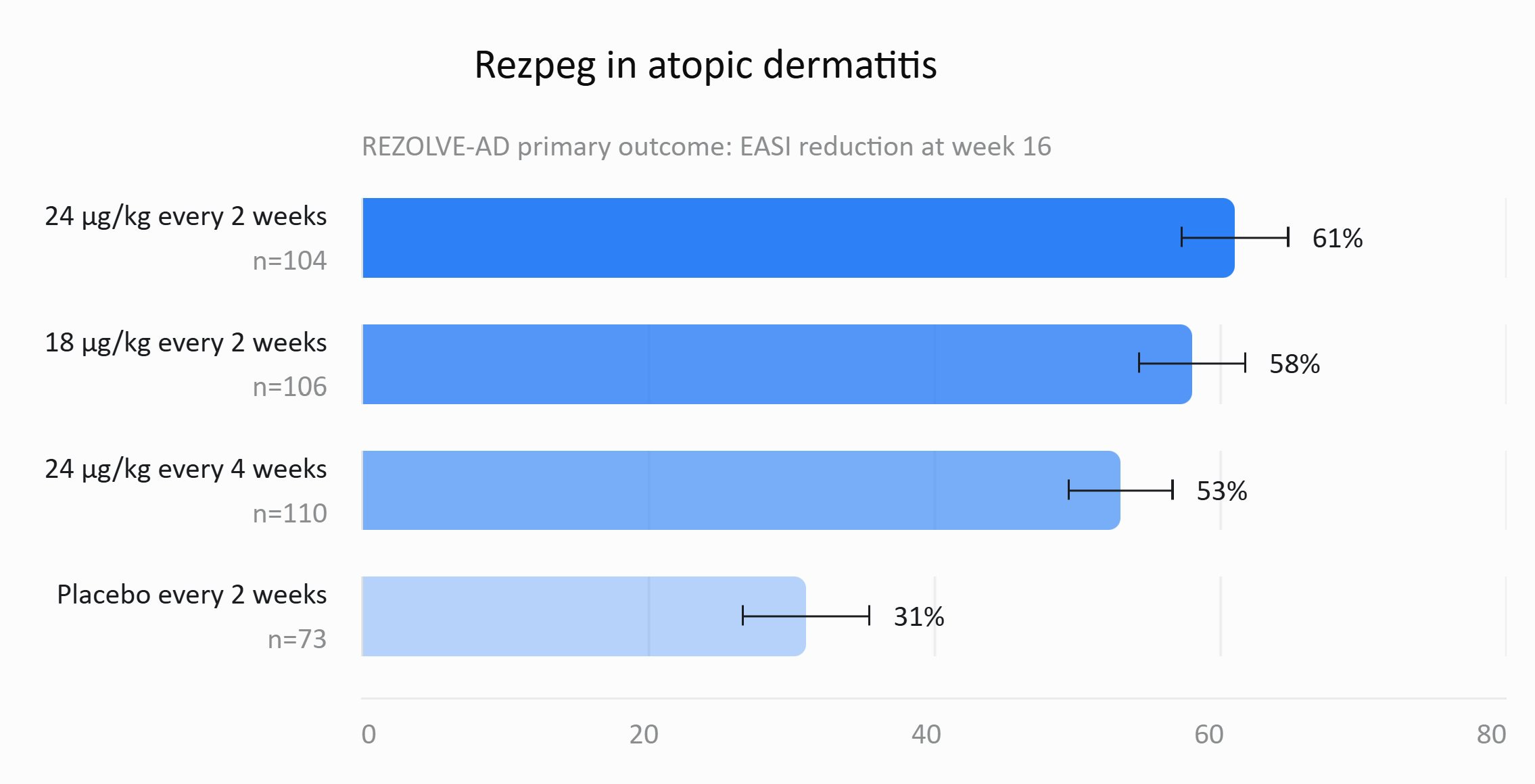
Source: Nektar Therapeutics in The Lancet.
4. How common is atherosclerosis, really?
Researchers in Denmark and Spain did a prospective cohort study with 16,808 healthy adults (ages 18 to 70) who had no prior history of cardiovascular disease. To look for silent (asymptomatic) atherosclerosis, they did imaging:
3D vascular ultrasounds, to examine the carotid (neck) and femoral (leg) arteries.
CT Scans (angiography and noncontrast) to examine the coronary arteries.
They found that atherosclerosis begins much earlier than we thought — for example, about 20% of 30 year old men already have atherosclerosis.
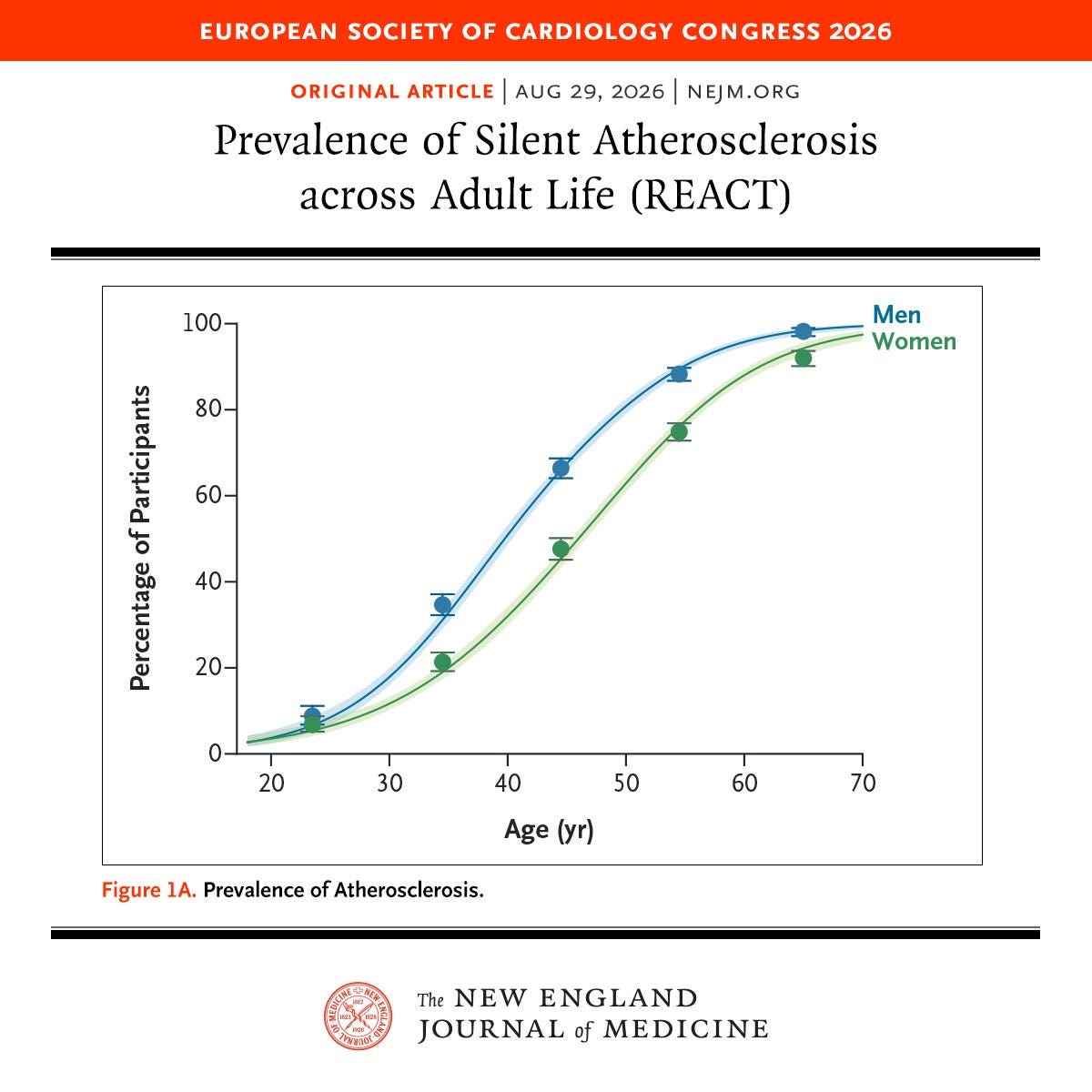
This rise of atherosclerosis, with age, is exponential.
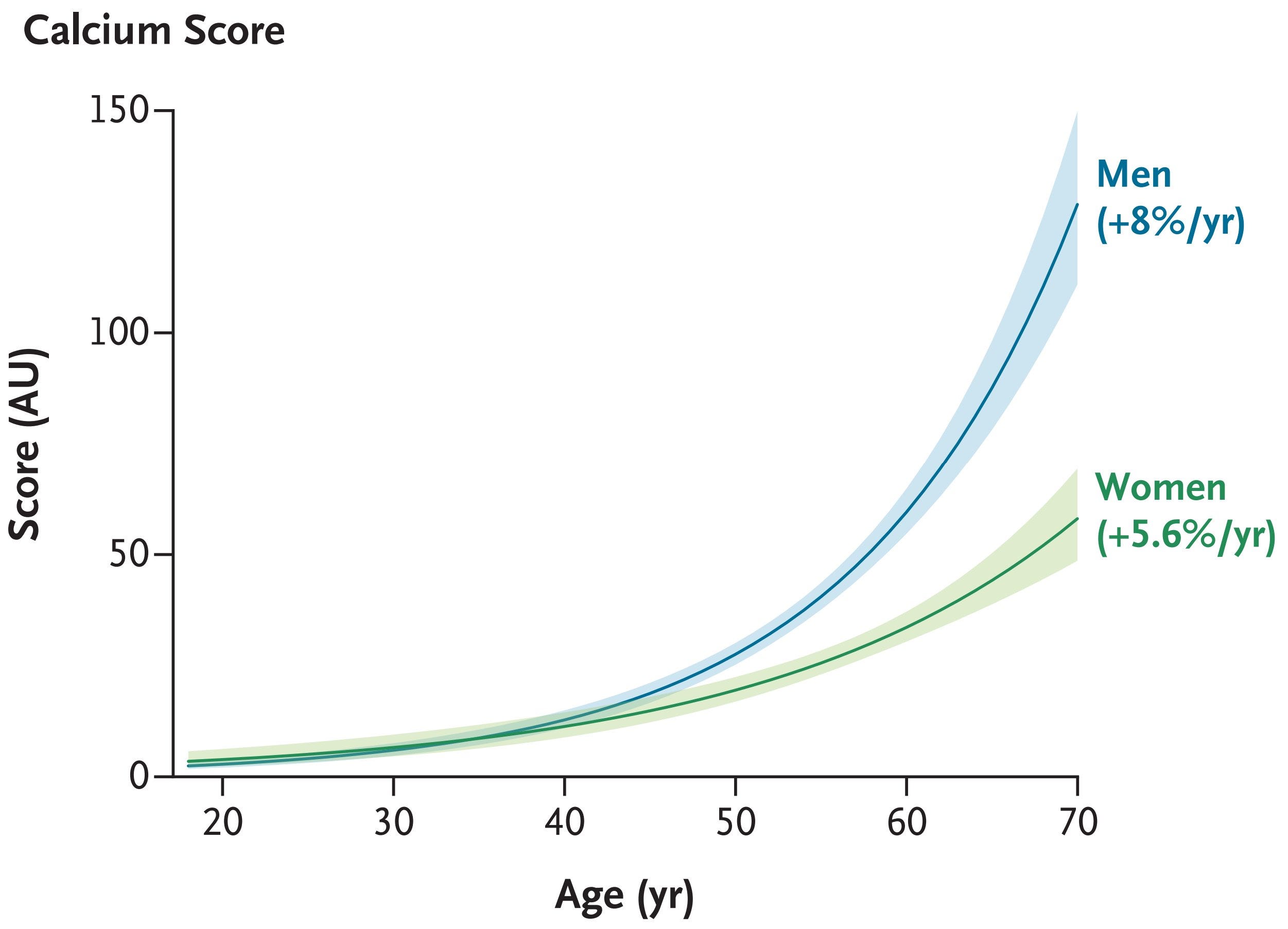
To me this shows the importance of early intervention and prevention. The good news is we really do have (almost) all of the tools to intervene and prevent this — including for the big 3: LDL cholesterol, high blood pressure and obesity (smoking is the other one).
For more on cardiovascular prevention and how to solve it, listen to my interview with Sek Kathiresan, who is pioneering one-and-done lipid-lowering therapies to prevent heart disease.
Source: University of Copenhagen and University of Madrid in NEJM.
