


Cancer vaccines have not yet transformed oncology, with many failed trials over the last few decades. But recent success, including for Moderna’s personalized mRNA vaccine in melanoma, has revitalized the field. Here, anticipating the upcoming cancer vaccines era, we mapped the global landscape of clinical trials.
Methods
We did comprehensive searches in clinical trials databases — US, EU, UK, Asia, Australia and the rest of the world. We supplemented this with targeted literature searches.
We grouped cancer vaccines into one of three groups: therapeutic — intended for patients with diagnosed cancer; interceptive — for patients with a pre-cancer state (like high-risk pancreatic cysts); preventative— for patients at high risk, but without pre-cancer or cancer (like Lynch syndrome).
We did not include routine vaccines used for prophylaxis against cancer-associated pathogens (like HPV, hepatitis B, or H. pylori). We excluded any clinical trials that have been discontinued.
For the surrounding research, we used Consensus.
We mapped programs by phase, by sponsor and country, by vaccine type and indication (e.g. mRNA vaccines, for melanoma), by intent (therapeutic, prevention, or interception), and by immune therapy companion (e.g. use alongside anti-PD1 antibodies). The full analysis of all of the programs, including a living dashboard, is at the end of the article.
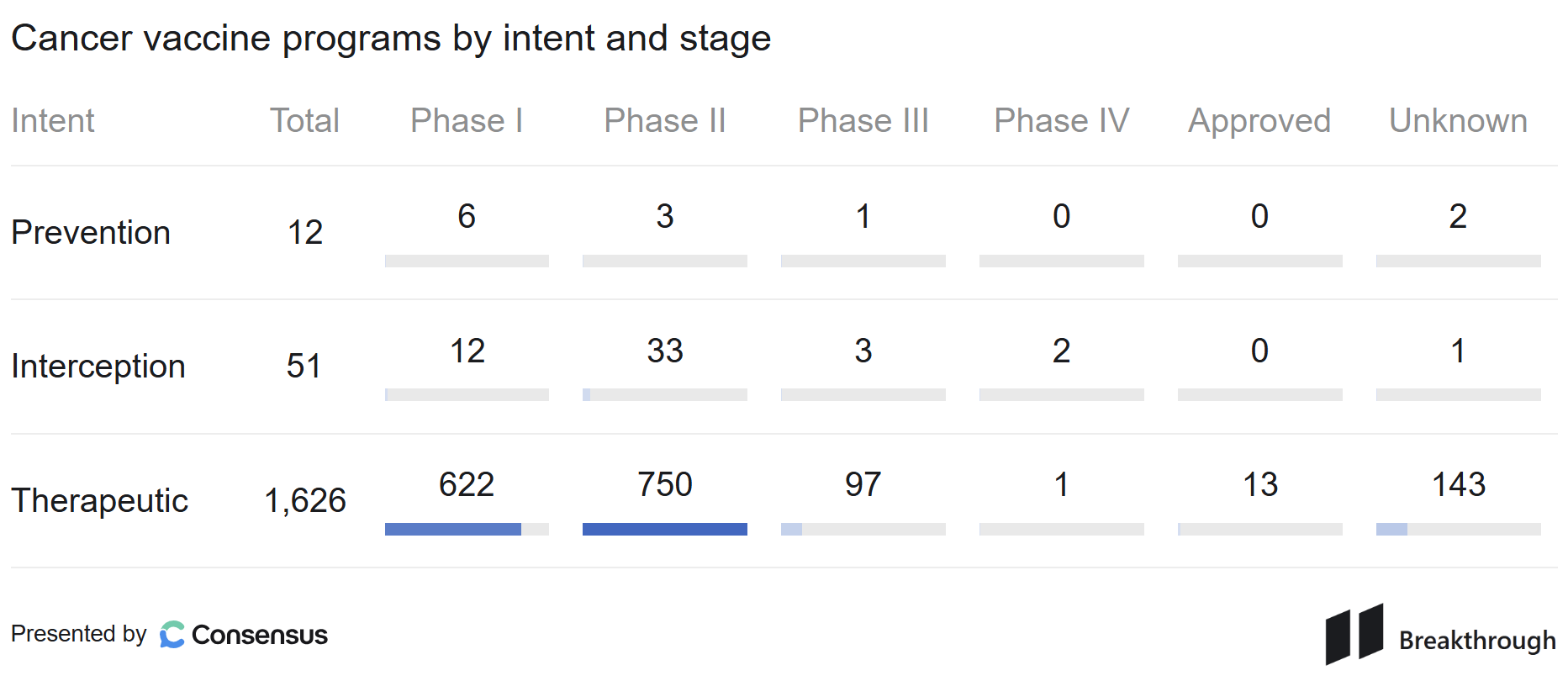
Globally, we identified 1,689 cancer vaccine programs: 1,626 therapeutic programs, 51 for interception, and 12 for prevention. In total, 640 of these are in phase 1, 786 in phase 2, and 101 in phase 3. 13 cancer vaccines are approved, though only two in the US: Provenge, made by Dendreon Pharma, for metastatic prostate cancer, and the repurposed tuberculosis vaccine, BCG, which is standard-of-care in non-muscle-invasive bladder cancer.
The programs, broken down by intent and stage, are shown in the figure below.
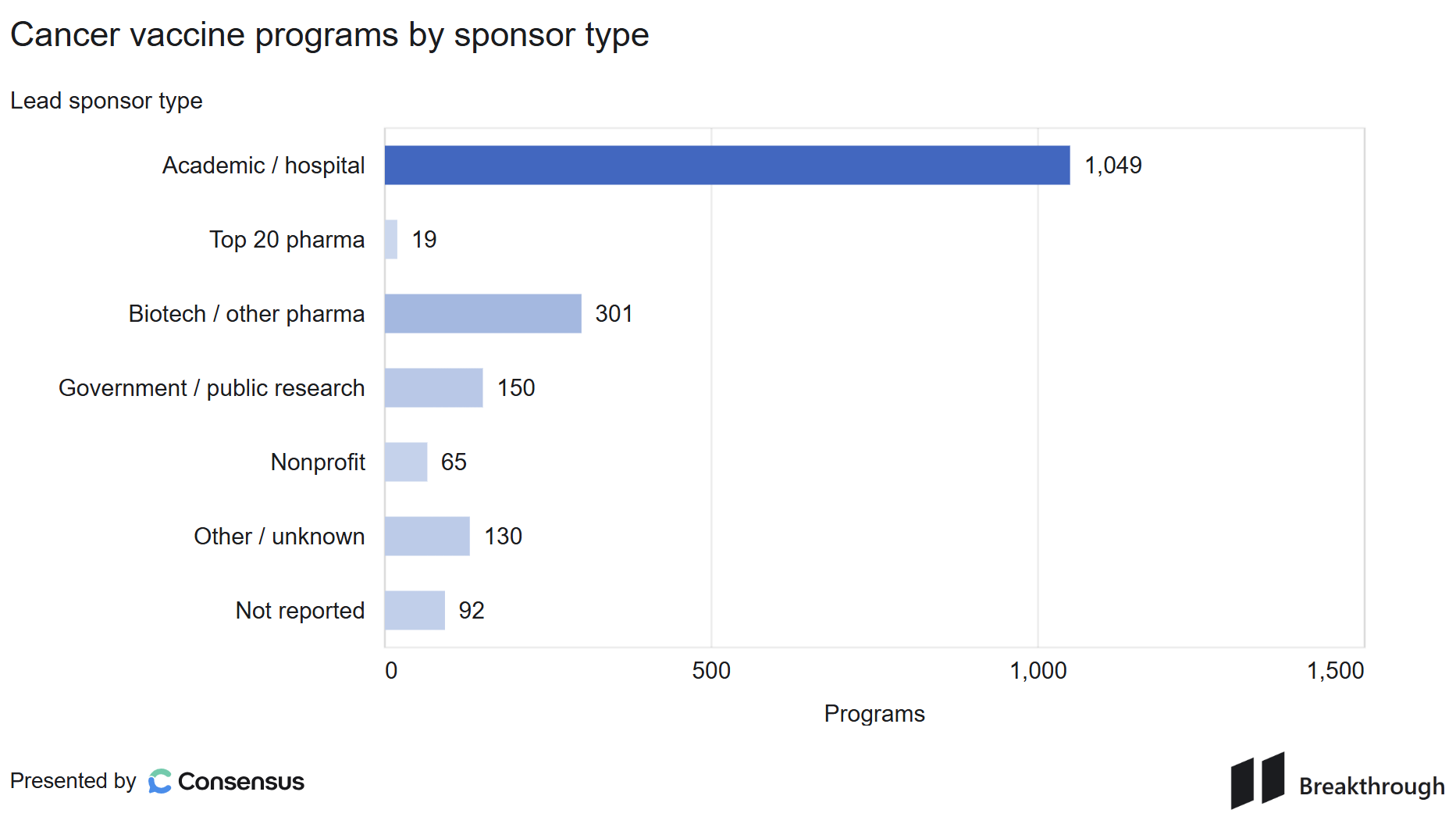
Most of the programs (a total of 1,049) are sponsored by academic or hospital centres, with big pharma only running 19, and smaller biotechs companies contributing 301 programs.
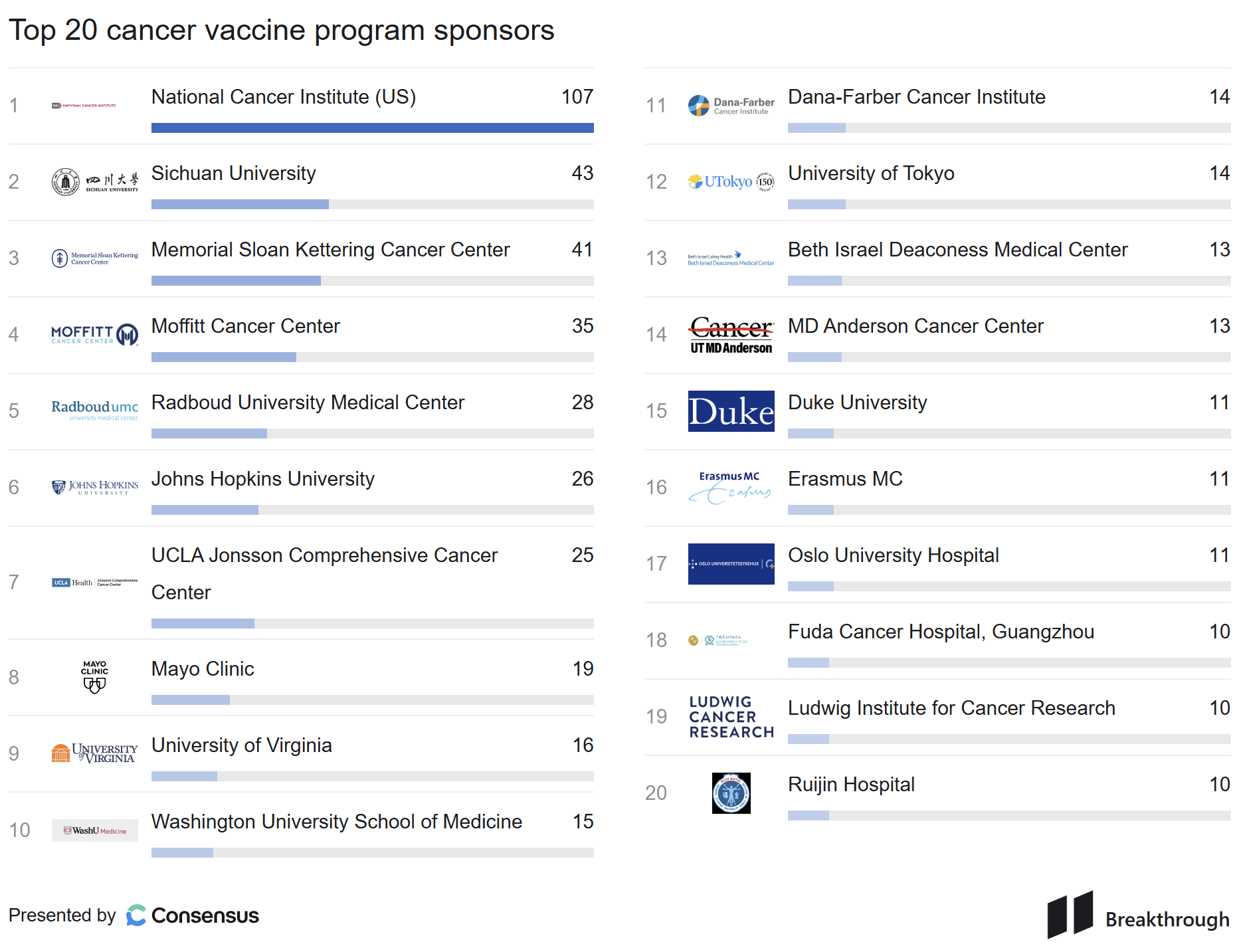
The top trial sponsor is the National Cancer Institute, in the US, who are funding 107 cancer vaccine trials.
Indeed, the home of cancer vaccine trials is the US, where 601 of the trials are running. Second is China, with 215, and then Japan, with 141 — shown in the following map.
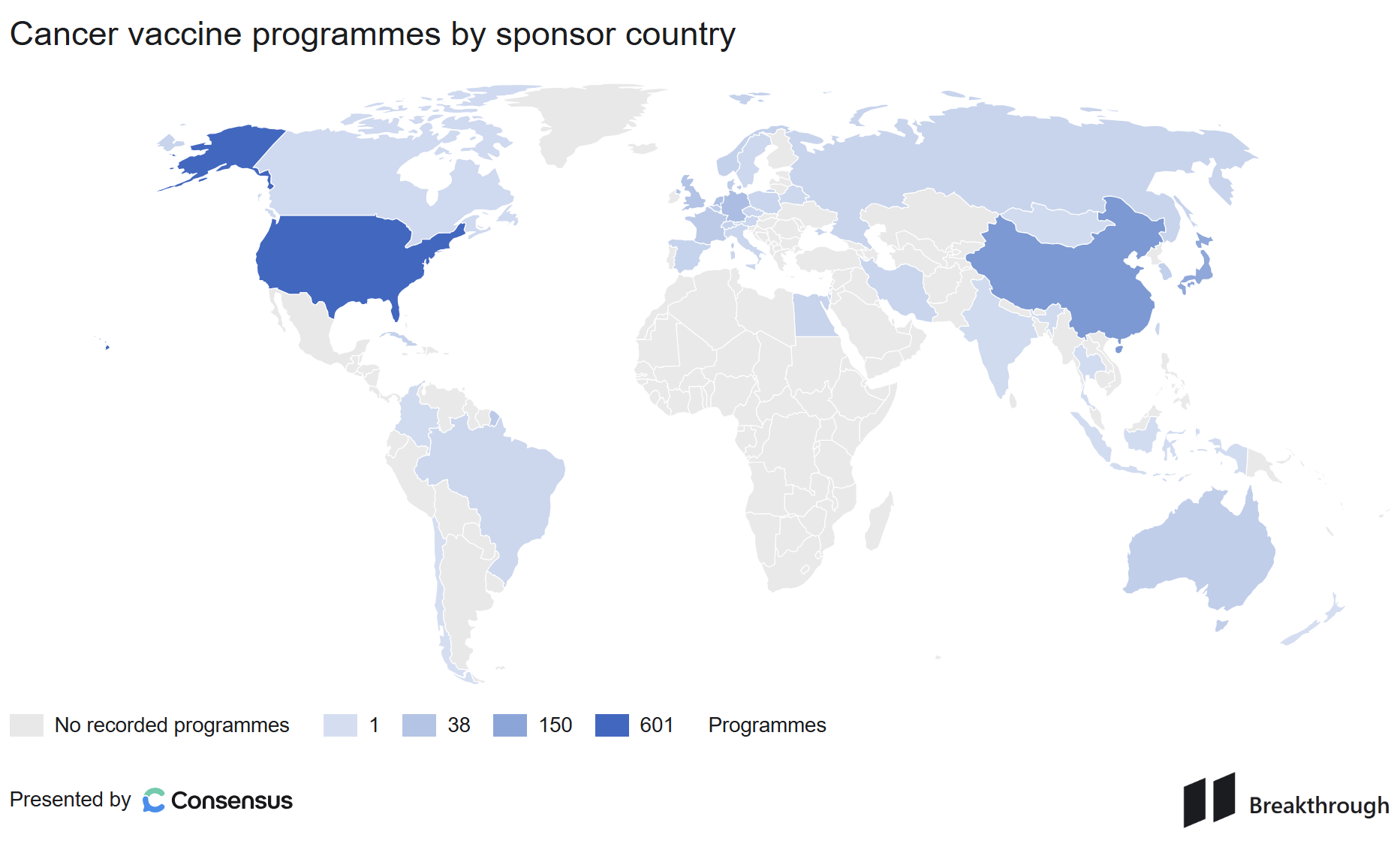
That’s shown in more detail here — Germany is in 4th place, with 57, and then the Netherlands (47) and the UK (41).