


Here, I make the case that, maybe, big pharma’s not so bad. The full talk is on Youtube, below, followed by the slides and discussion.
This work is brought to you by my partners at Consensus, the AI agent for research. Get a free trial with my link.
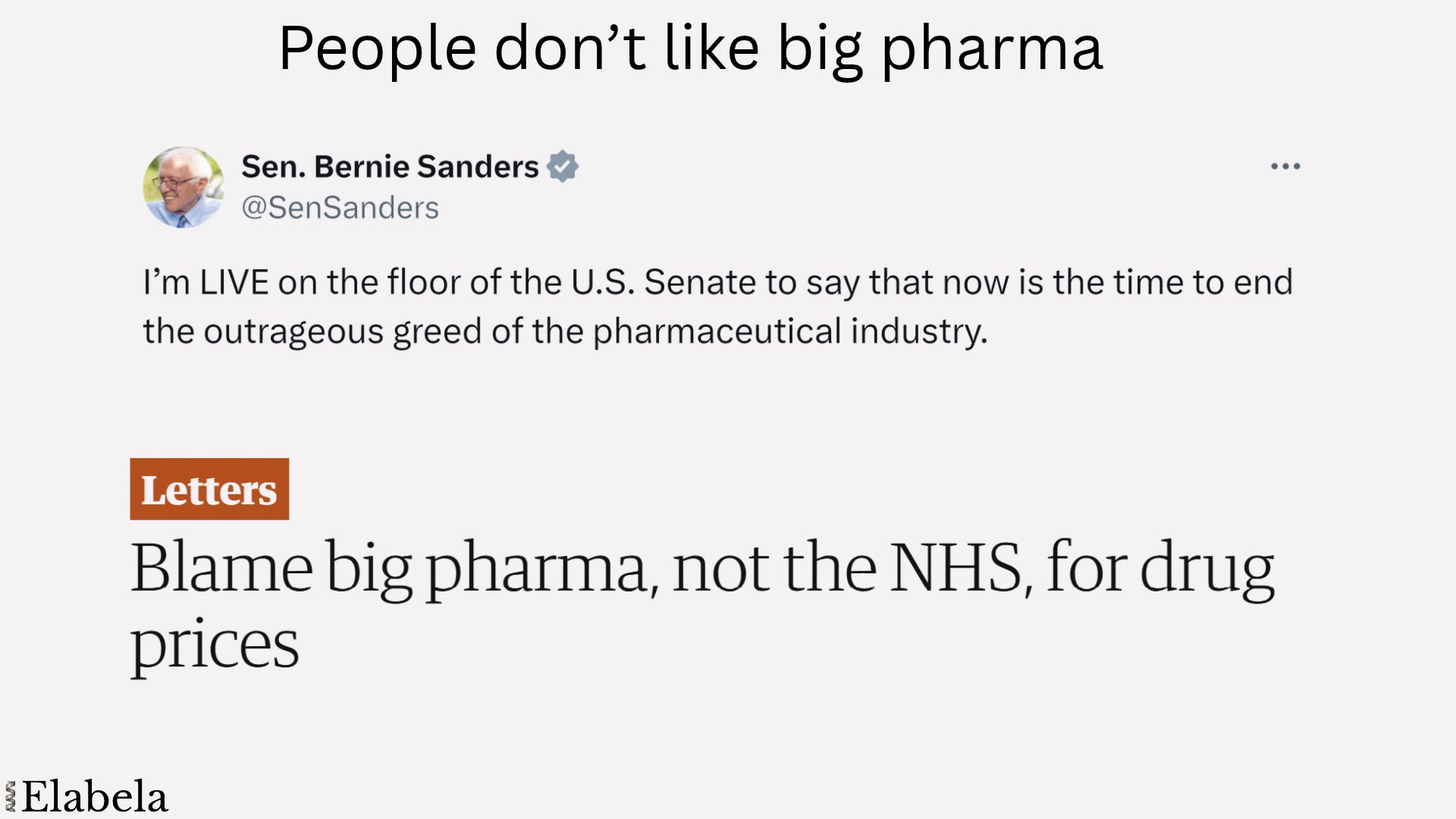
To start — people really don’t like big pharma:
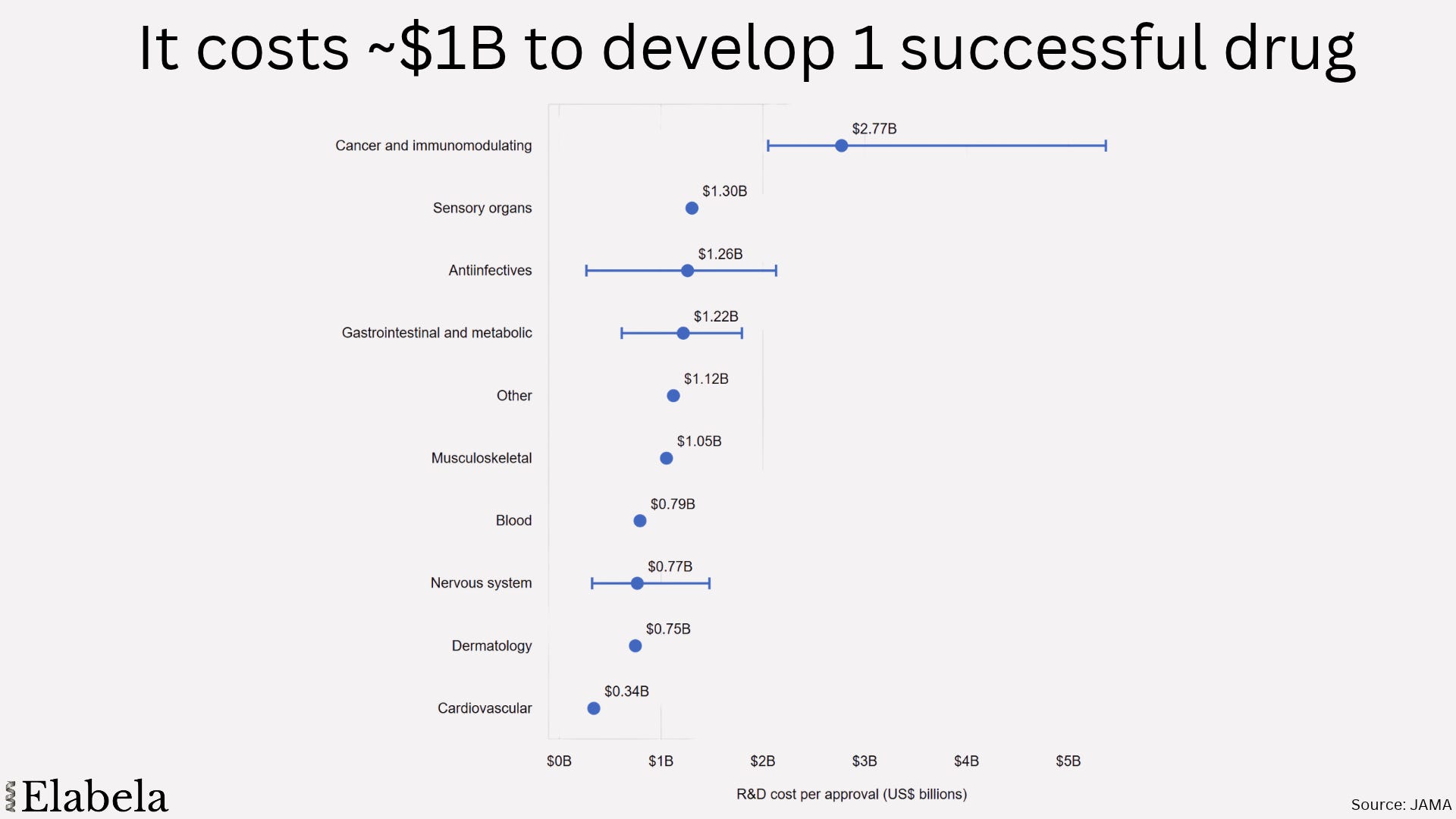
But… drug development is hard, risky and expensive — it costs an average of $1B to develop a successful drug.
This includes the cost of failures (it has to — we don’t know what will and won’t work, we just have to do it). Cancer trials are particularly expensive, where only 5% of drugs make it from the first human trial to approval.
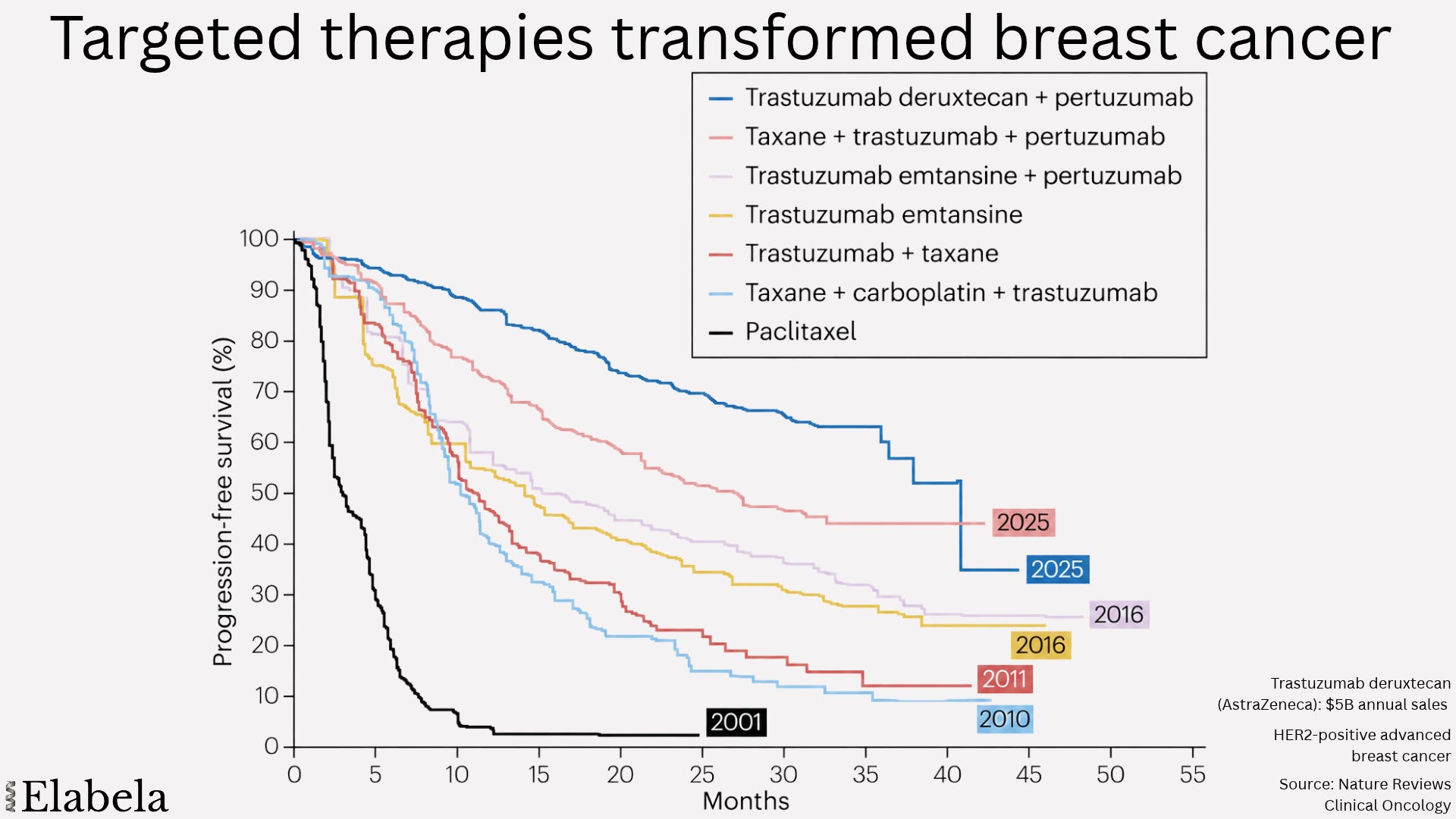
Not every trial ends in failure, though. Over the next few slides, I tell stories where big pharma has treated, cured, and prevented major diseases. Starting with breast cancer (HER2-positive, advanced breast cancer to be specific), an analysis we published in Nature Reviews Cancer.
In 2001, chemotherapy was the best treatment, and outcomes were extremely poor (the black line in the chart below). A series of breakthroughs, most recently with a HER2 antibody-drug conjugate, which specifically delivers chemotherapy to cancer cells, have transformed survival.
That drug, trastuzumab deruxtecan, is made by Astrazeneca, and it does ~$5B in annual sales.
Next: hepatitis C has been cured.
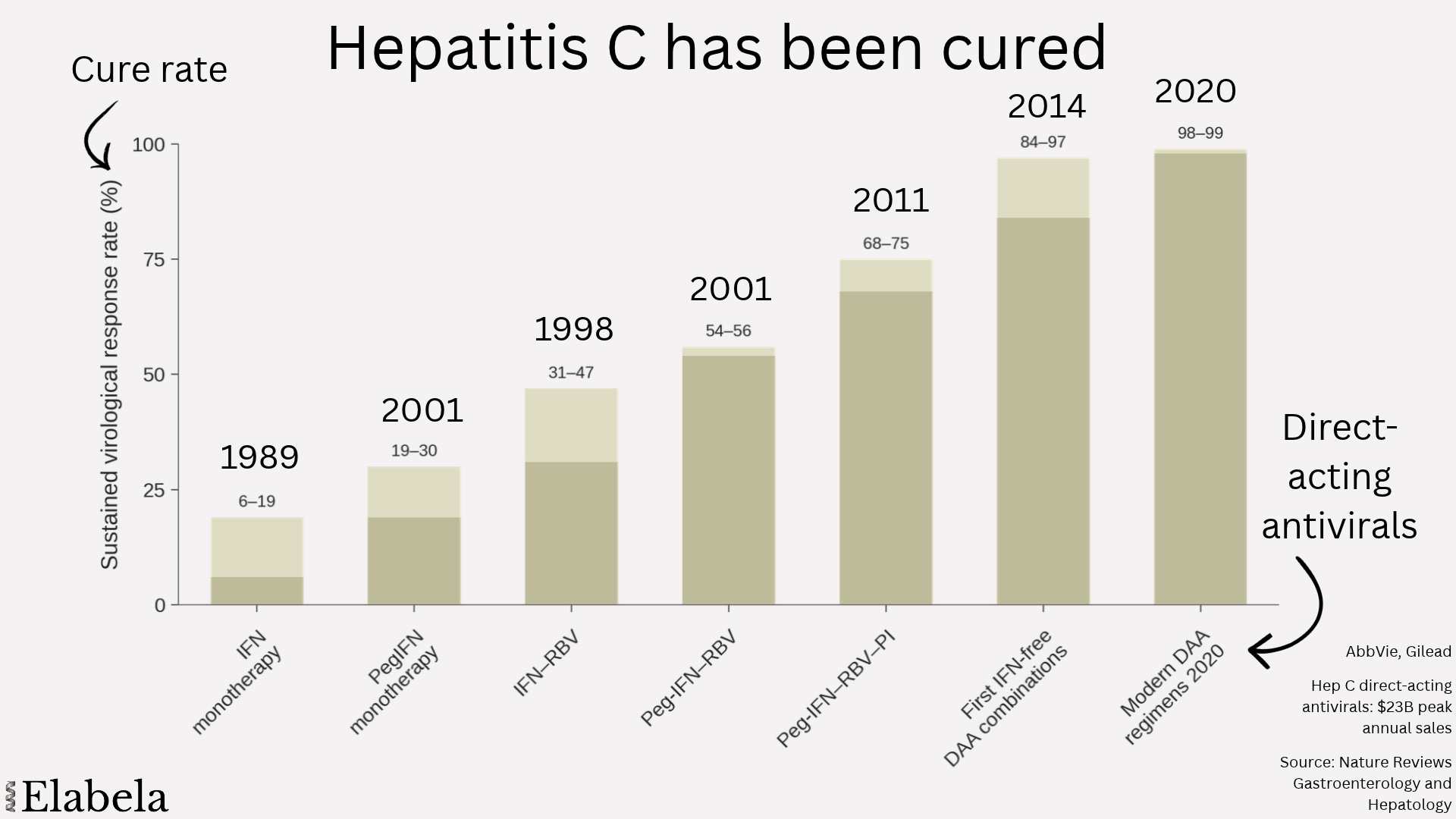
In 1989, the best therapy, inteferon, cured as many as 19% of hepatitis C patients. Successive advances improved this, and today 99% of patients can be cured.
These cures were developed by AbbVie and Gilead — at their peak, they did a collective $23B in sales.
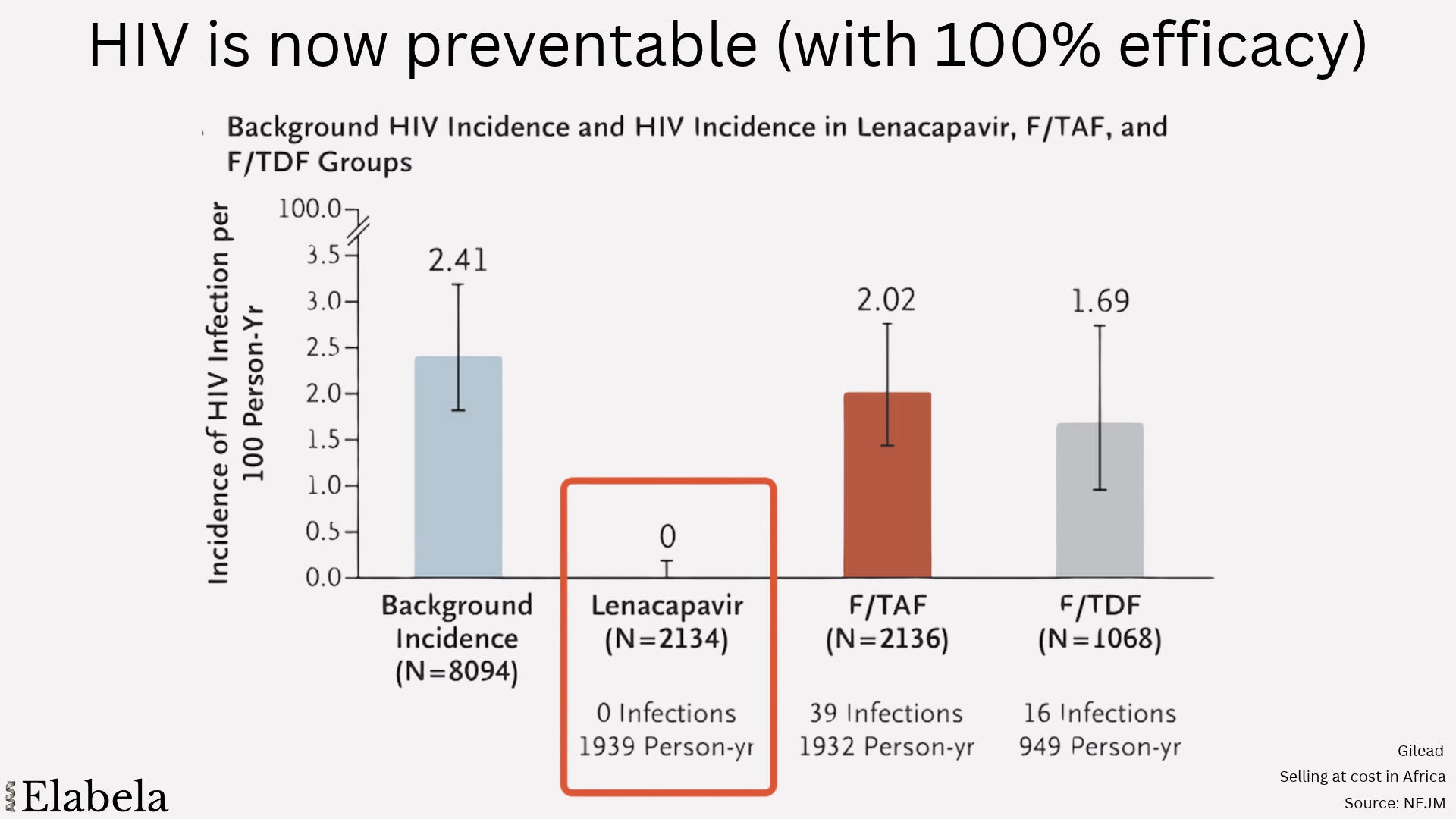
HIV is the next example — it’s now preventable. Lenacapavir is a twice-yearly injectable, that, in its phase 3 trial, prevented HIV infections with 100% efficacy: of 2134 patients in the trial, 0 contracted HIV.
Big pharma don’t always make loads of money from their drugs — this one’s made by Gilead, and they’re selling it at cost.
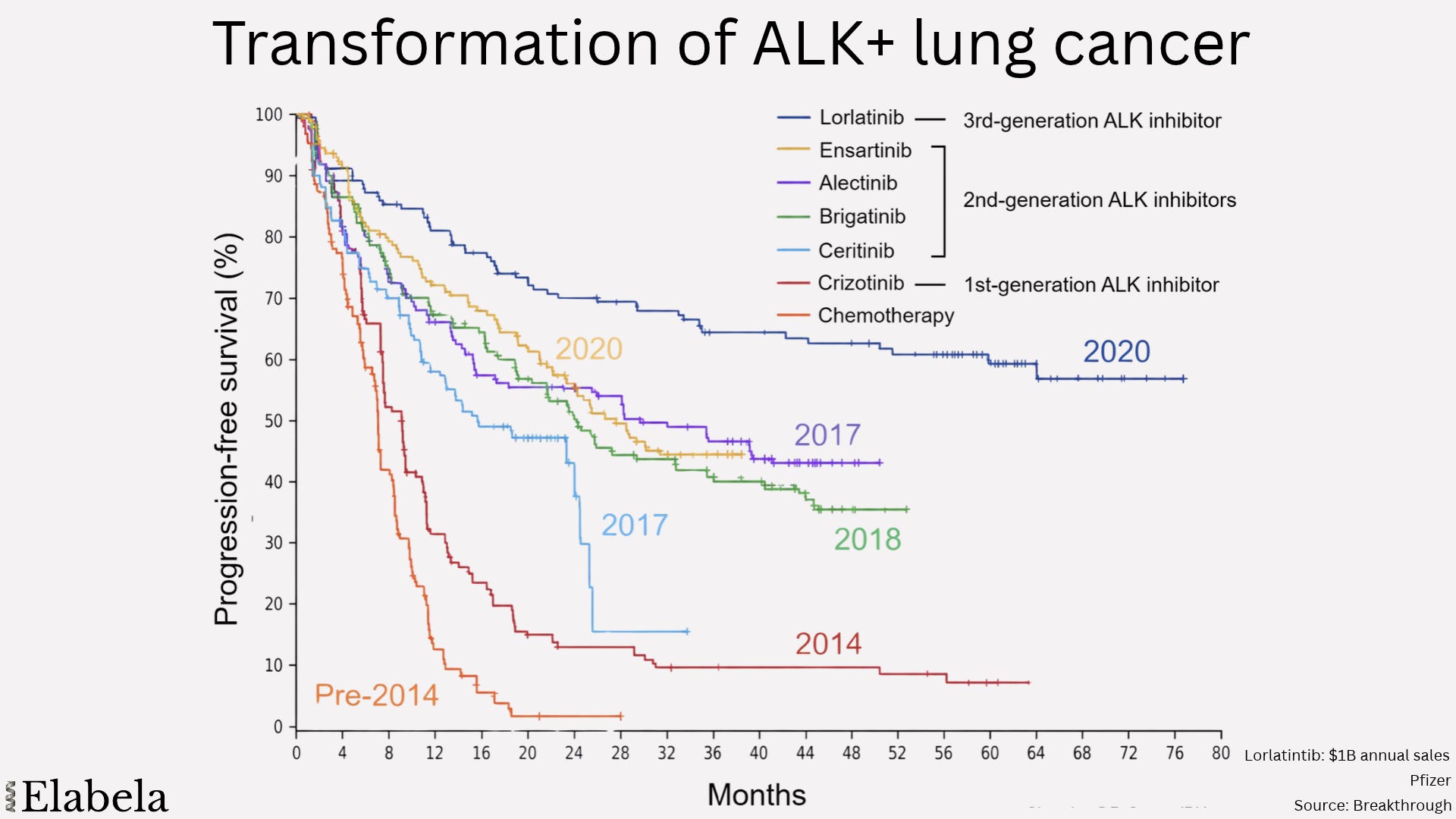
ALK-positive lung cancer is a subset of lung cancer that’s not associated with smoking, typically affects younger patients, and disproportionately affects women.
Before 2014, there were no targeted therapies, chemotherapy was the best option, and outcomes were extremely poor. ALK inhibitors, spearheaded by Pfizer, transformed the landscape. The 3rd generation of ALK inhibitors is lorlatinib (made by Pfizer), which now does ~$1B in annual sales.
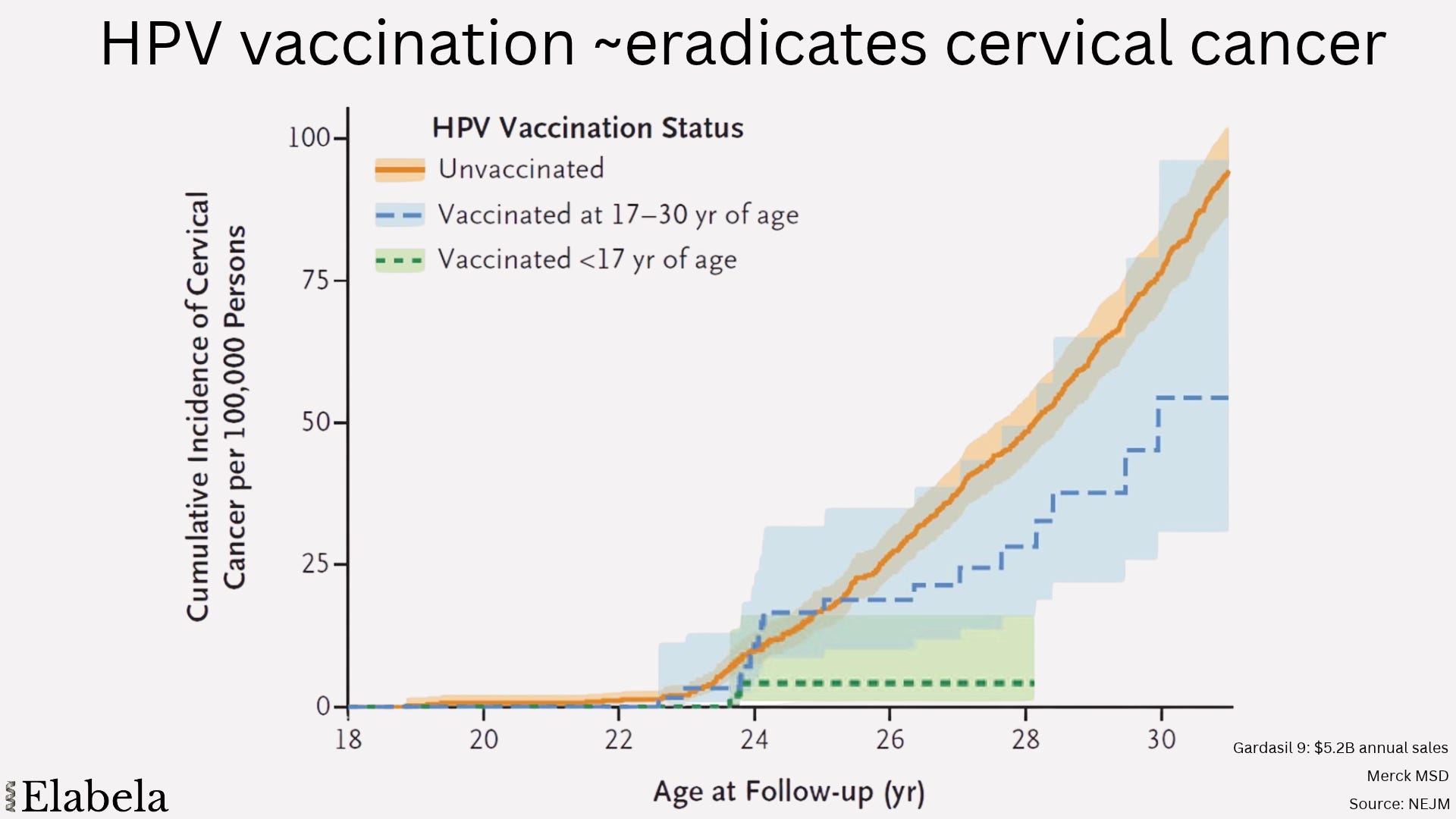
Cervical cancer is preventable now.
This is thanks to the HPV vaccine: when given at <17 years of age, the risk of cervical cancer is almost 0.
This vaccine, Gardasil-9, is made by Merck, and it sells about $5B per year.
Life expectancy in cystic fibrosis is (almost) normal now.