


1. Restoration of vision in the most common form of incurable blindness
The most common cause of incurable blindness in adults is dry age-related macular degeneration. The severe form of this, geographic atrophy, leads to loss of cells in the retina — and causes 20% of blindness in the US.
The symptoms are blurring of vision, usually with a central blind spot (where the macula is). There are a couple of therapies approved that slow down the atrophy, and others — even gene therapies — in the pipeline, but we don’t have anything at the moment that can fully restore vision.
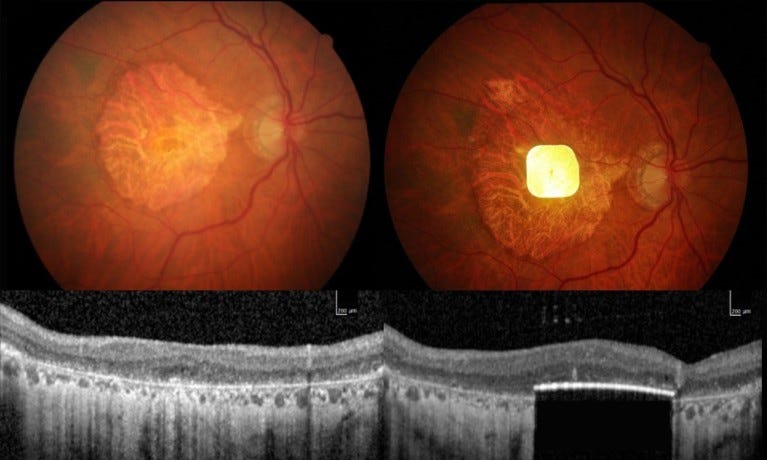
The underlying issue is loss of photoreceptors in the retina, which transduce light into electrical signals that can be processed and sent to the brain. This paper reports an implant that’s inserted into the back of the eye, under the retina, to replace the function of the lost photoreceptors.
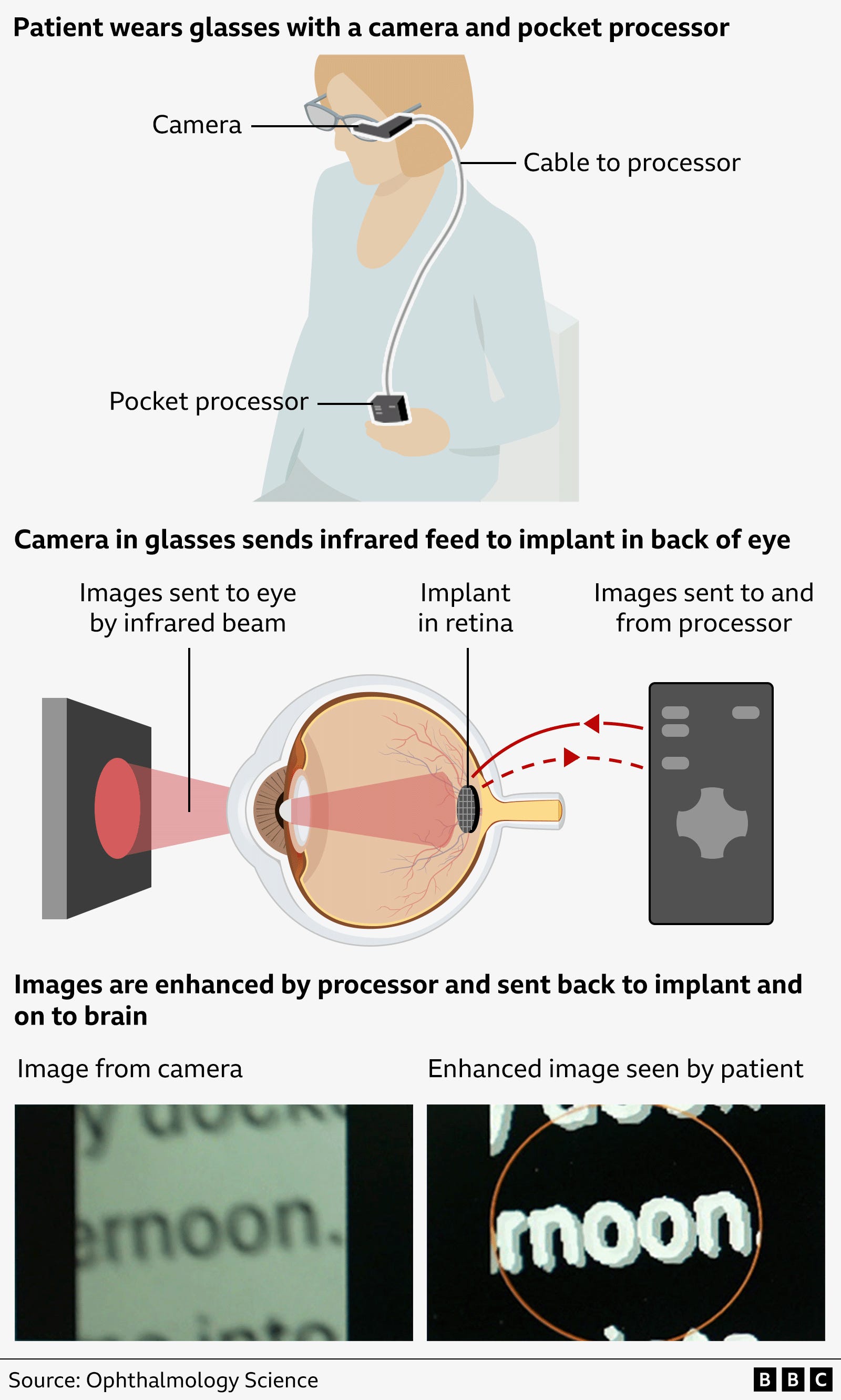
Patients need to wear specialised glasses, too, that capture images and send infrared signals to the implant, like this:
Of 32 patients given the implant, all of whom were legally blind at baseline, 27 regained the ability to read. It takes a few months to figure out how to interpret the images — and requires eye surgery (so it’s not for the faint of heart!).
The implant and glasses are made by Science Corp, and are still being trialled in Europe and the US, with no regulatory approvals (yet).
2. Semaglutide doesn’t need weight loss to protect the heart
Semaglutide has soared to the second biggest drug in the world (by sales) thanks to its approvals for obesity, type 2 diabetes, chronic kidney disease, and cardiovascular risk reduction. It’s generally thought that the semaglutide achieves this by weight loss — but this study challenges that.
In a re-analysis of a major trial, semaglutide reduced cardiovascular risk, irrespective of how much weight patients lost.
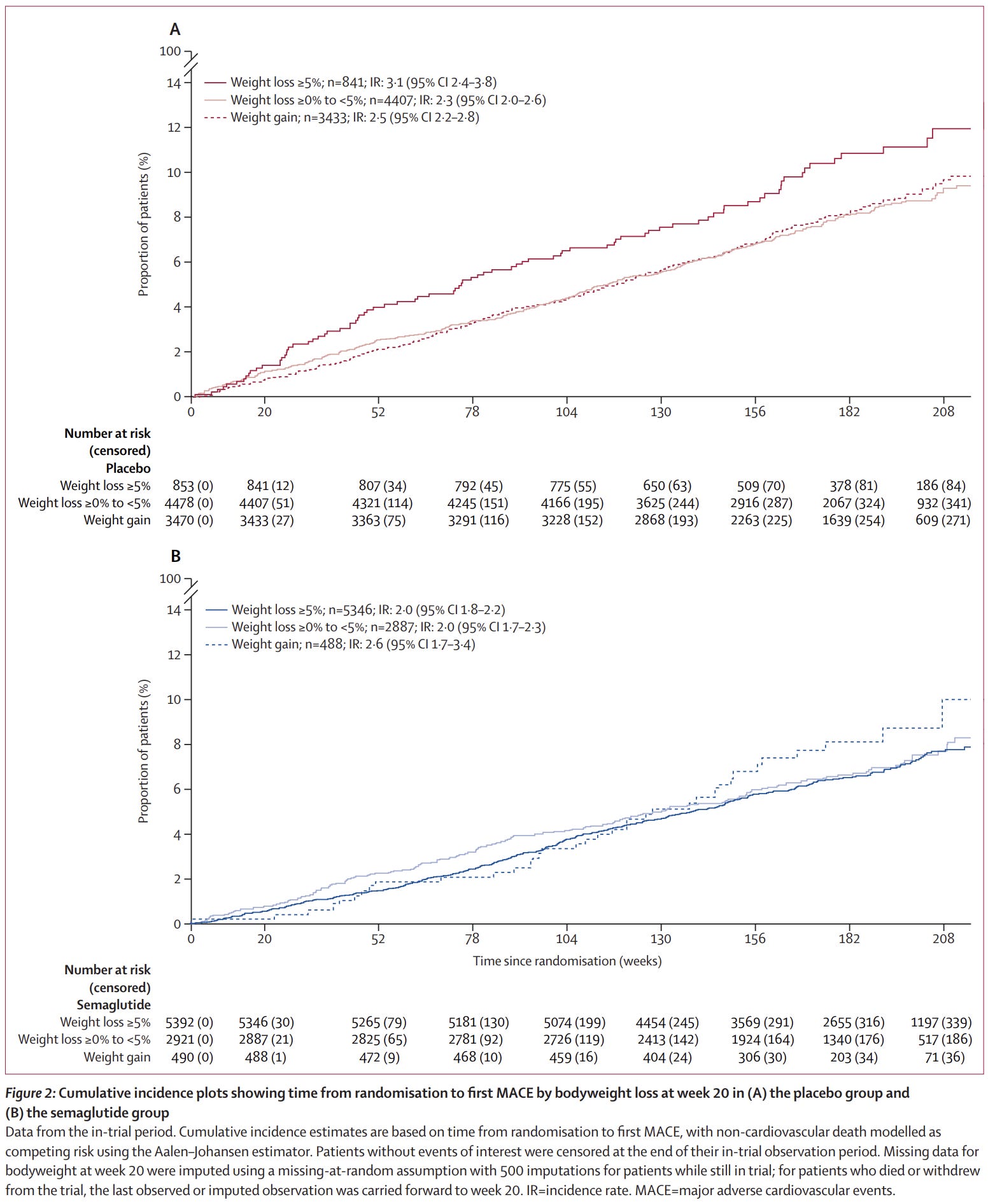
So there wasn’t a relationship with weight loss, but there was with waist circumference — which explains about 33% of the cardiovascular benefit of semaglutide. Waist circumference gives an idea of the visceral fat (that surrounds organs) rather than the subcutaneous fat (that sits under skin).
What about the remaining 67% of the benefit? This probably comes from the direct anti-inflammatory benefits of semaglutide, or because of its direct effects on vessels.
3. Progress for early cancer detection
Early detection is the future of cancer. To illustrate why it’s so important, here are some numbers. 5-year survival rates for colorectal cancer, pancreatic cancer, and prostate cancer (for example) when diagnosed after distant spread are 13%, 3%, and 37%, respectively. If diagnosed while still local, 5-year survival is dramatically better: 91%, 44%, and >99%, respectively.
Galleri is a multi-cancer early detection blood test that reads methylation patterns on the DNA shed from cancer cells (this is called cell-free DNA, or cfDNA). Through this approach, it aims to detect over 50 cancers in a single test.
In this huge trial (25,000 patients, all aged 50+), Galleri detected a cancer signal in 216 people — 133 of which were subsequently diagnosed via formal testing. 196 received a false negative test — they received no cancer signal, but cancer was later detected.
This means the the positive predictive value for the test was 62%, and the negative predictive value was 99.1%:
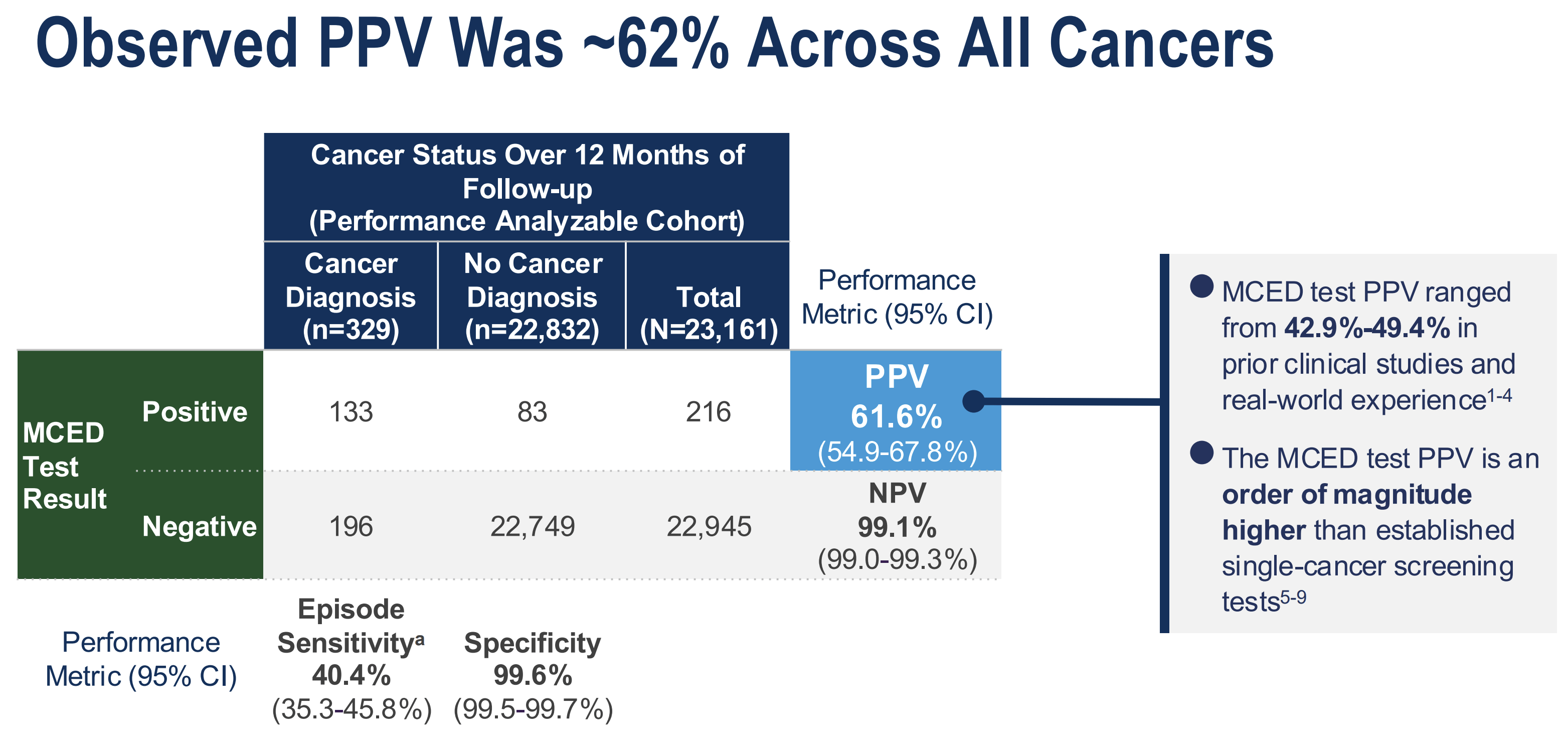
These data are impressive, but there’s still a long way to go: the sensitivity of detection drops for detecting early stage cancers (where we really want it to work); there are potential downstream harms (from false alarms and overdiagnosis); and there’s no data (yet) that kits like this can improve survival.
This space is very very hot, though: other competitors include Cancerguard (Exact Sciences). The Galleri test is already available in the US — but only via prescription — at a cost of $949. The next step is a huge randomised controlled trial run in the UK, with 140,000 patients. Data are expected in 2026…
4. A molecule that reduces inflammation in the brain
This is an extremely interesting new molecule: an oral, brain-penetrant NLRP3 inhibitor. (Usually I don’t spell out molecule names, because they don’t add much. NLRP3, for example, stands for ‘NLR family pyrin domain containing 3’.)
