


Doctors only spend about 90 minutes a day with patients. Almost six hours are spent on non patient-facing work (3.5 hours of which is just admin). Something needs to change, and AI could be the catalyst.
In medicine, we need models that are multimodal — that can work through difficult diagnoses, interpret clinical images, find important details buried in years of notes, and choose the best investigation. And we need models that can do things — check guidelines, write referrals, and organize the next steps in a patient’s care.
The landscape of medical AI models is becoming increasingly competitive. Generalist models from the US, like OpenAI’s GPT-6.2 Astra and Anthropic’s Claude Fable 5.2, and China, like DeepSeek’s V4.1-Flash, now sit alongside a growing number of medical specialists — including, new this week, the LingSante models, from Chinse AI lab AntLing.
Closed models, like Astra and Fable, offer managed access and infrastructure, but leave hospitals dependent on their providers. Open models, like LingSante, can be adapted and run locally, giving hospitals greater control over both the model and patient data.
But which models are actually best at what? Here, we look at how they compare across a range of benchmarks — and put them through their paces ourselves, with clinical cases of increasing difficulty, to see what they can already do, where they struggle, and how close we are to medical AI that’s ready for prime time.
The benchmarks
Reasoning and tool use
There are really two things we want medical AI to be good at: reasoning through a clinical problem (e.g. identifying the most likely diagnosis or choosing the best investigation) and actually carrying out tasks (e.g. searching medical records, checking clinical guidelines or organizing referrals). The latter requires agentic capabilities and the ability to interact with external tools — something that will be particularly important for AI to alleviate the admin burden.
The benchmarks in the following figure test both. They show show that the leading AIs for medical reasoning are still the closed US models: GPT-6 Astra and Claude Opus 5.5.
What’s interesting, though, is how competitive the open models are becoming: LingSante-3.1-flash, trained specifically for medicine, actually outperforms the closed models on some agentic benchmarks.
These are, of course, developer-reported benchmarks, but the prospect of an open medical model with frontier-level reasoning and competitive agentic capabilities is very exciting.
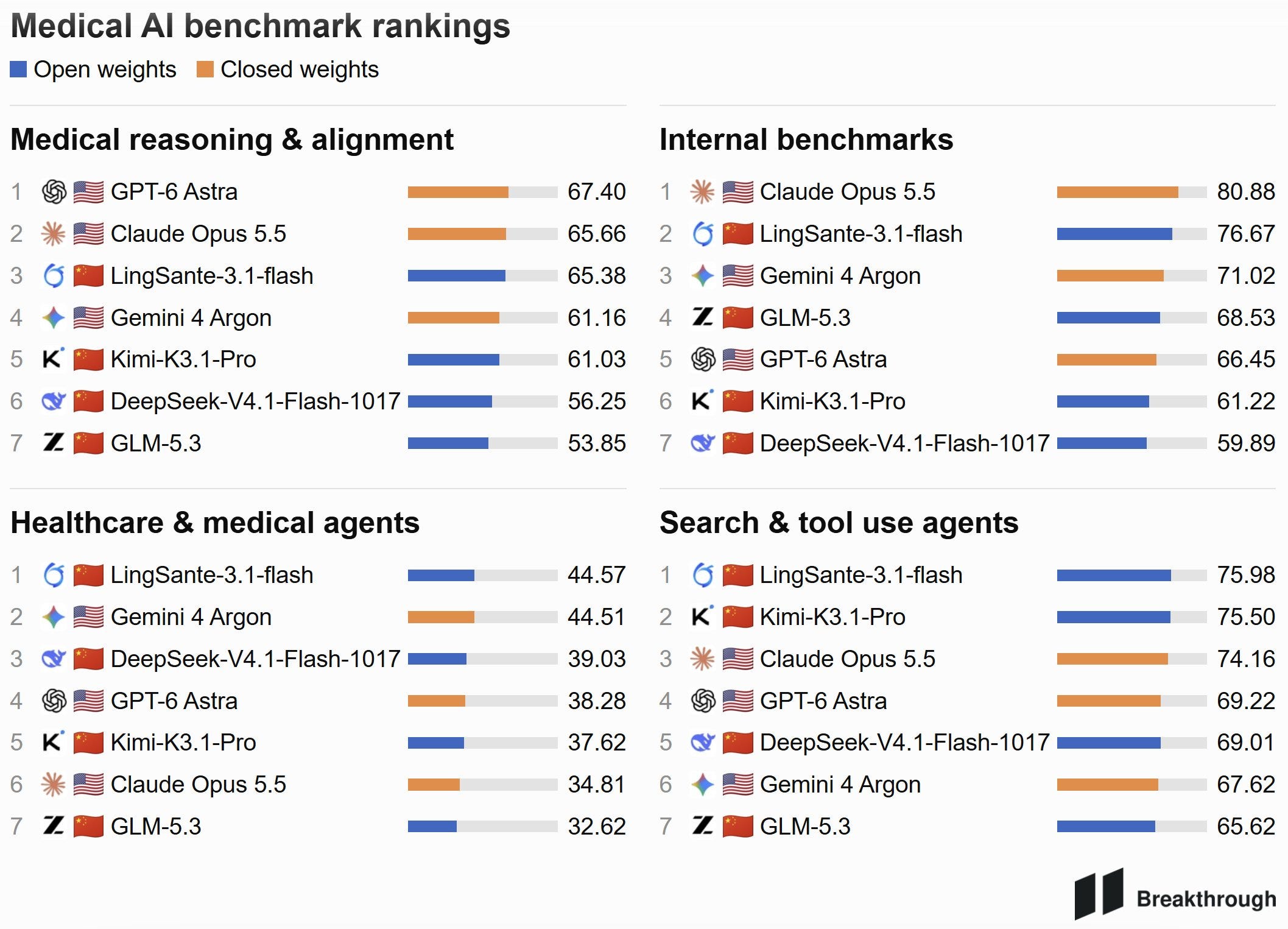
The benchmarks above span four categories:
Medical reasoning and alignment: HealthBench Professional, DiagnosisArena-MCQ, MentalHealthBench, MedXpertQA-Text.
Internal medical benchmarks: AFUMED-LCR, MedEthicAlign, InclusionMed-DxFiles, AFUMED-SearchTrace.
Healthcare and medical agents: PhysicianBench, CHI-Bench, EHR-Complex, TeleMedAgentBench.
Search and tool use: HLE (text-only, with tools), BrowseComp (with context), Tau3-Banking, MCP-Atlas.
LingSante-3.1-flash is limited to text, though, so how do models fare with clinical images?
Medical images
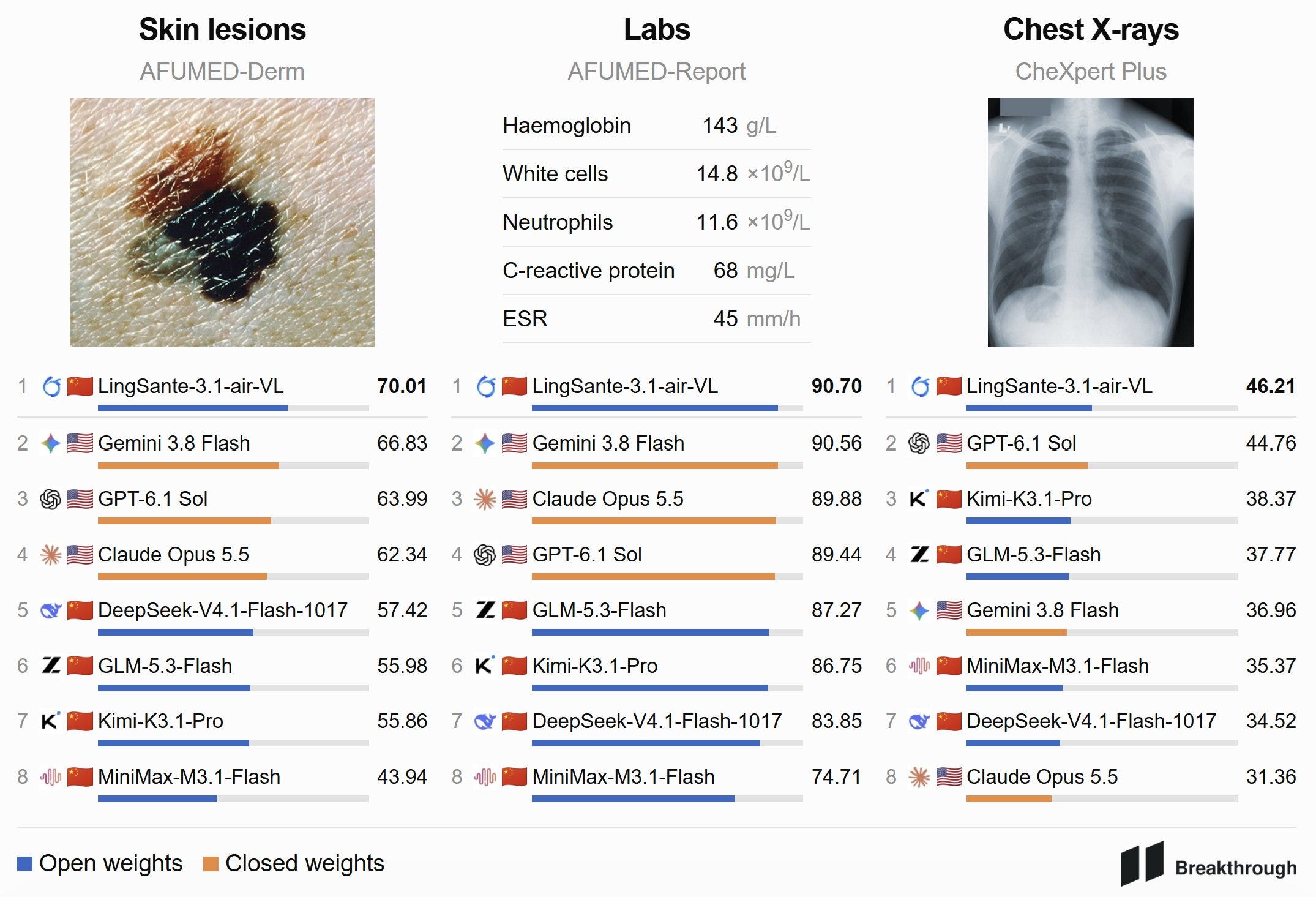
The benchmarks that follow specifically assess multimodal capabilities: interpreting skin photographs, chest X-rays, and laboratory results. Ant Ling’s image model, LingSante-3.1-Air, comes out on top here, too, outperforming the leading closed, US generalist models across the reported vision benchmarks.
This suggests that, at least for certain tasks, specialist, open models can compete with — and maybe even outperform — the generalist frontier models.
My testing
Benchmarks are useful, but benchmaxxing is a challenge — models optimized to score well on benchmarks. So we wanted to test these models out ourselves.
Case 1: easy
First, we tested the image model, LingSante-3.1 Air. We put it through its paces on a clinical case with skin images, chest radiographs, blood tests, agentic workflows and clinical reasoning.
The clinical case
A 27-year-old woman presents with painful lumps on both shins, which developed over several days. They are tender to pressure.
The model needs to describe the dominant lesion, shown below, its distribution, and what the most likely diagnosis is.
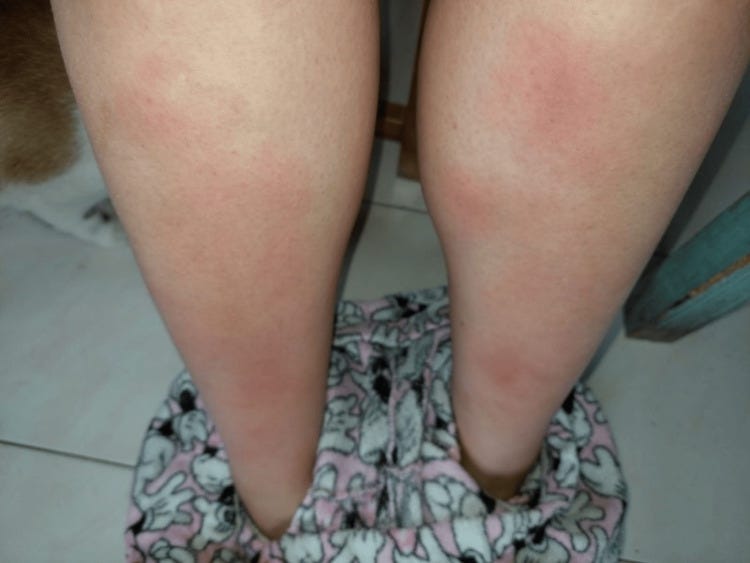
In our hands, both LingSante-3.1-Air and GPT-6.2 Astra get this question right: these are tender erythematous nodules, on the shins, and the most likely diagnosis is erythema nodosum.
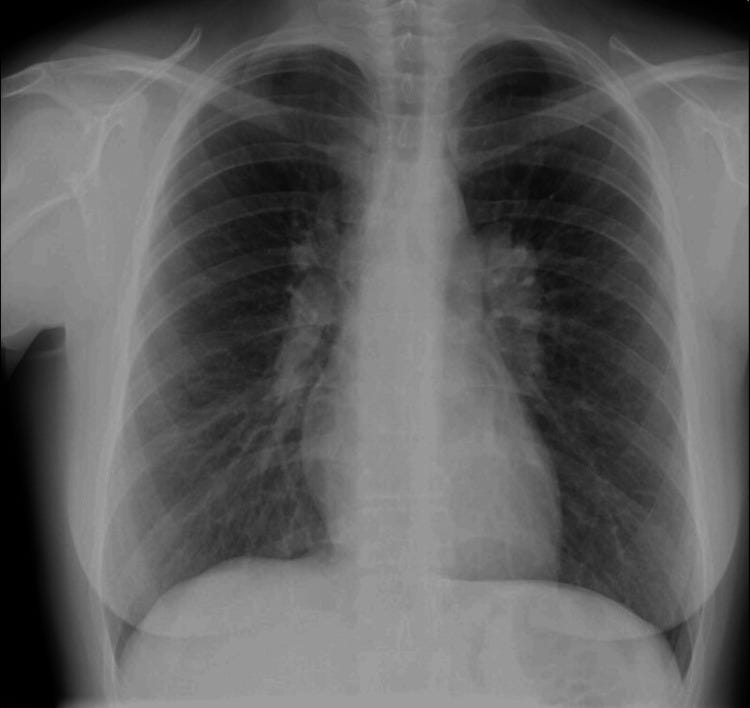
Two weeks later, this same patient develops swelling in both ankles. She has no cough or breathlessness, but her clinician obtains the following chest X-ray:
And these lab tests:
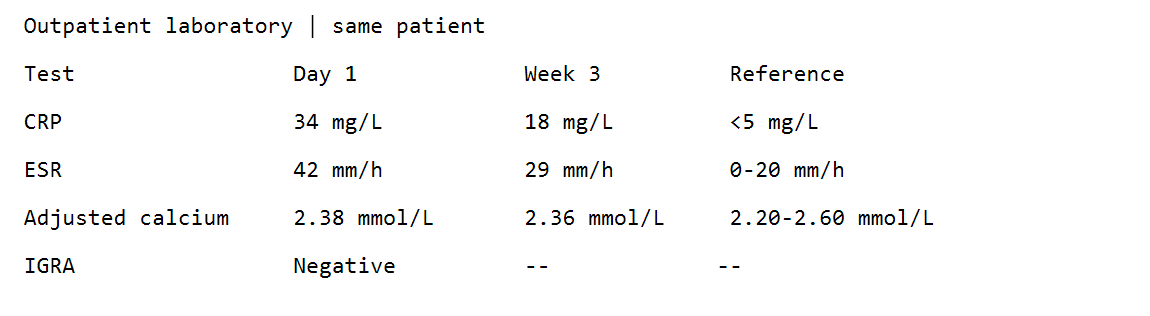
LingSante-3.1-Air and Astra get this right, too. Both accurately diagnose acute sarcoidosis (aka ‘Löfgren syndrome’), citing the erythema nodosum, bilateral ankle inflammation, and bilateral hilar lymphadenopathy. The normal calcium levels, though sometimes raised in sarcoidosis, do not rule it out. So, 100% for both models on image interpretation.
We also tested both models on an ethical question and a communication task, as shown in the video below. Here, Astra had the edge: it was able to call external tools where LingSante couldn’t, and performed better on the communication task.
Case 2: intermediate
The question above, I classify as easy. The next one’s harder!
The clinical case
An 11-year-old boy’s left hand was photographed after five minutes in water at 37°C. Panel A was taken before starting a new medication, and panel B one month later. What changed between panels? Name the clinical sign and the inherited condition it suggests. Which targeted treatment could explain the change, and how does it work?
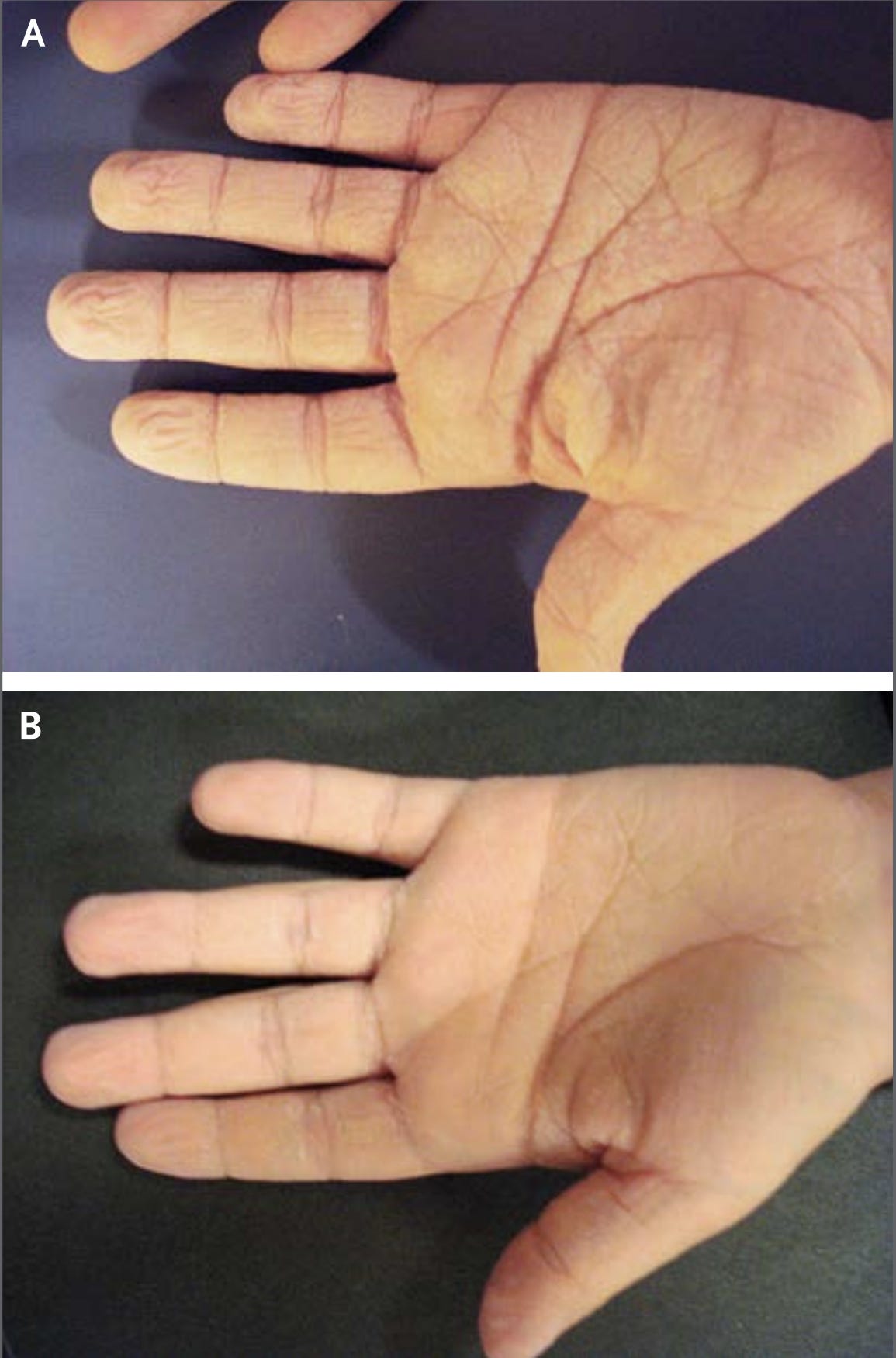
There are 11 points available here, as follows:
3 points: Identify fingertip or palmar wrinkling in A, that improves in B.
2 points: Identify aquagenic wrinkling of the palms.
2 points: Identify cystic fibrosis as the most likely associated condition.
2 points: Name ivacaftor as the targeted treatment.
2 points: Explain that ivacaftor increases the opening probability of CFTR chloride channels.
GPT-6.2 Astra, Claude Fable 5.2, Gemini 4 Carbon all scored 11/11. LingSante-3.1-Air scored 6/11. Interestingly, the model got the image interpretation backwards: it described smooth digits in panel A and wrinkling in panel B.
LingSante-3.1-Air scored full marks, though, on the reasoning part, correctly identifying cystic fibrosis, naming ivacaftor, and explaining its mechanism of action.
Case 3: hard
Onto a hard case!
The clinical case
A 55-year-old man is experiencing recurrent chest pain, dyspnoea, headache and pallor over the preceding 24 hours. He is distressed, with cold, clammy skin. His initial blood pressure is 250/140 mmHg. Continuous invasive haemodynamic monitoring is shown in the figure below.
What’s the diagnosis? Describe the haemodynamic findings and explain what the red and black arrows most likely represent.
Here’s the image:
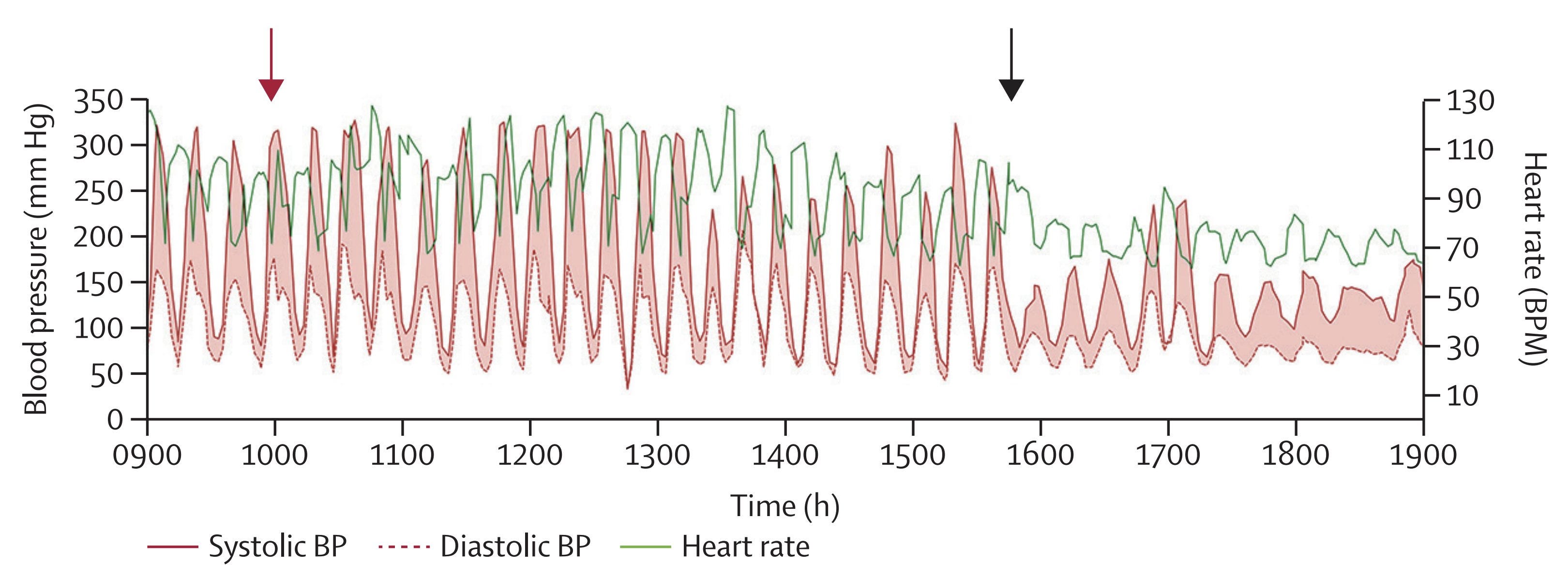
There are 11 points up for grabs here.
3 points: Diagnose phaeochromocytoma crisis.
2 points: Recognize cyclical hypertension and hypotension.
2 points: Identify reciprocal changes in heart rate.
2 points: Identify that the red arrow marks the administration of alpha-blockade.
2 points: Identify that the black arrow is where treatment takes effect.
This case is hard, even for the frontier models. Neither GPT-6.2 Astra nor Claude Fable 5.2 managed full marks, tying at 9/11. LingSante-3.1-Air scored 7/11.
Conclusions
Across a broad set of benchmarks, the open LingSante models perform extremely well. In my own testing, maybe they’re not quite ready for prime time yet — including on the agentic task (though it is possible that this was a fault of my testing, not the model itself). The most revealing mistake was in the cystic fibrosis case, with the hand images: it got the disease and treatment right, but reversed what the photos showed.
Nonetheless, I’m enthusiastic about open models for medicine. They’re cheaper to run, adapted to local clinical practice, and could be deployed within a hospital’s own infrastructure.
Much of the hype around medical AI centres on its ability to solve increasingly difficult (occasionally unrealistic) cases — but some of its biggest value could come from automating mundane tasks, and saving time. We should be benchmarking these models not just on clinical intelligence, but on the amount of clinical time they can actually give back.
Ultimately, from my perspective, I think we’ll eventually have models like this everywhere. I want it writing discharge summaries, I want it writing prescriptions, I want it doing referrals. Doctors should spend time with patients, not on paperwork.
Methods and sources
We used Benchclub to run the tests. The links to each full report are here:
Case 1: painful lumps on shins.
Case 2: wrinkling hands.
Case 3: blood pressure swings.
The LingSante models on Hugging Face:
Sources to the images in cases
Thank you for reading! Curious to hear your thoughts, please let me know.
Open versus closed models feels like a big question for health systems that need to keep patient data in house. Which side looked stronger in your deep dive, and why?