


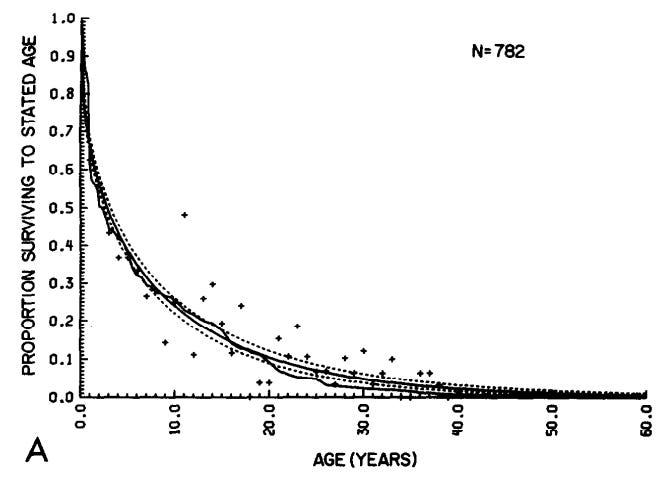
The Tetralogy of Fallot is ingrained in most medical students’ minds: stenosis or atresia of the pulmonary artery, a ventricular septum defect, right ventricle hyperplasia and an overriding aorta. First recognised as a syndrome in the late 19th century, it had an abysmal outcome without surgery, as shown in the figure below.
It took until 1945 for any real improvement in the care for these patients to be developed. Helen B. Taussig was a pediatric cardiologist at Johns Hopkins University, well read in cardiac physiology. Inspired by techniques to ligate a patent ductus arteriosus, another common heart defect, she worked out that artificially keeping the ductus arteriosus open might provide relief for patients with Fallot’s Tetralogy.
