


I recently went to China for its biggest cancer conference (CSCO) and it’s clear there is a lot of novel science happening. The frontier of science is the first-in-human clinical trial — where a new drug is tested in people for the first time — so I wondered: what novel programs are entering human trials in China this year?
Background
It’s true that Chinese biotechs produce a lot of copycat (‘me-too’) drugs. But some of the most novel medicines are made in China, too, and now most deal value goes to Chinese biotech — 68% of all deal money this year (compared to 4% only 5 years ago). And about 50% of the world’s phase 1 trials (which test new drugs) happen in China. To see the medicines of the future, we have to look towards China.
Landscape of the new drugs
According to our analysis, China has cleared 160 novel drugs for first-in-human clinical trials this year — so far.
Methods
‘Novel’ here means the first therapy cleared to enter human trials — either with a genuinely new mechanism of action, or the first use of that mechanism in a given indication.
As the source, we used the Chinese National Medical Products Administration (NMPA) Center for Drug Evaluation (CDE) clinical trial permission database. We included any novel drug that received clearance to start human trials (as an Investigational New Drug, IND).
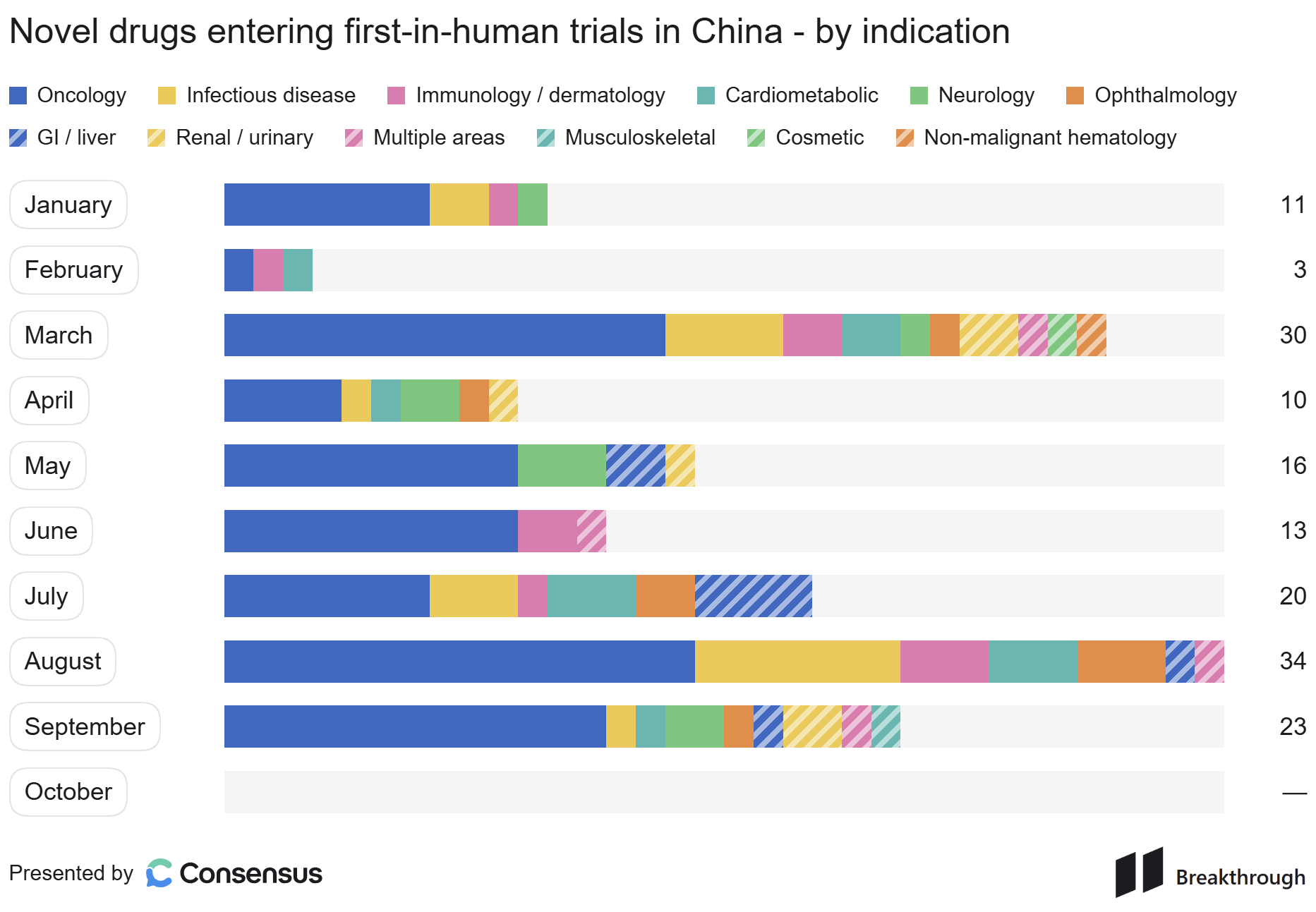
The most common indications are shown in the figure below. The biggest group is oncology, followed by infectious disease, then immunology.
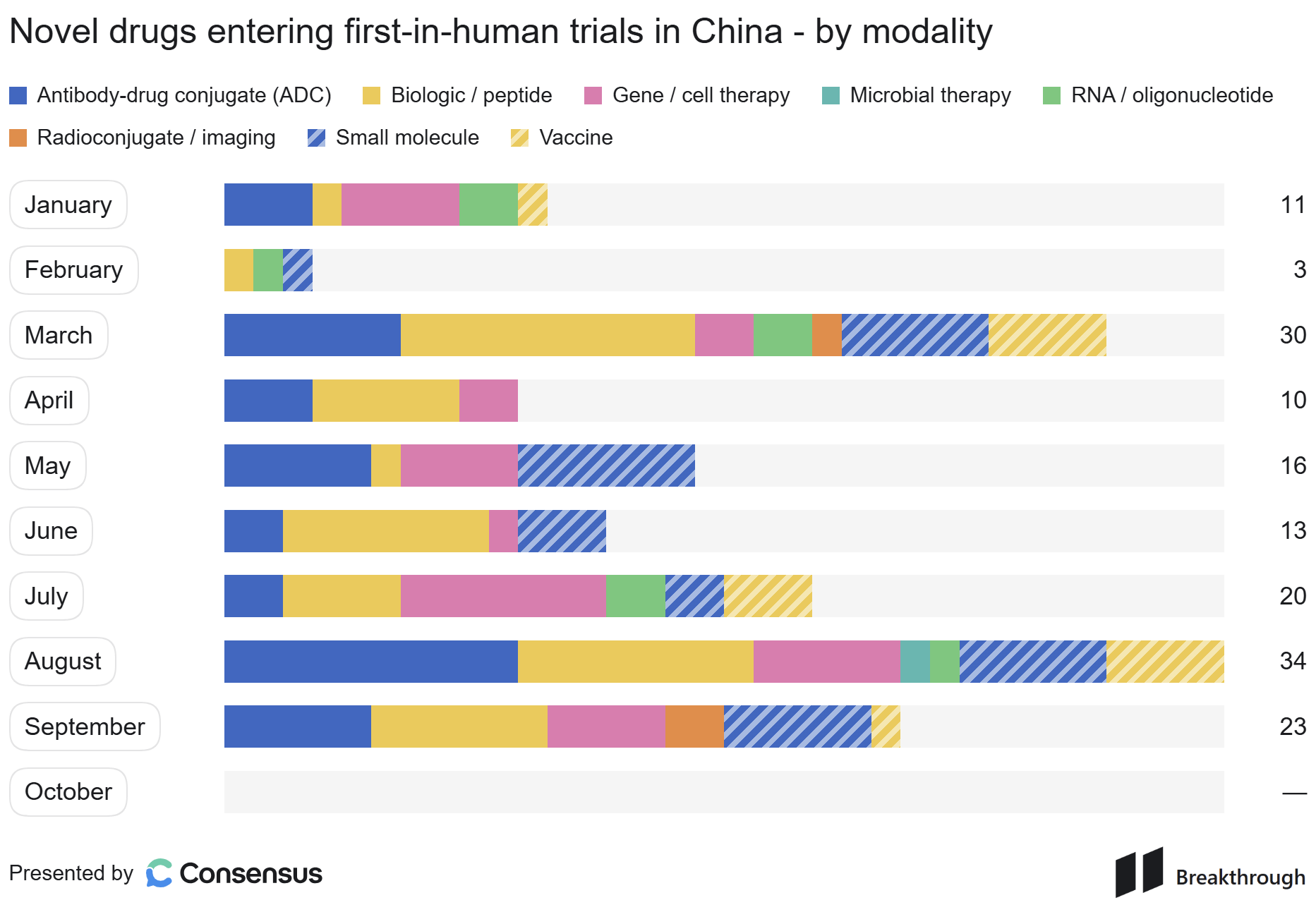
The most common novel modalities, as follows, are antibody-drug conjugates (ADCs) and biologics.
The most novel programs
There are a lot of interesting programs here.
The most novel infectious disease programs
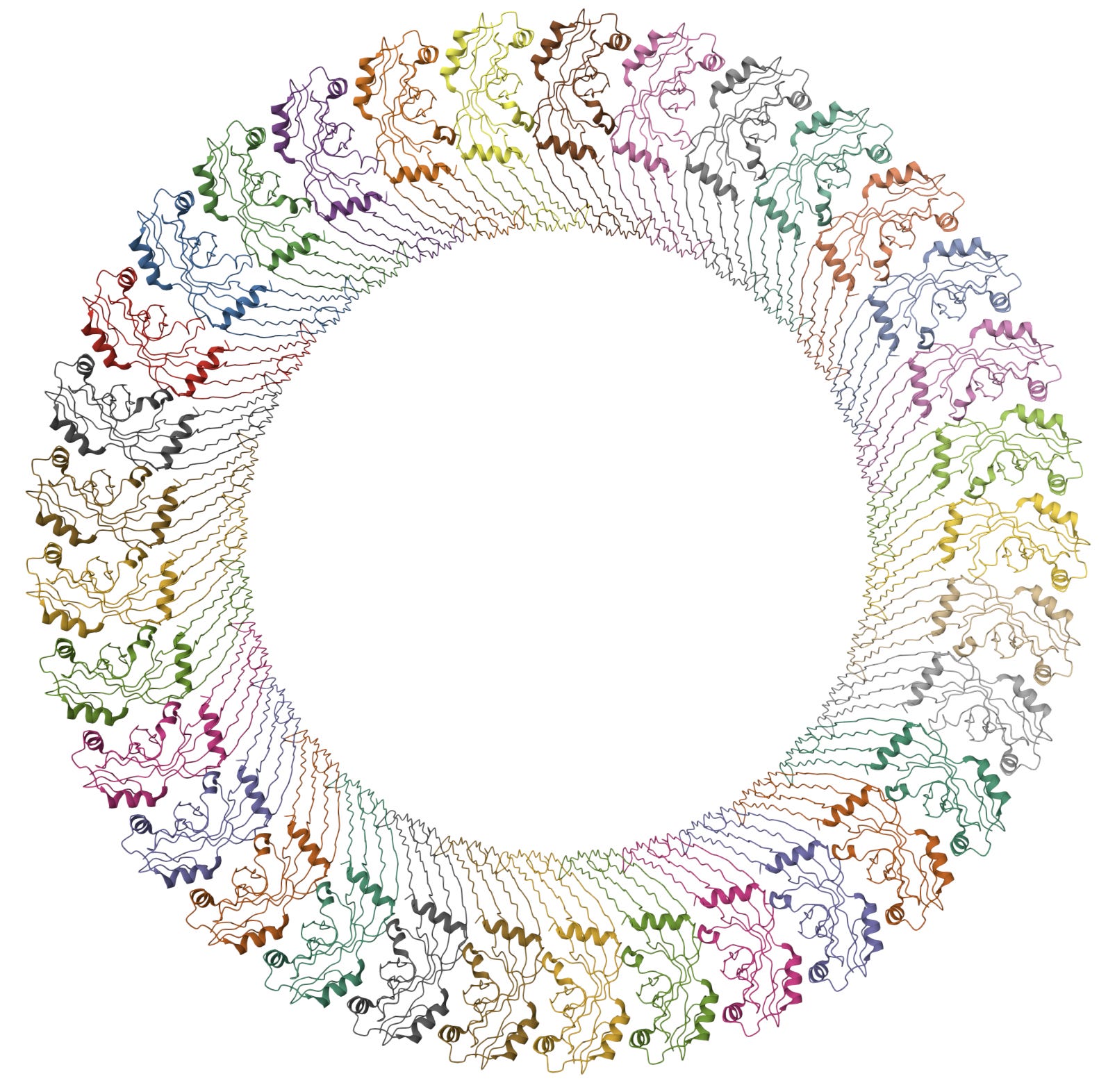
A selective gasdermin D inhibitor (PTT-121)
Made by: Pyrotech Therapeutics; China application number: CXHL2600780.
This is the first selective gasdermin D inhibitor to enter human trials — for septic shock, which is associated with about 20% of all deaths globally, but we lack any disease-modifying, host-directed medicines. In sepsis, infection triggers pyroptosis, an inflammatory form of cell death where a protein called gasdermin D forms pores in immune cell membranes. This causes cell rupture and can lead, ultimately, to multiorgan failure.
Sepsis has been a graveyard of clinical development (we reviewed it here) and, though there are a number of pre-clinical gasdermin D inhibitors, none have reached clinical trials yet.
Pyrotech Therapeutics’ drug, which was dosed into the first healthy volunteers on 1 September, blocks formation of gasdermin D pores, cutting off the execution step of pyroptosis (while leaving upstream pathogen sensing intact).
Here are all of the most novel programs, divided by indication, and the complete analysis:
The most novel cancer programs
ILT2 × ILT4 × CSF1R trispecific antibody (AK150)
Made by: Akeso; China application number: CXSL2501152.
This is the only trispecific ILT2/ILT4/CSF1R antibody in clinical trials — it’s designed to dismantle several layers of immune suppression, and it’s being tested for advanced solid tumours.
Blocking ILT2 releases inhibition of natural killer cells and T cells; blocking ILT4 reprograms and releases myeloid cells; and blocking CSF1R removes suppressive tumour-associated macrophages.
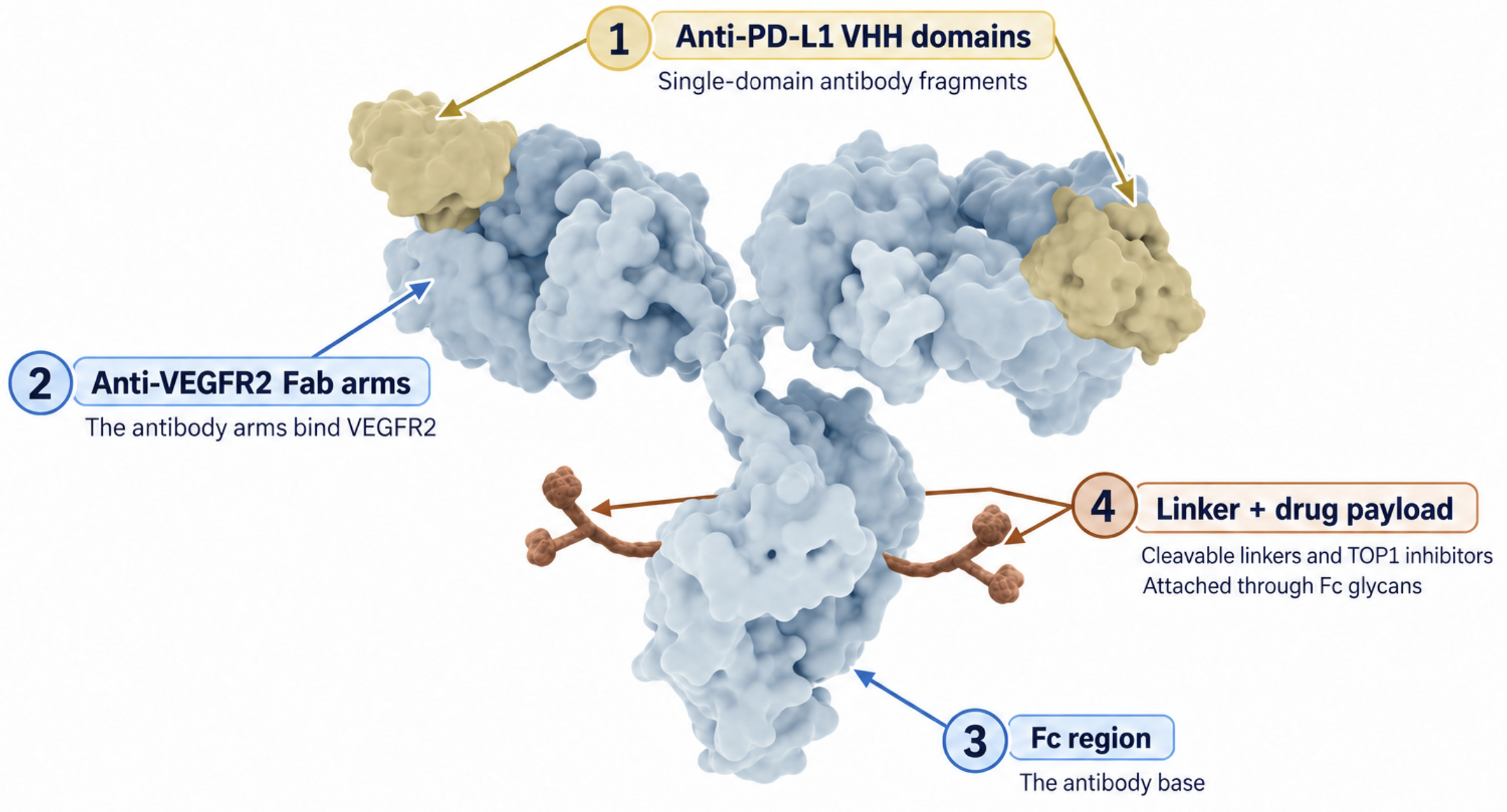
PD-L1 × VEGFR2 bispecific TOP1 ADC (JSKN027)
Made by: Alphamab Oncology; China application number: CXSL2501089.
This is a first-in-class PD-L1/VEGFR2 bispecific antibody-drug conjugate (ADC), with a TOP1 inhibitor payload, for advanced solid tumours. It simultaneously inhibits immune suppression, blocks the tumour blood supply, and adds direct cytotoxic killing.
STEAP1 × CD3 × CD28 trispecific T cell engager (HLX3902)
Made by: Henlius; China application number: CXSL2600400.
STEAP1 is highly expressed on prostate cancers, making it a good address to physically recruit T cells. CD3 provides the activation signal that triggers T cell killing; CD28 provides the co-stimulatory signal — particularly important in prostate cancer’s immune-cold microenvironment.
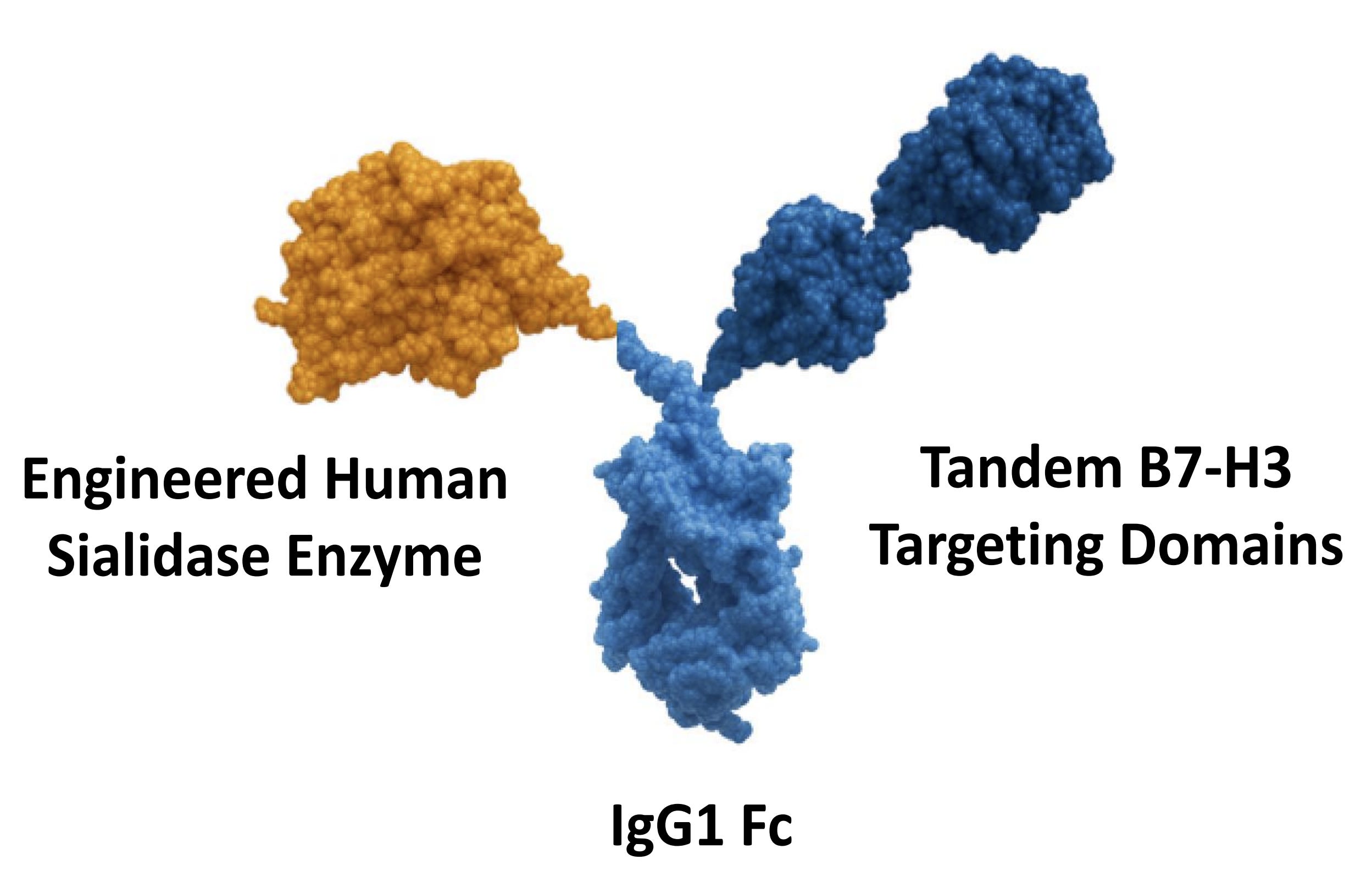
B7-H3-targeted sialidase (HLX316 / E-688)
Made by: Henlius/Palleon Pharmaceuticals; China application number: CXSL2501134.
The first tumour-targeted enzymatic desialylation therapy to enter the clinic. Guided to B7-H3-expressing tumour cells, it enzymatically strips immunosuppressive sialic acids from the tumour surface (in a completely PD1-independent manner). In other words: a potentially new cancer immunotherapy.
FOLR1/MSLN trispecific ADC (VBC106)
Made by: VelaVigo; China application number: CXSL2600684.
Mesothelin (MSLN) is often co-expressed with FOLR1 in ovarian, endometrial and lung cancers. Targeting both antigens means cells can be captured when FOLR1 is low but MSLN is high (or vice versa). This molecule leverages biparatopic targeting of FOLR1 (it binds via two different epitopes in the same molecule), increasing avidity and internalisation of the TOP1 inhibitor payload.