Three-quarters through the year, it’s time to look at what’s been achieved so far.
There have been 46 new drug approvals, 23 of which (by our count) have genuinely novel mechanisms of action. The record of new drugs approved in a year, by the way, is 59 — set in 2018.
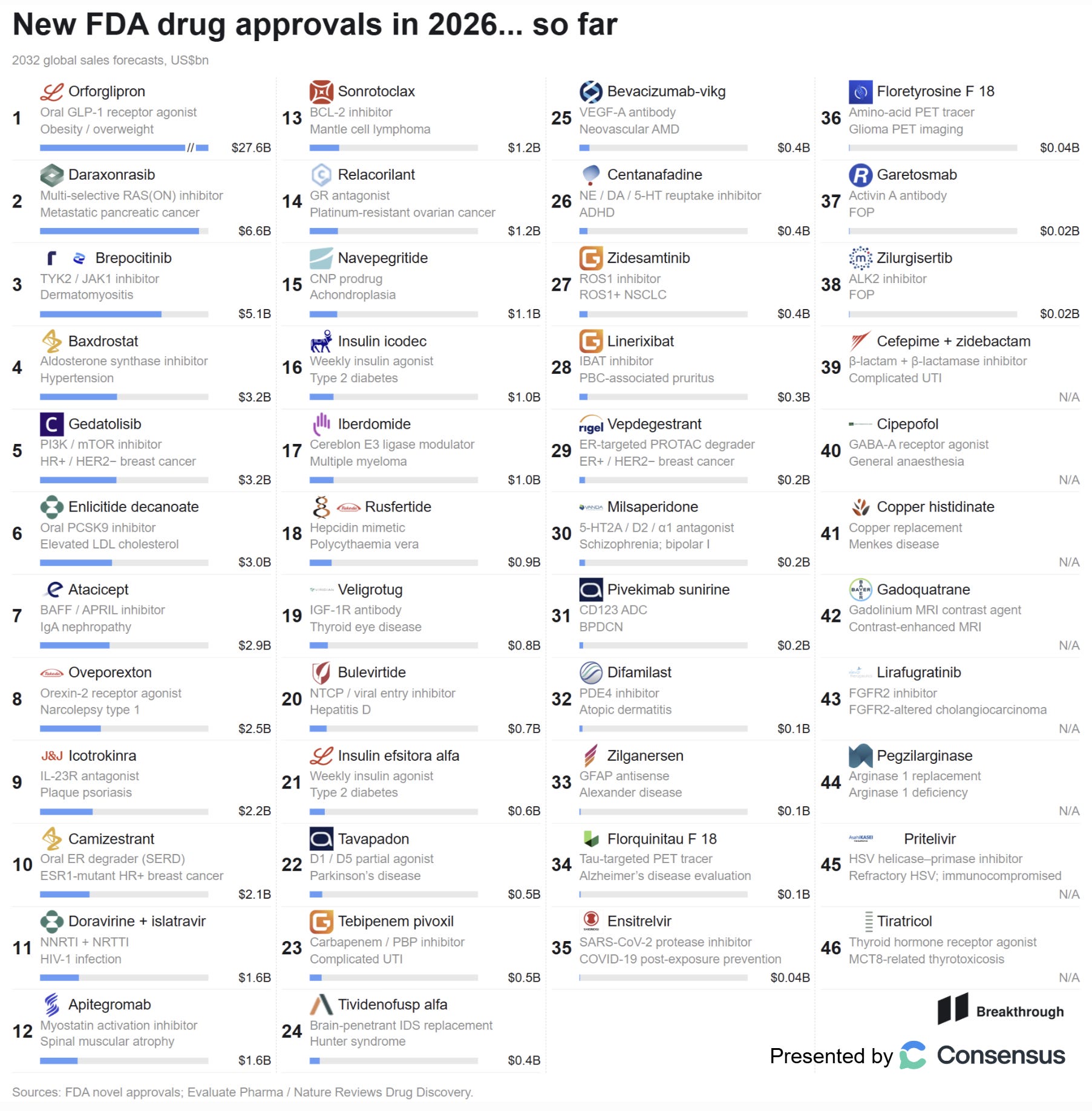
For the following analysis we scoured for advances that changed practice, stood out in late-stage trials, or demonstrated a new therapeutic concept. To do the research, we used Consensus.
1. First-in-class medicines in cancer
There has been plenty to get excited about in cancer treatment.
The first approved pan-RAS inhibitor
Revolution Medicines’ daraxonrasib delivered the first real step change in survival for pancreatic cancer. Daraxonrasib acts as a ‘molecular glue’ that locks RAS — the main oncogenic driver in pancreatic cancer — into an inactive three-part complex with cyclophilin A. It targets multiple RAS isoforms, both mutant and wild-type, and inhibits the active, GTP-bound form of RAS, known as RAS(ON) — a more potent approach than inhibiting inactive RAS(OFF).
In the second-line setting, it doubled median overall survival while improving quality of life and reducing pancreatic cancer-related pain.
RAS breakthroughs beyond daraxonrasib
One of the things I like most about medicine is that, as soon as a promising new drug arrives, the race to improve it begins. In animal studies, drugs that inhibit both the ON and OFF states of RAS are more effective — which makes a lot of intuitive sense.
There’s room to improve tolerability, too. Because daraxonrasib targets several RAS isoforms — including the wildtype form expressed in skin — it can cause a serious rash.
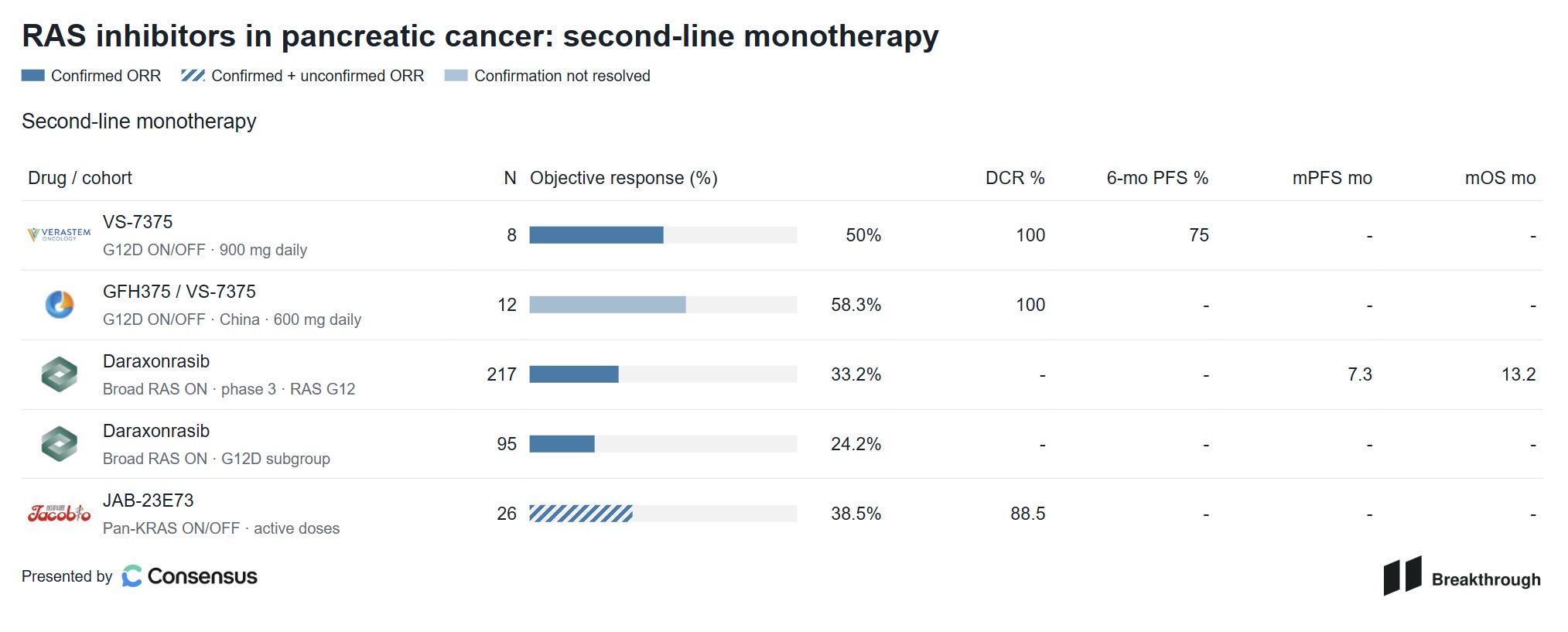
Verastem’s VS-7375 aims to improve on both, through specific targeting of the G12D mutant, in both its ON and OFF states. The data are still early — phase 1/2 — but the objective response rate of 50% is higher (cross-trial) than daraxonrasib, with substantially less rash.
We put together the data that’s been collected for RAS inhibitors in second-line pancreas cancer — including daraxonrasib and VS-7375 — in this figure.
Another way to improve on daraxonrasib would be with combination therapies.
Around 30% of pancreatic cancers have lost the metabolic enzyme MTAP, leaving them vulnerable to PRMT5 inhibition — through a mechanism known as synthetic lethality. Without MTAP, the metabolite, MTA, accumulates and partially inhibits PRMT5, making cancer cells critically dependent on the activity that remains. Further pharmacological PRMT5 inhibition triggers lethal defects in RNA splicing.
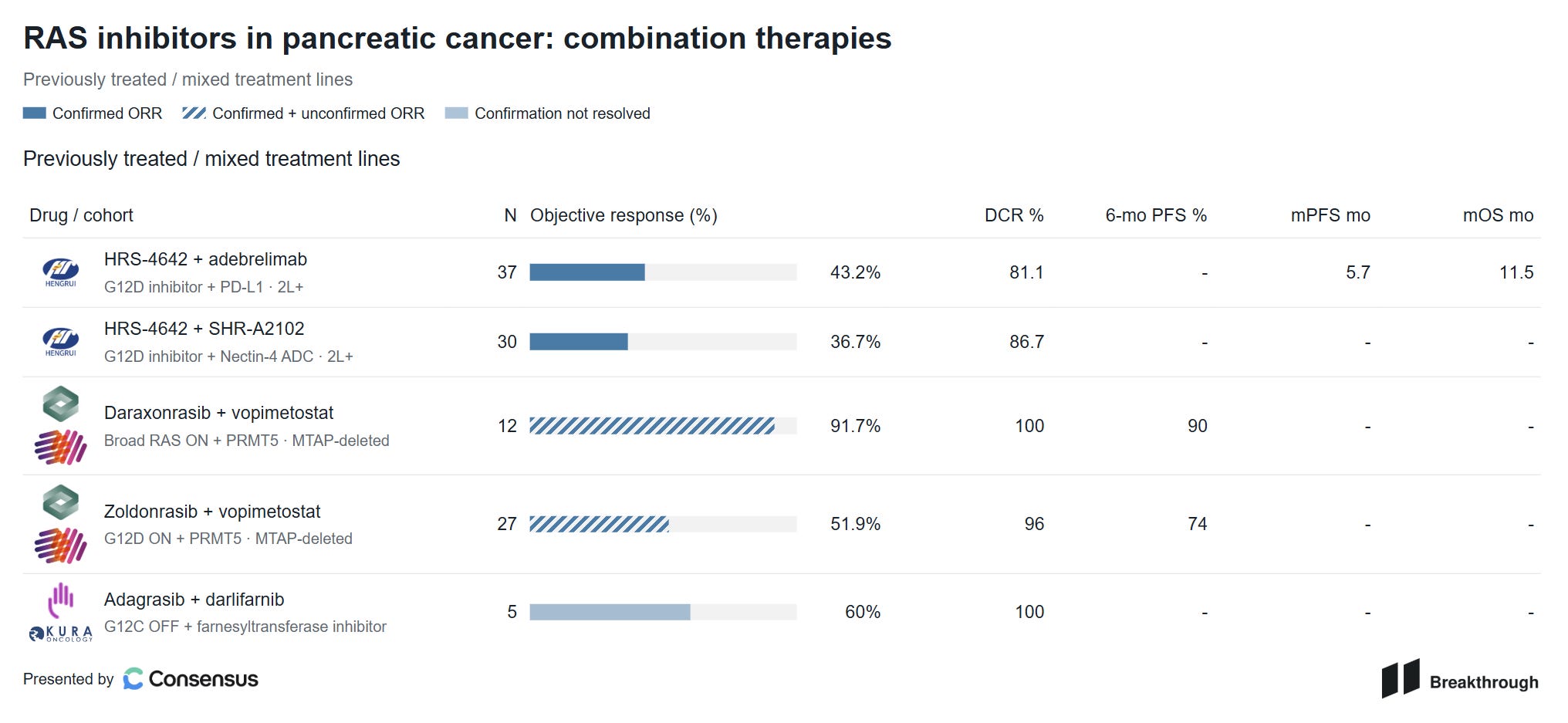
In a small phase 1/2 trial, Tango Therapeutics found that adding a PRMT5 inhibitor to daraxonrasib, in patients whose tumours have lost MTAP, achieved an unprecedented objective response rate above 90%. Here are those results, as well as the results with the other combination approaches that are emerging.
The first approved PROTAC
Many proteins (like RAS) are difficult to target with conventional drugs. Proteolysis-targeting chimeras — PROTACs — take a different approach: instead of blocking a protein, they degrade it. That opens the possibility of drugging new targets, improving target suppression, and overcoming drug resistance.
In May, Pfizer’s vepdegestrant, which recruits an E3 ligase to degrade the estrogen receptor, became the first approved PROTAC — for breast cancer.
The first drug to beat pembrolizumab on overall survival
In every year from 2023-2025, the PD1 inhibitor, pembrolizumab, was the world’s top-selling drug (doing $25.0B, $29.5B and $31.7B revenue in those years) — because it’s so effective across so many cancers.
Akeso’s ivonescimab is a bispecific antibody that blocks PD1, restoring T cell antitumour activity, as well as VEGF. Blocking VEGF inhibits tumour angiogenesis, and improves infiltration by T cells (that are also unleashed by PD1 blockade). Its design enables cooperative binding to PD1 and VEGF, concentrating checkpoint blockade in VEGF-rich tumour environments.
In September, ivonescimab beat pembrolizumab in a head-to-head phase 3 trial in advanced lung cancer, extending median overall survival from 22.6 to 30.8 months.
A biparatopic antibody in gastric cancer
Exemplified by ivonescimab, we’re seeing an explosion of multispecific drugs — that are beating their monospecific alternatives in trials. Jazz Pharmaceuticals’ zanidatamab is another good example. It’s a biparatopic antibody, which means it binds two different sites on the same protein: the oncogenic receptor HER2.
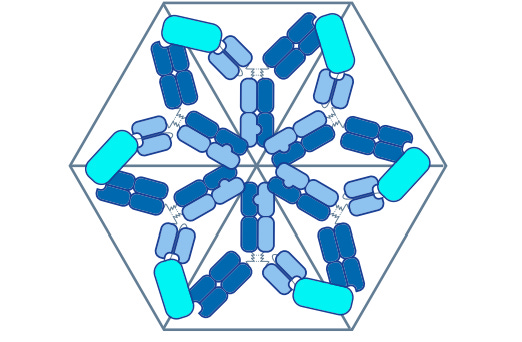
As well as blocking downstream signalling, this allows zanidatamab to bring HER2 molecules together into clusters, centred on a zanidatamab hexamer. Those clusters activate complement-mediated cancer-cell killing — something its monospecific counterpart, trastuzumab, does not do. In a head-to-head trial (in HER2-positive gastro-oesophageal adenocarcinoma) zanidatamab outperformed trastuzumab — and was FDA approved for this indication.
The world’s first bispecific antibody-drug conjugate
China approved the world’s first bispecific antibody–drug conjugate (ADC). It binds both EGFR and HER3 (not HER2!) which are often co-expressed on the cell surface. The bispecific design means it binds with more avidity: it’s harder to detach, promotes receptor clustering, and improves delivery of the payload. Cells with low EGFR can also be captured through HER3.
It’s approved in China for nasopharyngeal carcinoma and esophageal squamous-cell carcinoma, with positive readouts in triple negative breast cancer and lung cancer - and ongoing trials in a spectrum of other cancer types. The drug’s name is izalontamab brengitecan (iza-bren) — BMS owns the rest-of-world rights, and is now taking this global.
The first phase 3 trial to show an overall survival benefit for a B7-H3 ADC
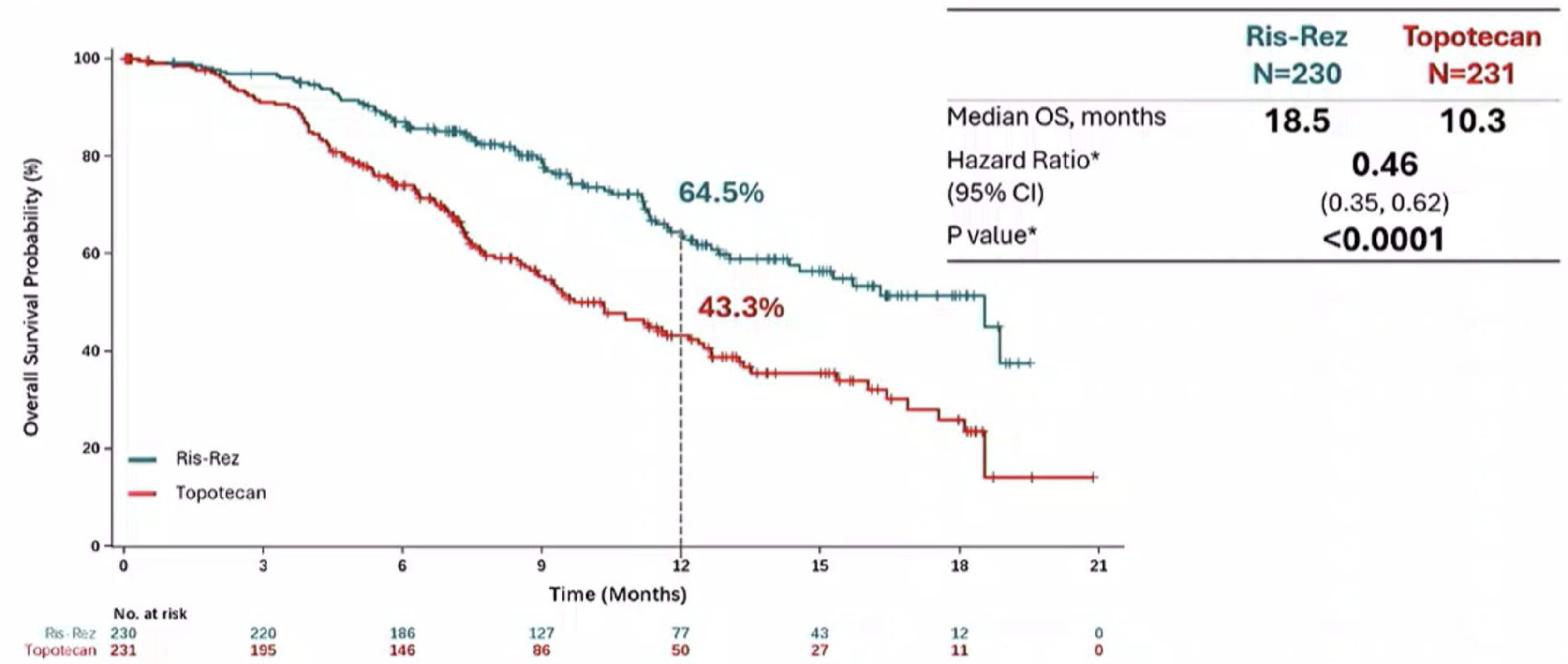
B7-H3 is widely expressed across solid tumours, but it’s not yet been targeted by any approved ADCs. Risvutatug rezetecan, or Riz-Rez, is a B7-H3 ADC. In second-line small-cell lung cancer, it extended median overall survival from 10.3 months (with the standard-of-care chemotherapy, topotecan) to 18.5 months — the first phase 3 demonstration of an overall survival benefit for a B7-H3 ADC in any cancer.
The drug was discovered and developed by China’s Hansoh, which licensed the rights outside China to GSK. GSK is now repeating the trial outside China.
The results open the door to an entirely new class of treatments.
2. First-in-class medicines for cardiovascular disease
Cardiovascular disease remains the world’s leading cause of death. This year there have been new drug approvals, alongside promising results from earlier, newer approaches.
Approval of an oral PCSK9 inhibitor, enlicitide, for LDL cholesterol
PCSK9 plays a key role in LDL cholesterol metabolism. We know it’s an important target because people born with inactivating variants have low LDL cholesterol — and a low lifetime risk of cardiovascular disease. This is also why we know that living without it is safe.
That human genetic evidence has helped establish PCSK9 as (probably) our strongest target for cholesterol lowering — and we are now targeting it from every direction: siRNAs, monoclonal antibodies and, this year, a once-daily pill.
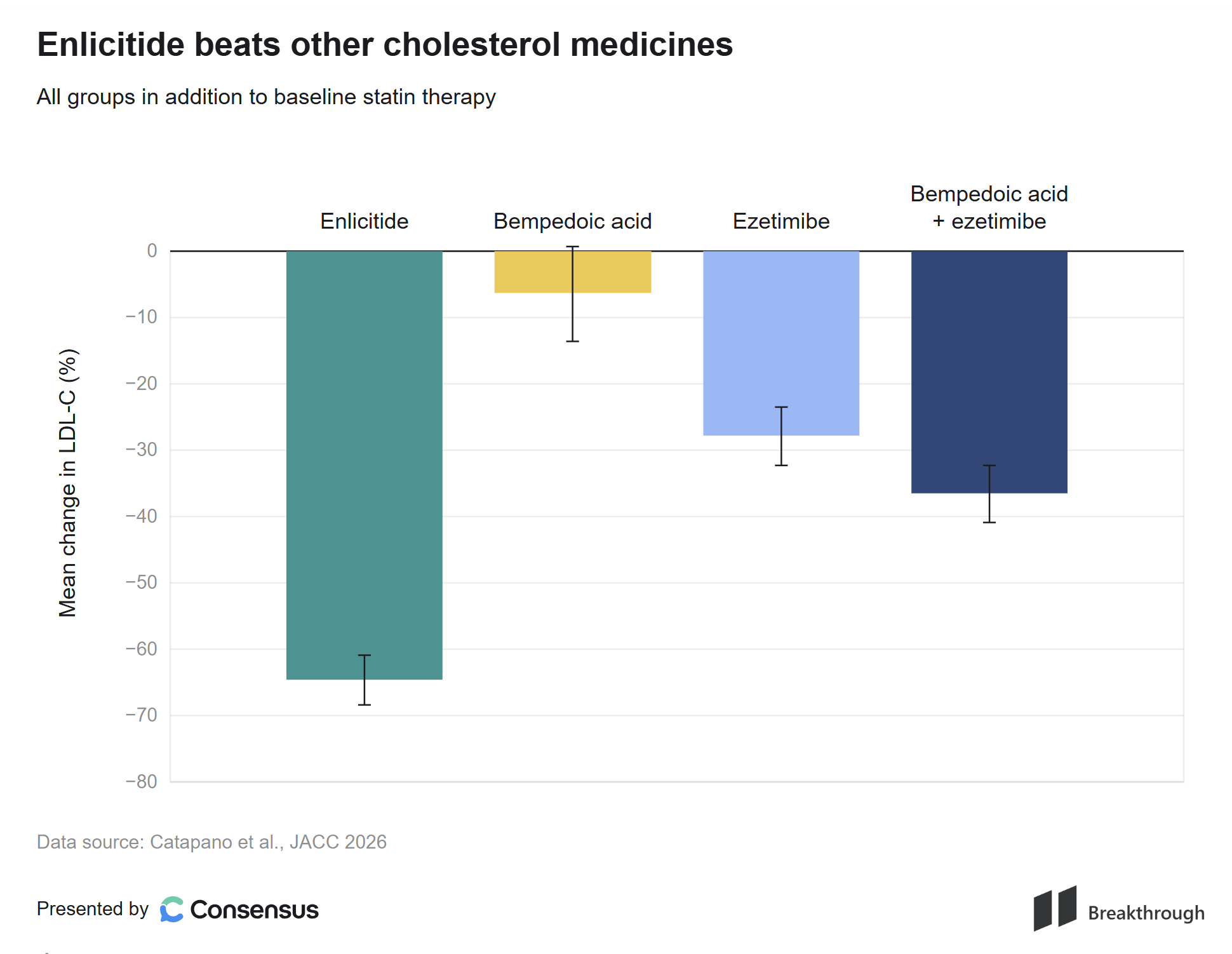
Merck’s oral PCSK9 inhibitor, enlicitide, reduced LDL cholesterol by more than 60% on top of statin therapy — almost twice the reduction achieved with the combination of two other non-statin drugs, bempedoic acid and ezetimibe.
Genetic editing of PCSK9 to lower LDL
We can now lower PCSK9 with a daily pill, a monthly antibody or a six-monthly siRNA. What about a one-off therapy? This still sounds futuristic, but it may be closer than it seems. This year, phase 1 data from Verve and Lilly’s PCSK9 base editor showed that a single intravenous infusion could reduce LDL cholesterol by as much as 60%.
Approval of aldosterone synthase inhibitor, baxdrostat, for hypertension
The other major cardiovascular risk factor is high blood pressure (hypertension). Treatment-resistant hypertension is common, affecting ~7-10 million adults in the US. AstraZeneca’s baxdrostat, which was approved in May, uses an established mechanism — aldosterone inhibition — but in a differentiated way to circumvent side-effects: blocking the synthesis of aldosterone altogether.
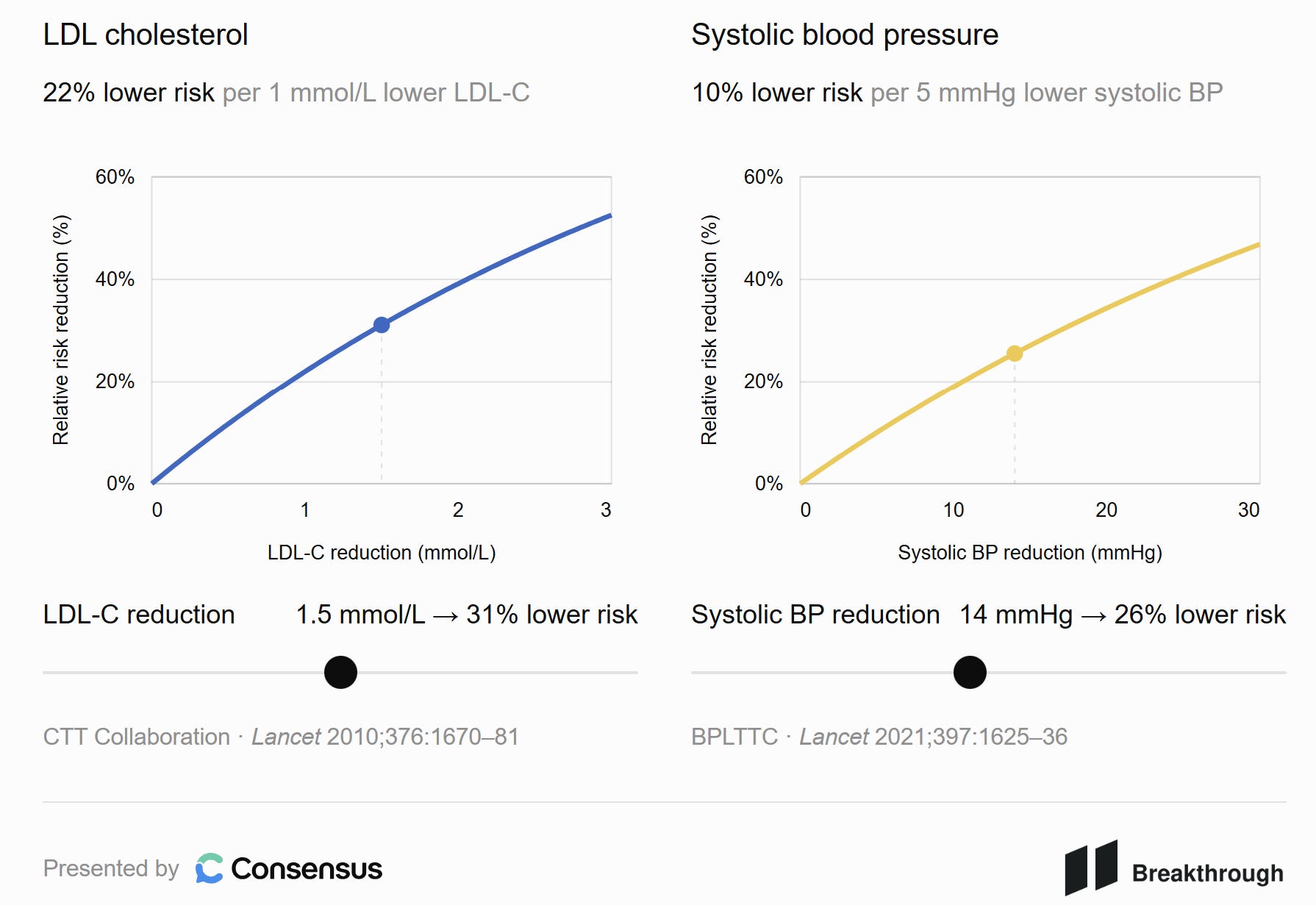
This resulted in an average systolic blood pressure lowering of 14.0 mmHg. For context, this would translate to ~26% lower risk of a cardiovascular event (for enlicitide, its lowering of ~1.5 mmol/L in LDL cholesterol would translate to ~31% lower risk) — shown in this figure.
Not everything worked
It’s not all been positive in cardiovascular disease. We’ve seen two major failed trials, too — Novartis’ pelecarsen, which lowers lipoprotein(a), failed to prevent cardiovascular events as secondary prevention in patients with high Lp(a), and Novo’s IL6 inhibitor, ziltivekimab, failed to prevent cardiovascular events as secondary prevention in patients with chronic kidney disease and high inflammation.
3. First in class medicines in autoimmune disease
Obefazimod in ulcerative colitis
In ulcerative colitis, 12 medicines from 6 classes are approved (anti-TNF, anti-integrin, anti-IL12/23, anti-IL23, JAK inhibitors, and S1P modulators), the best of which reach clinical remission in only ~40% of patients and (the better, harder, more objective target) endoscopic remission in ~25% . One thing’s clear: we need new modes-of-action.
This year Abivax presented phase 3 data for their brand new mechanism with obefazimod, a daily oral pill that induces expression of miRNA-124, an anti-inflammatory miRNA. It seems to do this through modulation of the aryl hydrocarbon (AH) receptor.
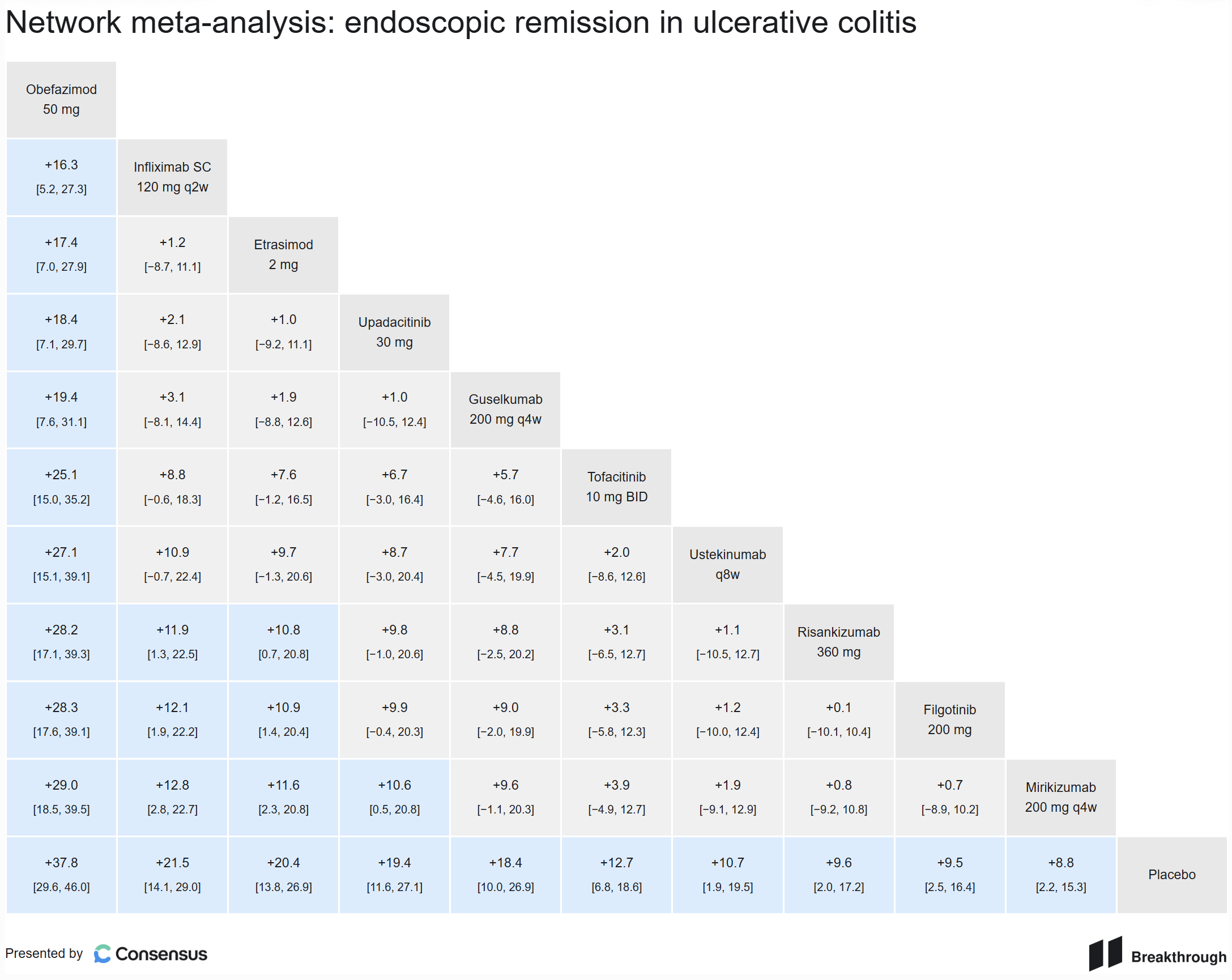
To compare efficacy between different medicines, we did the network meta-analysis — here’s how they each stack up against each other (blue is a statistically significant beat, grey is not) — obefazimod is top of the pack.