


Before I start: if you run systematic reviews in academia, biotech, or pharma, we built a new platform that’ll help you do the end-to-end workflow (question to meta-analysis) — in minutes to hours.
Try it for free here: scholara.ai.
It was a busy week of breakthroughs! Let’s get into it…
1. Early stages of a breast cancer vaccine
There’s still only one therapeutic cancer vaccine that’s ever won FDA-approval — it’s this one, for prostate cancer. Other than this, the most advanced trial is for Moderna’s melanoma vaccine.
More recently there’s been excitement over personalized vaccines, where tumors are removed by surgery and vaccines are generated against tumors’ specific antigens (the ‘neoantigens’) to train the immune system and prevent the cancer from returning. Examples include early trials for vaccines in kidney and pancreatic cancer.
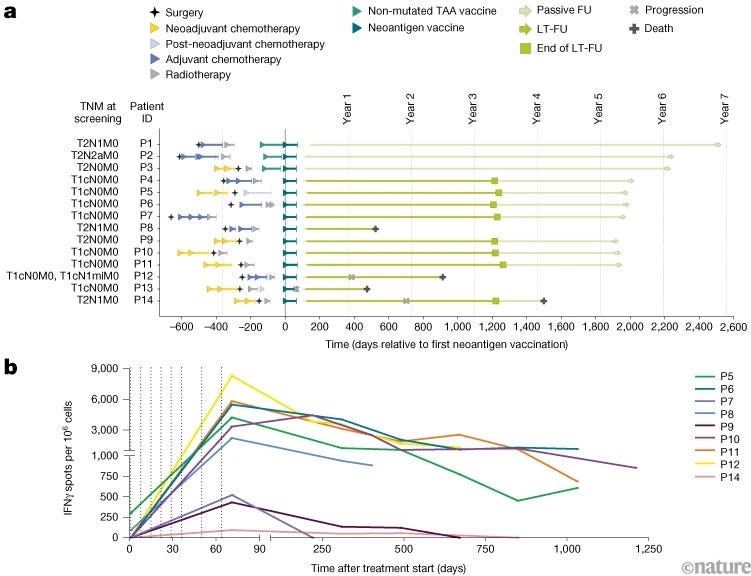
This is a new trial, in Nature this week, in triple-negative breast cancer. This type of breast cancer lacks any of the three receptors (the estrogen receptor, progesterone receptor, or HER2) that can be targeted with currently effective drugs — so new therapies are badly needed.
The trial’s just small — 14 patients (and no control group!) — but 11 of the vaccine recipients were relapse-free at 6 years:
BioNTech funded this trial — they’re also running trials for off-the-shelf vaccines (in melanoma and non-small cell lung cancer), in HPV-positive head and neck cancer, and for other personalized vaccines in colorectal cancer, bladder cancer, and pancreatic cancer.
2. The first approval for locally-advanced pancreatic cancer in >30 years
Another very welcome breakthrough was in (locally-advanced) pancreatic cancer, where there’ve been no new therapies for >30 years. That changed this week with the approval of Novocure’s tumor treating fields — delivered via a wearable device, like this:

For the technical details: tumor-treating fields deliver low-intensity electric fields that disrupt microtubule assembly to cause mitotic catastrophe (and apoptosis) in dividing cells. The fields also seem to impair DNA repair, so can sensitize cells to DNA-damaging chemotherapy.
The survival advantage is admittedly modest, but significant:
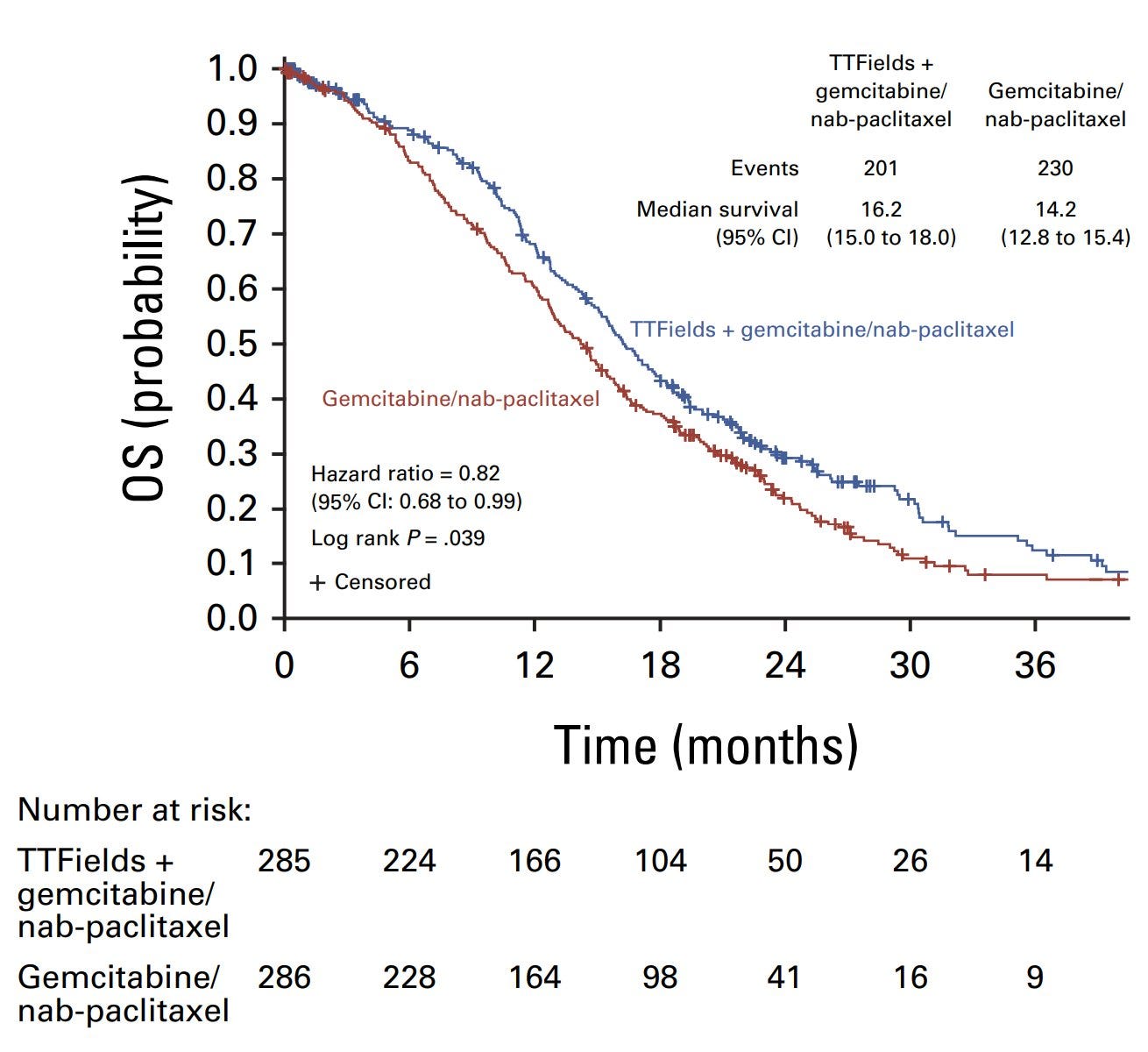
This is the third approval for tumor treating fields, following glioblastoma and mesothelioma.
3. An update to the standard of care in bladder cancer
The standard of care in muscle-invasive bladder cancer is the 70-year old chemotherapeutic, cisplatin (plus surgery). The issue is that about half of patients are ineligible for cisplatin, mainly because of poor kidney function — which can happen as a direct result of the bladder cancer. For these patients, there’s no clear standard-of-care.
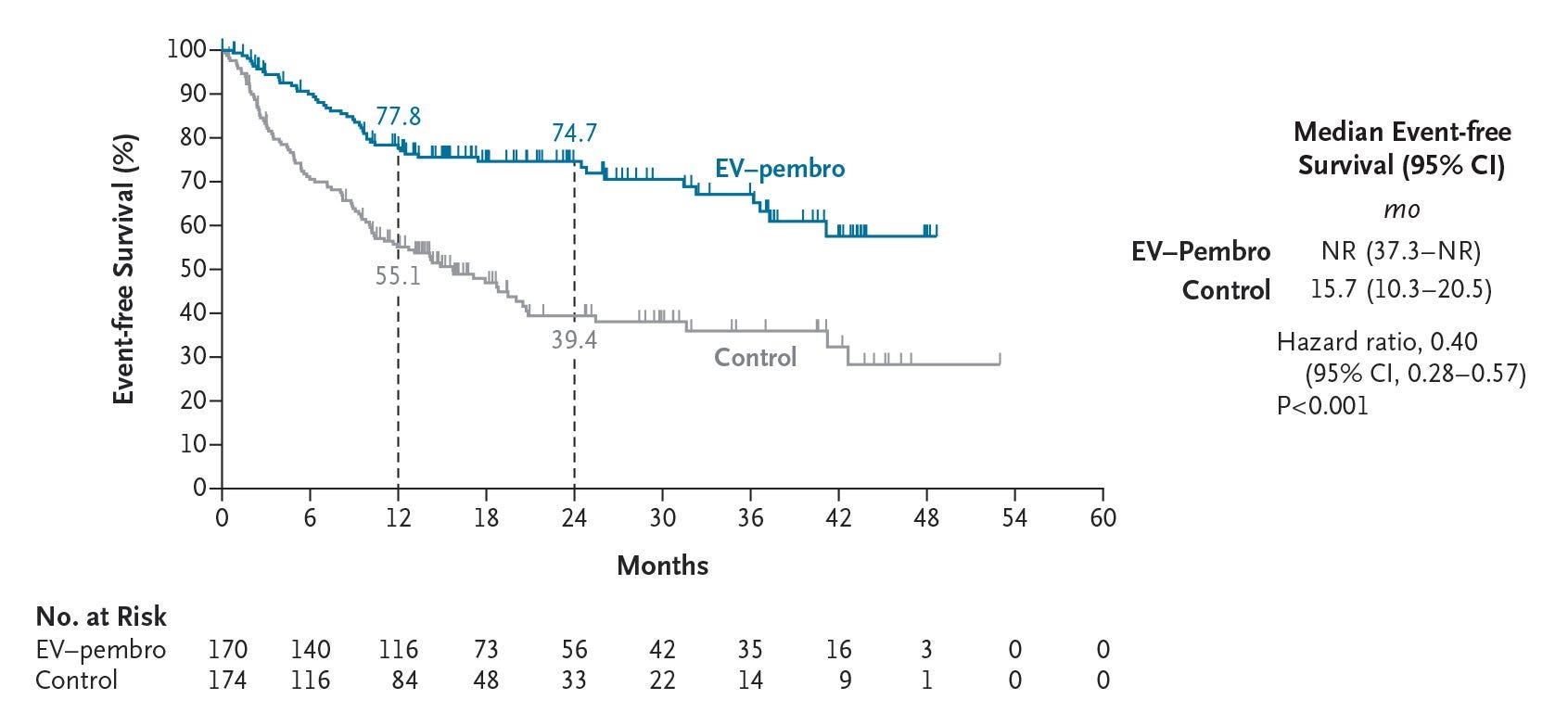
This trial tests the antibody-drug conjugate, Enfortumab Vedotin (which directs a toxic compound, monomethyl auristatin E, selectively to bladder cancer cells via the Nectin-4 antibody, Enfortumab) — in combination with the PD1 inhibitor, pembrolizumab — combined with surgery, in patients ineligible for cisplatin.
Here are the results, from this week in NEJM: dramatically better event-free survival (74.7%, vs. 39.4%) and overall survival (79.7%, vs. 63.1%) vs. surgery alone:
Here are some of the takes from oncologists around the world on this trial…


and my favourite:
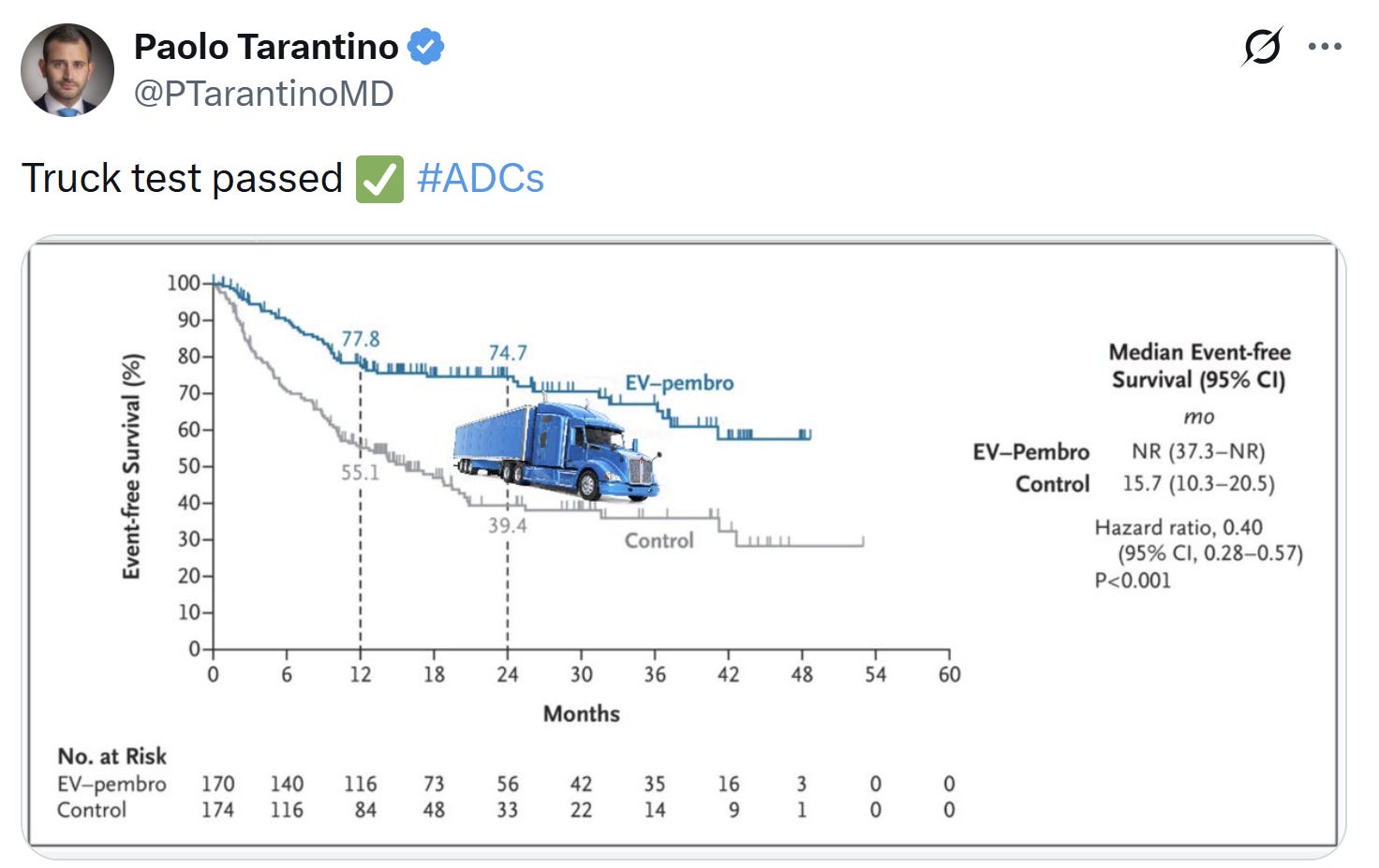
So it’s impressive, for sure, but there’s still some way to go: many patients still didn’t respond, and (as you might expect with a combination of two cancer drugs) adverse events were common.
4. The first therapy for myotonic dystrophy…?
The pathology of myotonic dystrophy type 1 is interesting: it’s caused by a trinucleotide expansion (like Huntington’s) but unlike Huntington’s it’s an RNAopathy, not a proteinopathy.
Toxic RNA transcripts from inherited, expanded repeats in the DMPK gene accumulate in muscle cells, disrupting alternative splicing of many genes and causing problems across the body: muscle weakness, cataracts, cardiac dysfunction. There are no current therapies.
