


I love the a16z newsletter on Charts of the Week, so I have shamelessly stolen the idea. This week: how new therapies have transformed cancer survival, and whether GLP1 obesity medicines cause pancreatitis.
Before I start, I’ve been working with some others to build the world’s first AI-native systematic review platform. It helps automate the entire end-to-end workflow (with the researcher in the loop) in hours, not months. If you run systematic reviews, I’d love for you to try it — it’s available for free at scholara.ai. I’ve included some original research we did with it later in the newsletter!

1. How immunotherapy transformed survival in melanoma
This week I realised that GPT-5.4 Pro can help reconstruct and merge Kaplan-Meier curves from different trials, which opens the opportunity to directly show how much progress has been made so far (and how much there is left to do).
Advanced melanoma used to be treated with chemotherapy, with an average survival of <12 months. Immunotherapy means that now more than 50% of patients live for at least 5 years (many with very durable remission).
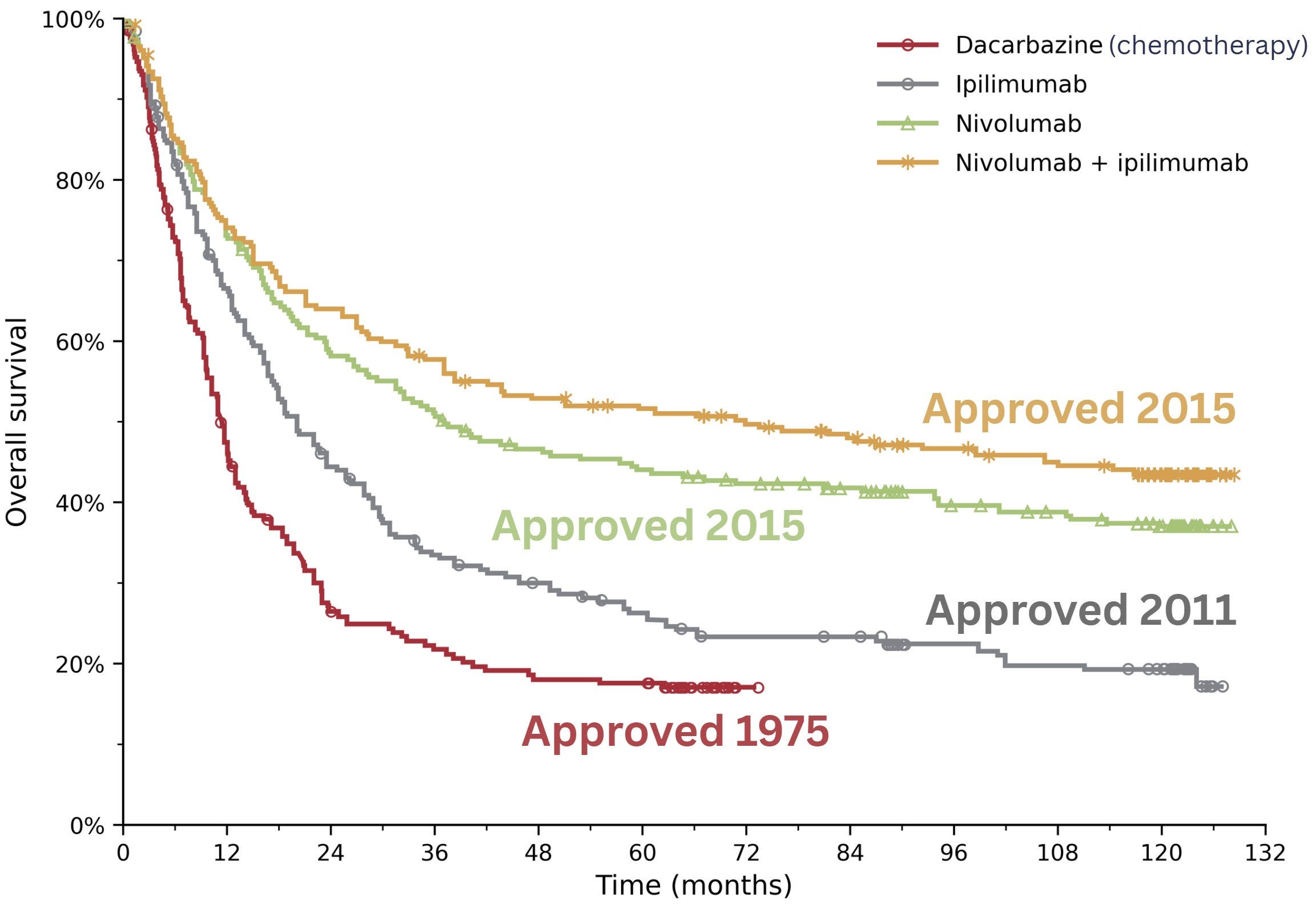
The curves come from the CheckMate 066 and CheckMate 067 trials, both for first-line treatment. For clarity, I left out some regimens (Pembrolizumab, combinations with anti-LAG3, combinations with BRAF and MEK inhibitors).
2. How EGFR inhibitors changed outcomes in EGFR-mutant non-small-cell lung cancer
Advanced EGFR-mutant non-small-cell lung cancer used to be treated with chemotherapy alone. Gefitinib was the first EGFR inhibitor with a positive phase 3 trial, in 2010, and since then there have been further, stepwise improvements. Osimertinib is today’s most effective EGFR inhibitor, especially when combined with a certain chemotherapy.
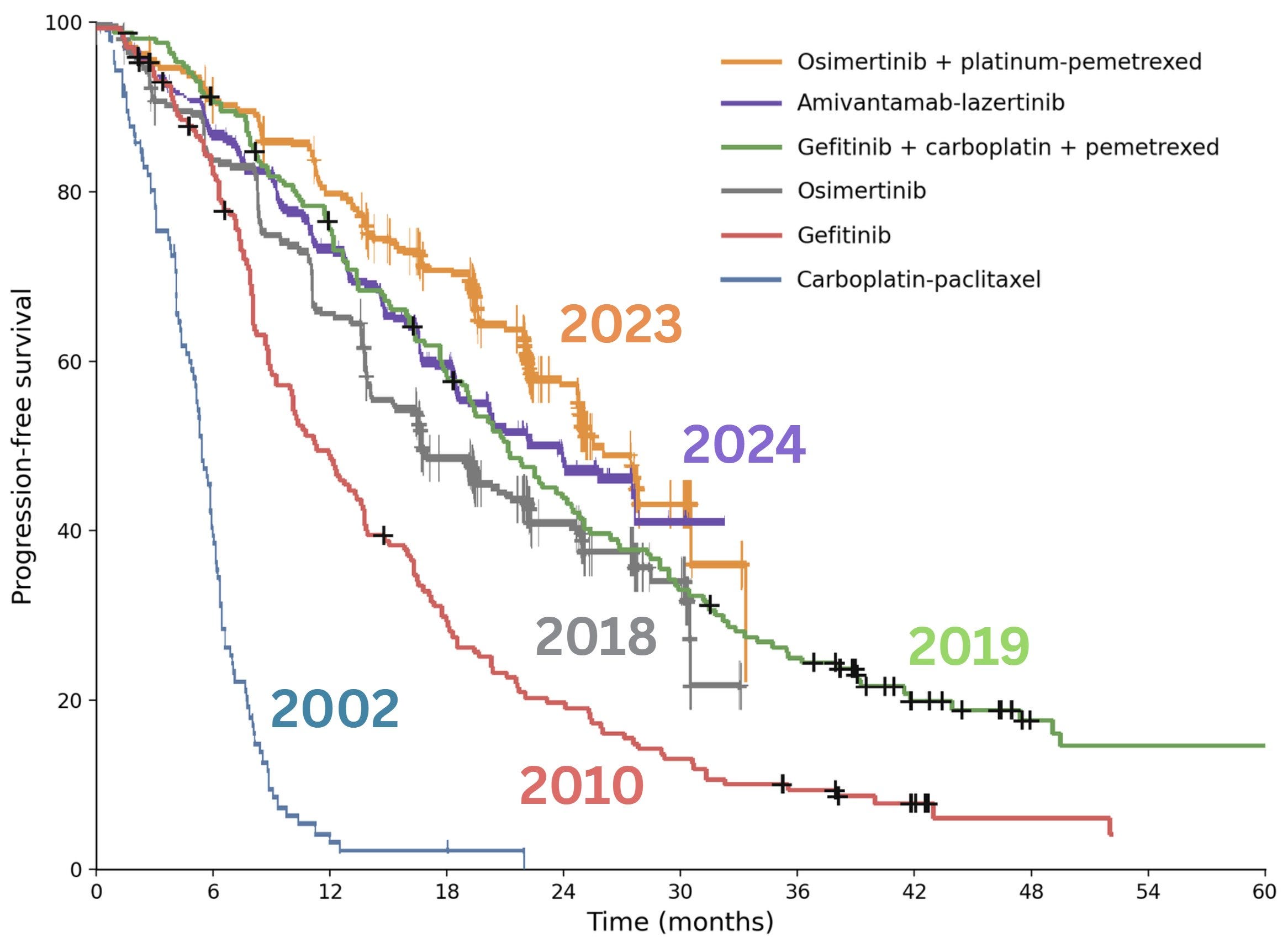
To do this, I merged the Kaplan-Meier curves from four trials (1, 2, 3, 4) for first-line treatment of EGFR-mutated (exon 19 deletion or L858R mutation) advanced non–small-cell lung cancer. I left out some intermediate regimens for clarity, but this tells the story of how median progression-free survival was transformed from 5.4 to 25.5 months.
3. Do GLP1s cause pancreatitis?
Semaglutide and Tirzepatide are now the top two-selling drugs globally, but there is still a safety concern over acute pancreatitis. The last systematic review of the randomized evidence is now almost two years old (its search was done in May 2024) and there have since been a lot of new data on this, so I updated it (using scholara.ai).
Across 31 randomized trials with 40,274 patients, here are the results.
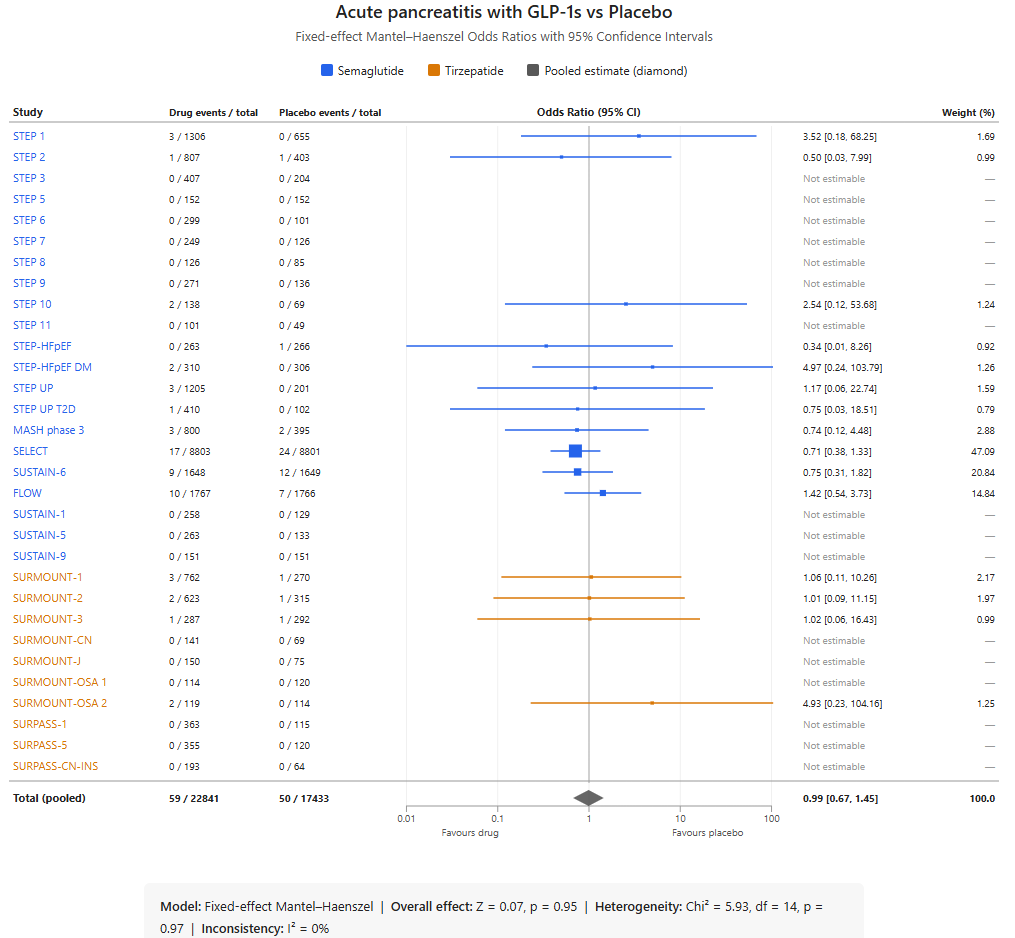
In the placebo group, there were 50 cases of acute pancreatitis across 17,433 patients; in the Semaglutide/Tirzepatide groups, there were 59 cases/22,841 patients — the odds ratio was 0.99 (95% CI 0.67-1.45).
The studies included here are: phase 3 randomized trials of drug vs. placebo; subcutaneous semaglutide or tirzepatide only (because these are the modern, approved GLP1s that >95% of GLP1-receiving patients are taking today); only the studies that report acute pancreatitis as an adverse event.
There’s no obvious pancreatitis safety signal in these pooled randomized data (which is reassuring) but the overall incidence of acute pancreatitis was very very low. We also published this as a preprint, if you’re interested.
4. How modern therapies displaced classical chemotherapy in advanced urothelial carcinoma
Urothelial carcinoma is an amazing example of a cancer where classical chemotherapy has been displaced by modern therapies: antibody-drug conjugates and immunotherapy.
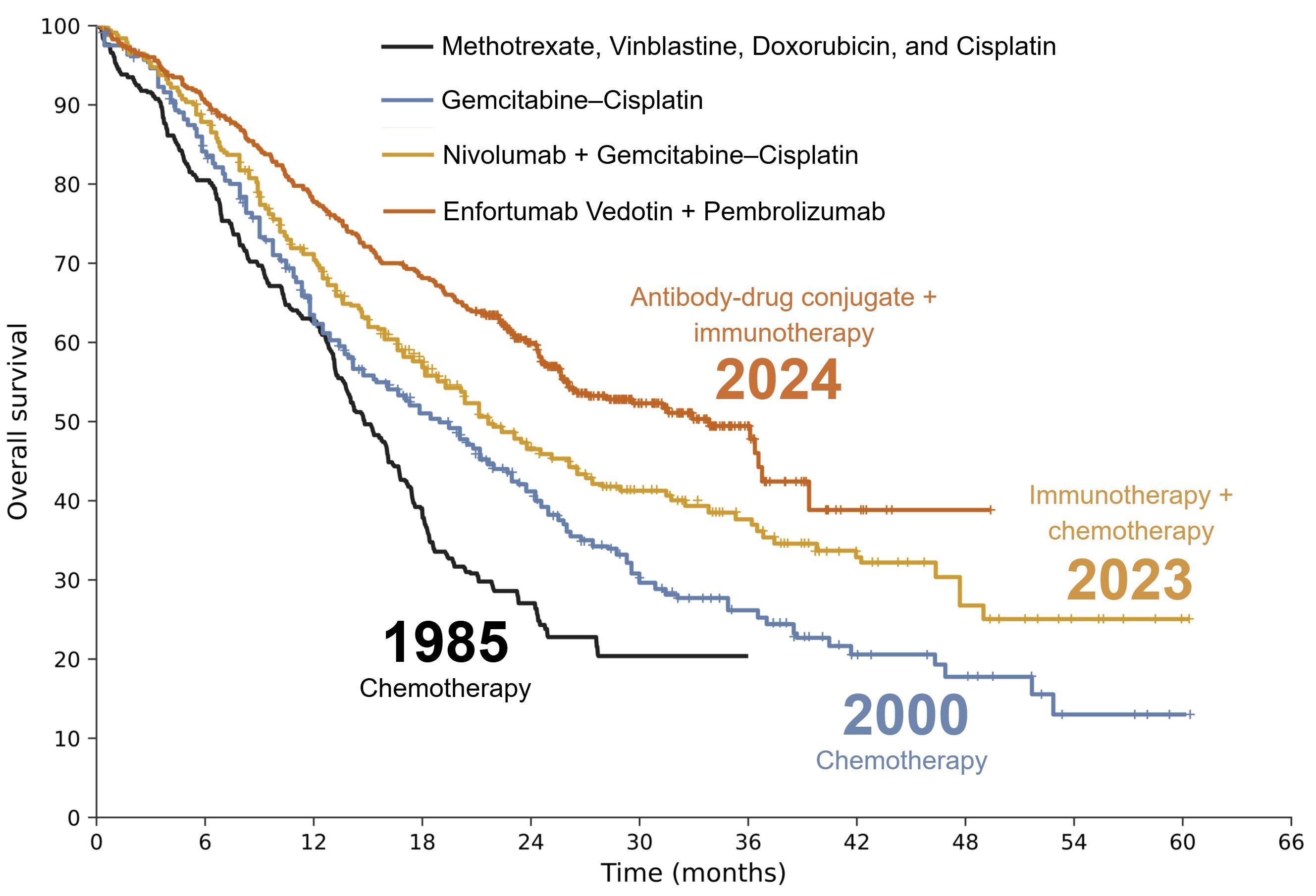
To do this I merged the Kaplan-Meiers from three phase 3 trials in first-line locally advanced or metastatic urothelial carcinoma: 1, 2, 3.
