Progress in medicine is fast. I track it here, with the 5 most important advances from each week — let’s go!
Before I start: if you run systematic reviews in academia, biotech, or pharma, we built a new platform that’ll help you do the end-to-end workflow (question to meta-analysis) — in minutes to hours.
We’re improving it every day. Try it for free: scholara.ai.

1. A small molecule to re-activate p53 in cancer
p53 is the ‘guardian of the genome’ — it’s a tumour suppressor that’s mutated in about half of cancers (and deregulated in most of the others). p53 is the reason elephants get much less cancer than they’d be expected to, given their size — they have 20 copies of it!
Re-activating p53 has always been a moonshot goal in cancer therapy, but it’s almost always failed too. To sum it up, here’s a a brief history:
2003 — Gendicine, a p53 gene therapy, approved in China (but not elsewhere)
2012 — The first small molecule MDM2 inhibitor (RG7112, which works by preventing degradation of p53) enters trials, but did not progress to approval
2013 — Second-generation MDM2 inhibitor (Idasanutlin) reached phase 3, but failed and was dropped
2017 — A dual MDM2/MDMX inhibitor, ALRN-6924, enters trials; it has not since been approved
2020–2021 — A mutant p53 reactivator, Eprenetapopt, fails in phase 3
2023 — An MDM2 inhibitor, Milademetan, fails in phase 3
2024 — Promising phase 1 data for an MDM2 degrader
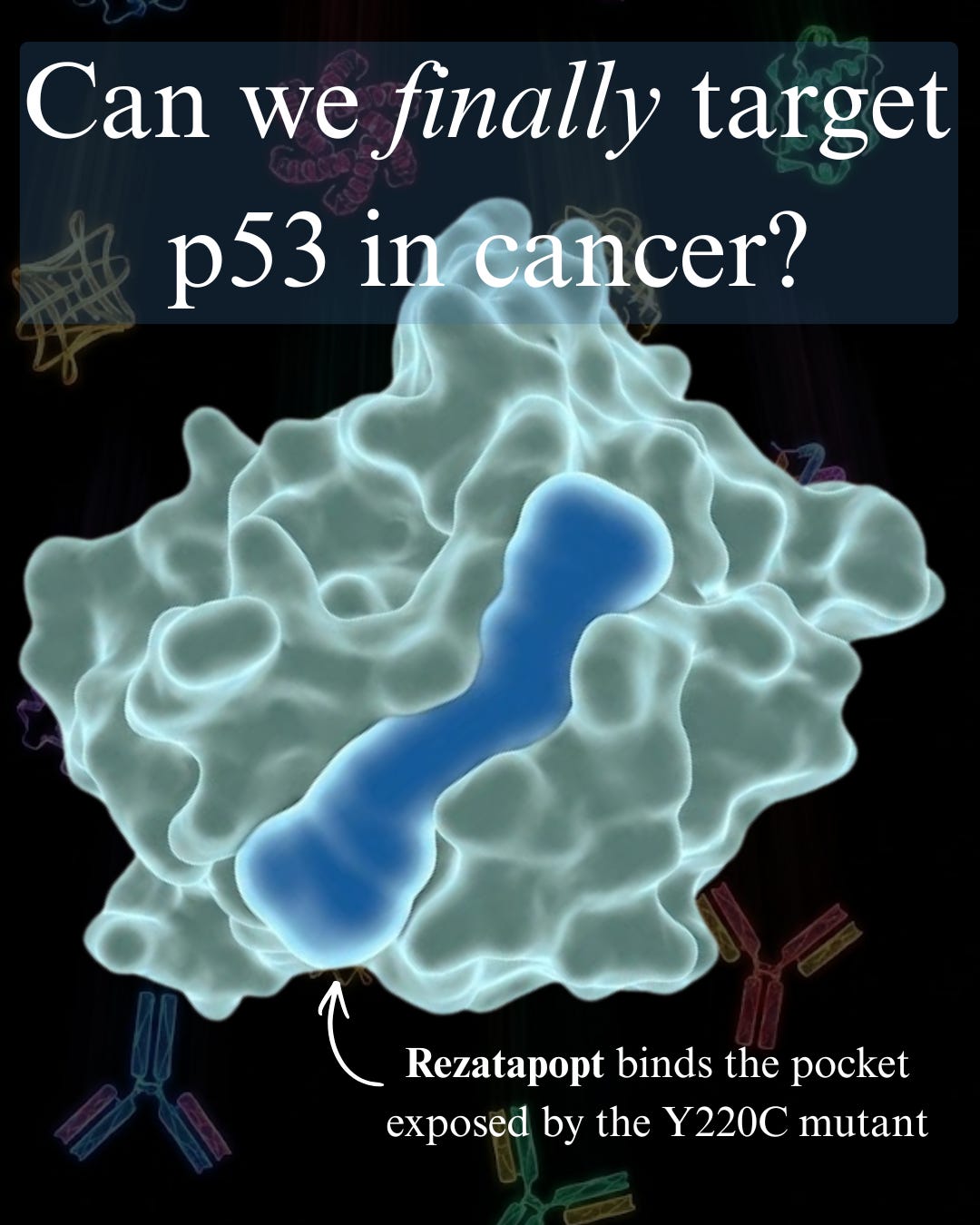
This week, PMV Pharma released phase 1 data in the New England Journal of Medicine. It’s an oral p53 reactivator, called Rezatapopt, which fits into a pocket exposed by p53’s Y220 mutation, re-folding it to look more like wildtype p53. This mutation is surprisingly common — it affects ~1% of all solid tumours.
Across a range of tumour types, all refractory to many rounds of previous therapy, the overall response rate (meaning complete or partial response) was 20%:
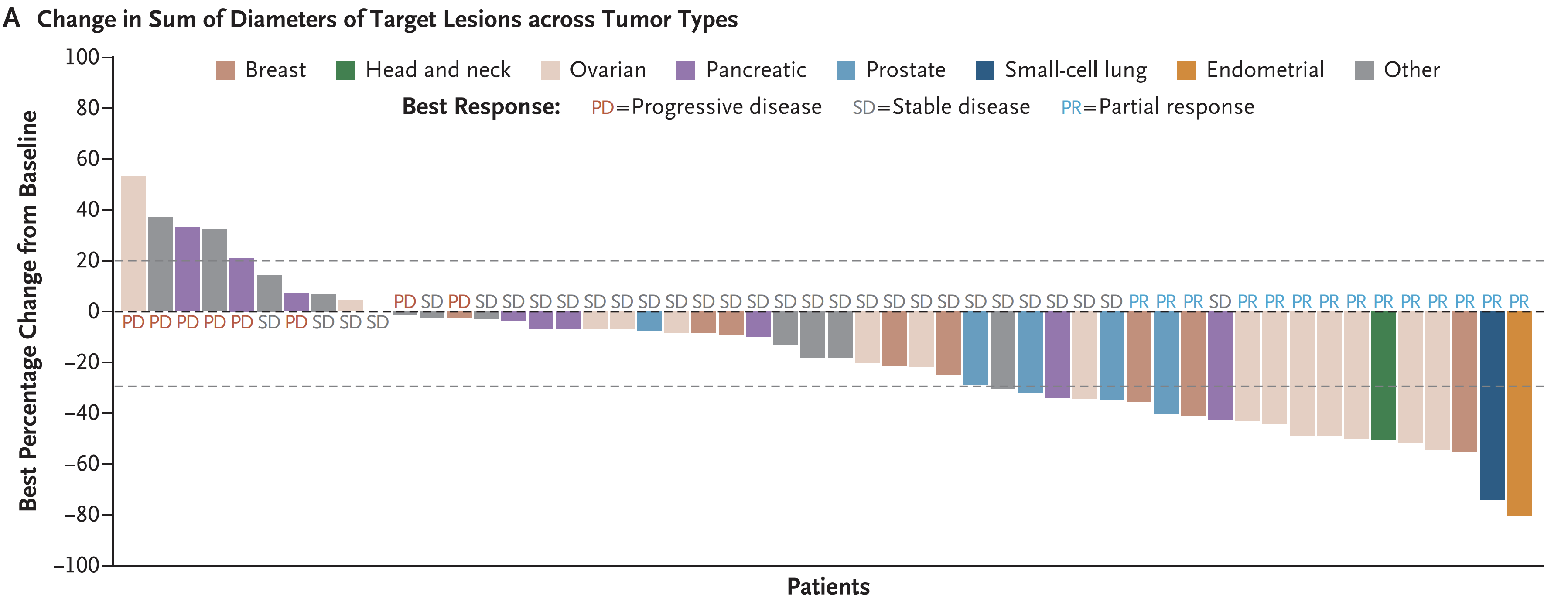
One concern with p53-reactivating therapies is the extremely strong selection pressure cancers exert to inactivate p53 (and there are thousands of ways to do it) — for example, straightforward resistance mechanisms here could be MDM2 overexpression (to speed up p53 degradation) or just mutation of a different residue. To what extent this happens with Rezatapopt, and how fast, isn’t yet known.
With recent breakthroughs for inhibitors of RAS (the most commonly mutated cancer gene) and now these early data for a p53 re-activator (the second most mutated) — this is a very very exciting time in Oncology.
2. The most effective weight loss drug yet?
The first-generation obesity drugs (like Semaglutide) were single agonists of the GLP1 receptor. The second-generation drugs (Tirzepatide) were dual agonists, for both GLP1 and GIP receptors. The third-generation is now here, and we’re calling them ‘Triple Gs’ — they’re triple agonists of the GLP1, GIP, and glucagon receptors.
The first triple G, Eli Lilly’s Retatrutide, is ridiculously effective:
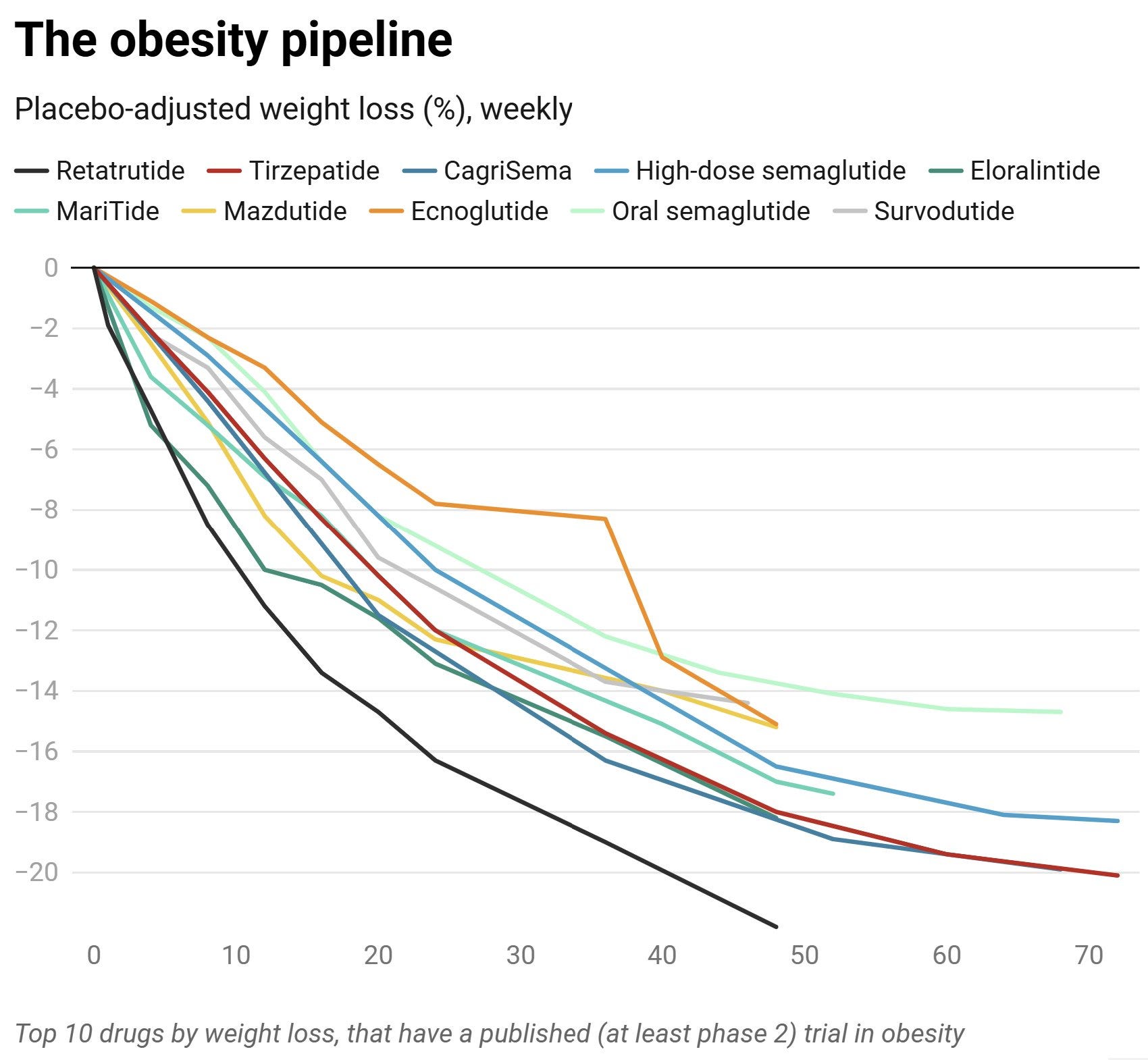
It turns out that Novo Nordisk, Eli Lilly’s main competitor, have been working on their own triple G — it’s called UBT251, and they released the phase 2 data this week. Here’s how it compares to Eli Lilly’s Retatrutide at the same 24 week timepoint — even faster weight loss!
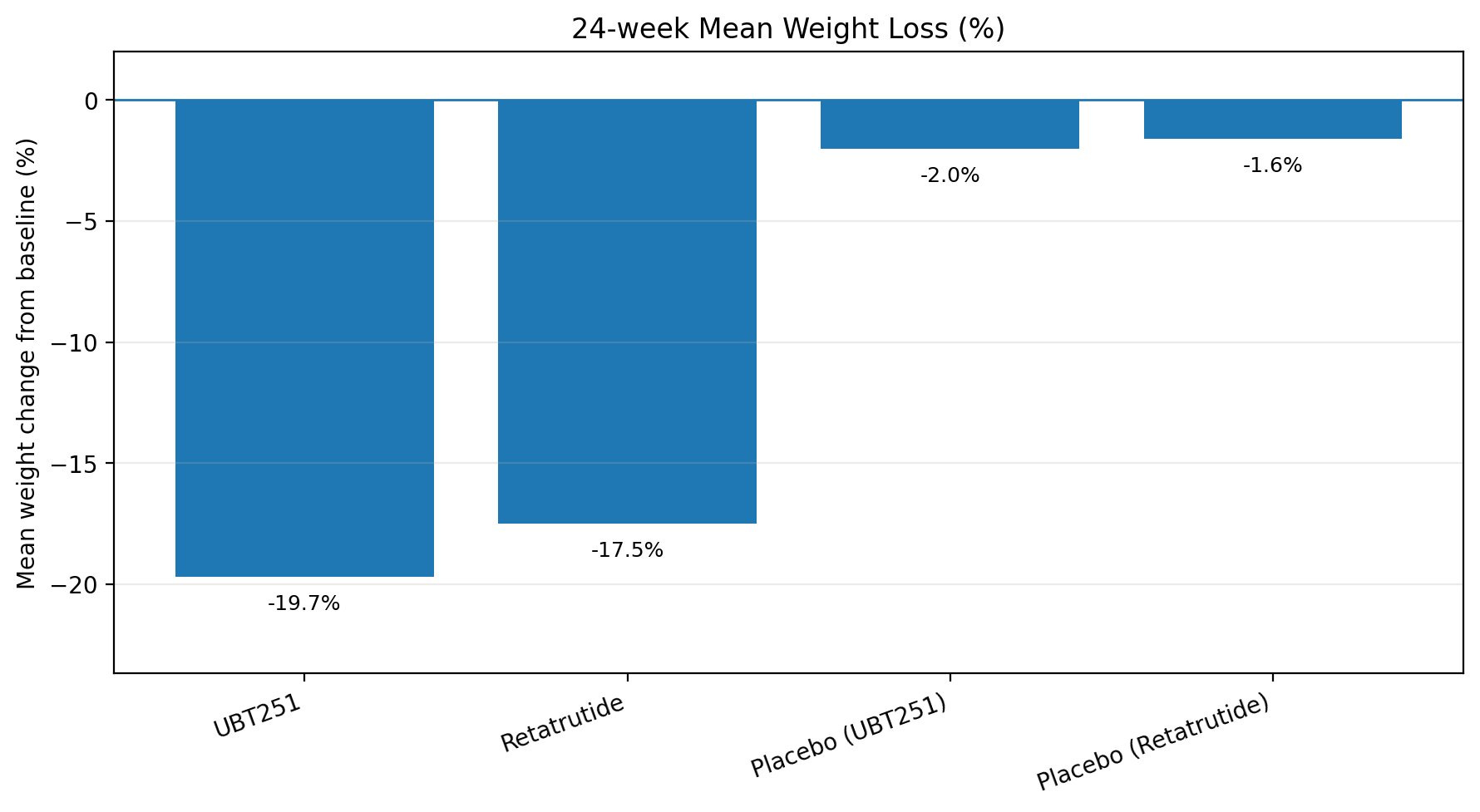
There are caveats to this comparison: it’s only phase 2 data, in different populations (UBT251 was tested exclusively in a Chinese population) — and there’s no precise safety data for UBT251.
If it holds up in the phase 3, UBT251 could be particularly useful for those with very high BMI (>40) or those unable to lost weight with other drugs (and it’ll need a different name, too!).
3. Stem cells help treat frailty
Something we’ll almost all face as we get older is frailty, and we are going to need some serious innovation to address it.
This study, published this week in Cell Stem Cell, is an extremely interesting randomized trial of stem cells in frail older adults, aged 70-85. The study measured 6-minute walking at the beginning, and then up to 9 months after stem cell infusion. There were 30 patients in placebo group, and 118 patients in stem cell groups.
The data are really nice. As you’d expect, the walking distance declines in the placebo group, and there’s some dose-dependence, too: at the high dose, stem cells boosted walking distance by about 20%.
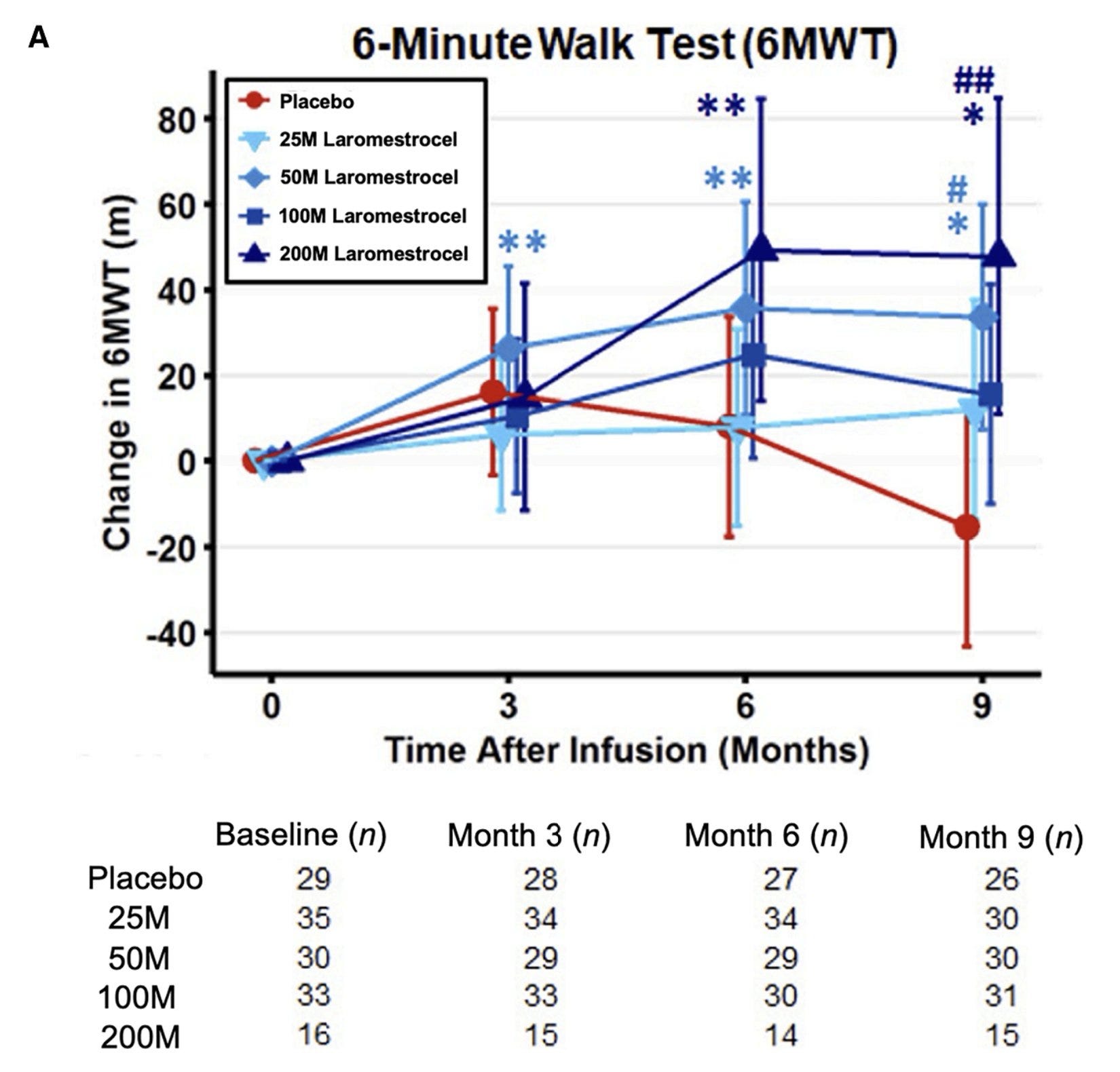
So how does it work? The stem cells (donor-derived mesenchymal cells) seem to act mainly by releasing signalling factors to reduce inflammaging and improve function of blood vessels (they do not replace worn-out tissues directly).
4. A first-in-human trial in spina bifida
Spina bifida affects about 1 in 2,875 births in the US (about 1,278 babies per year) — it’s a birth defect where the baby’s spine and spinal cord don’t develop properly early in pregnancy, leaving a gap in the spine.