


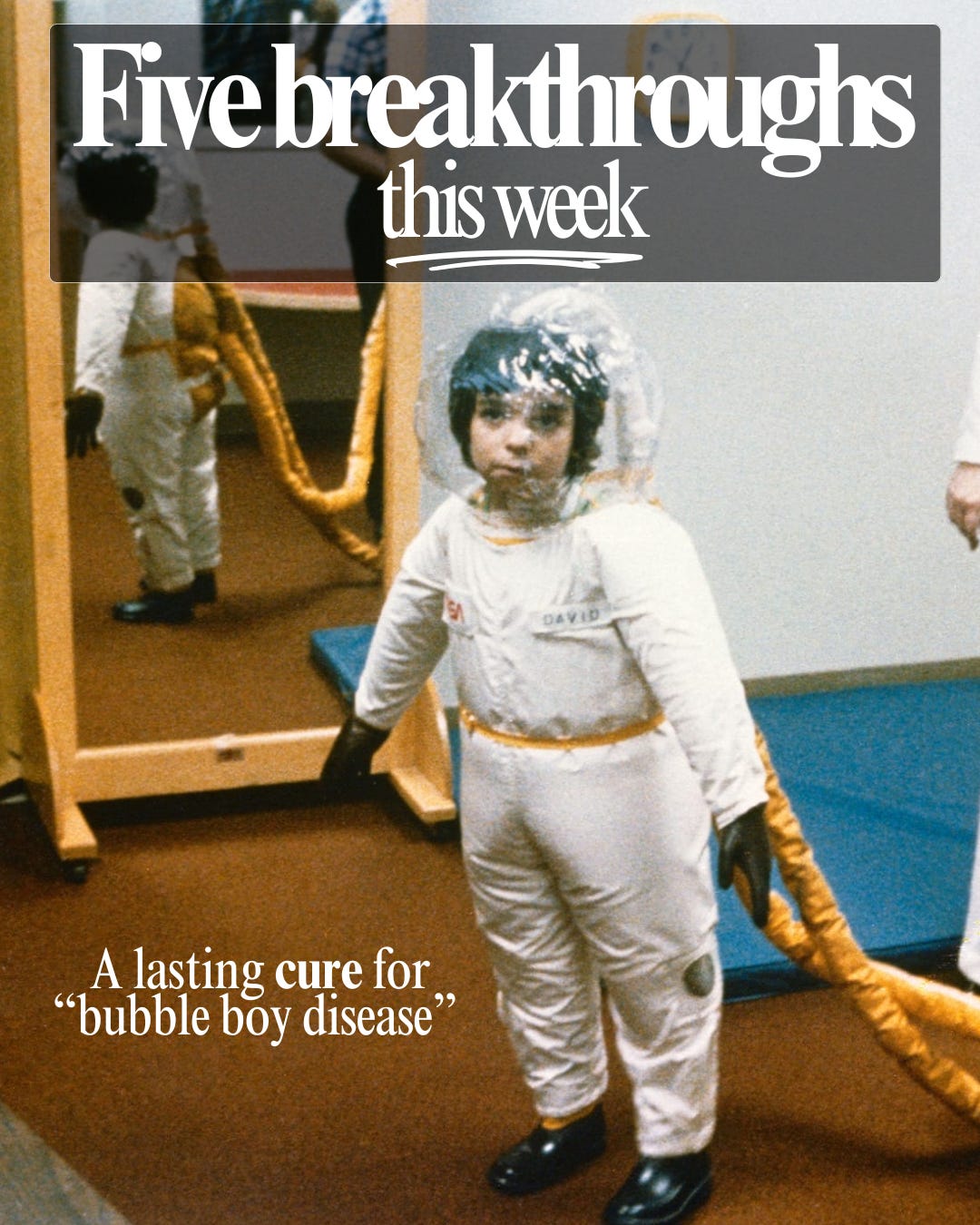
1. A lasting cure for SCID
Severe combined immunodeficiency (SCID) causes profound immunosuppression that can lead to severe bacterial, viral, and fungal infections — it’s called “bubble boy disease” because patients had to live inside sterile plastic bubbles. It used to cause death in most children by age 2.
It’s genetic, with roughly 20 causative genes. One treatment for SCID is a haematopoietic stem cell transplant, where a functional copy of the faulty gene is added to patients’ own blood stem cells, high-dose chemotherapy is used to deplete the existing bone marrow, and the corrected cells are re-infused.
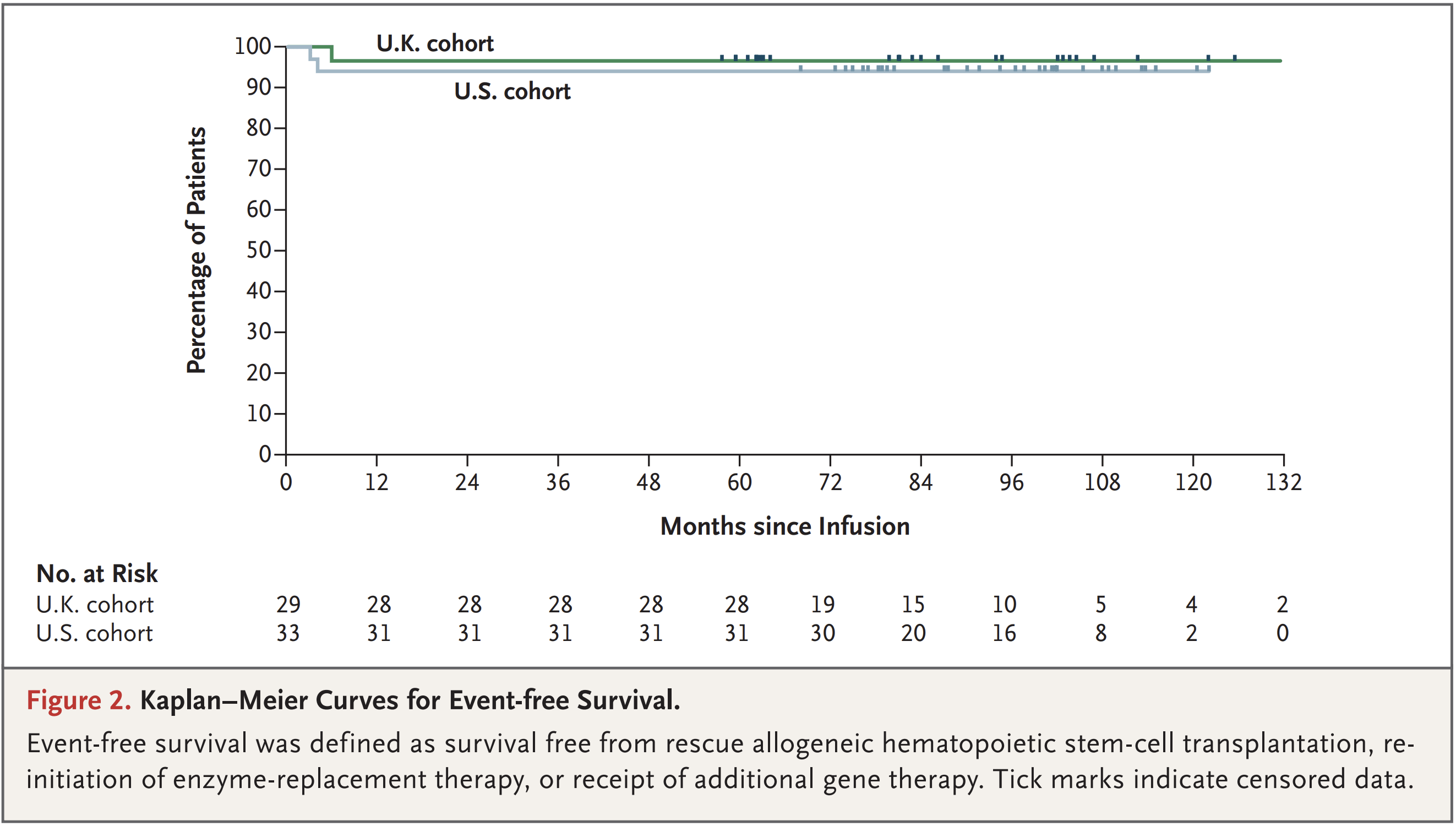
This study, published this week in NEJM, treated SCID patients (caused by deficiency in the ADA gene) in this way, and followed them up for up to 11 years. Every single patient was alive at follow-up: survival was 100%.
This autologous stem cell transplant is much more attractive than the alternative treatments: replacement of the faulty enzyme (which is not a cure) or bone marrow transplant from a donor (which requires immunosuppression, and carries a risk of graft-vs-host disease).
Now we can identify SCID as part of new-born screening programs, lasting cure should be the default for all patients.
2. Towards a cure for genetic hearing loss
Congenital deafness affects ~2 per 1,000 births. 1-3% of cases are caused by mutations in otoferlin, which is expressed by the OTOF gene in the hair cells of the inner ear.
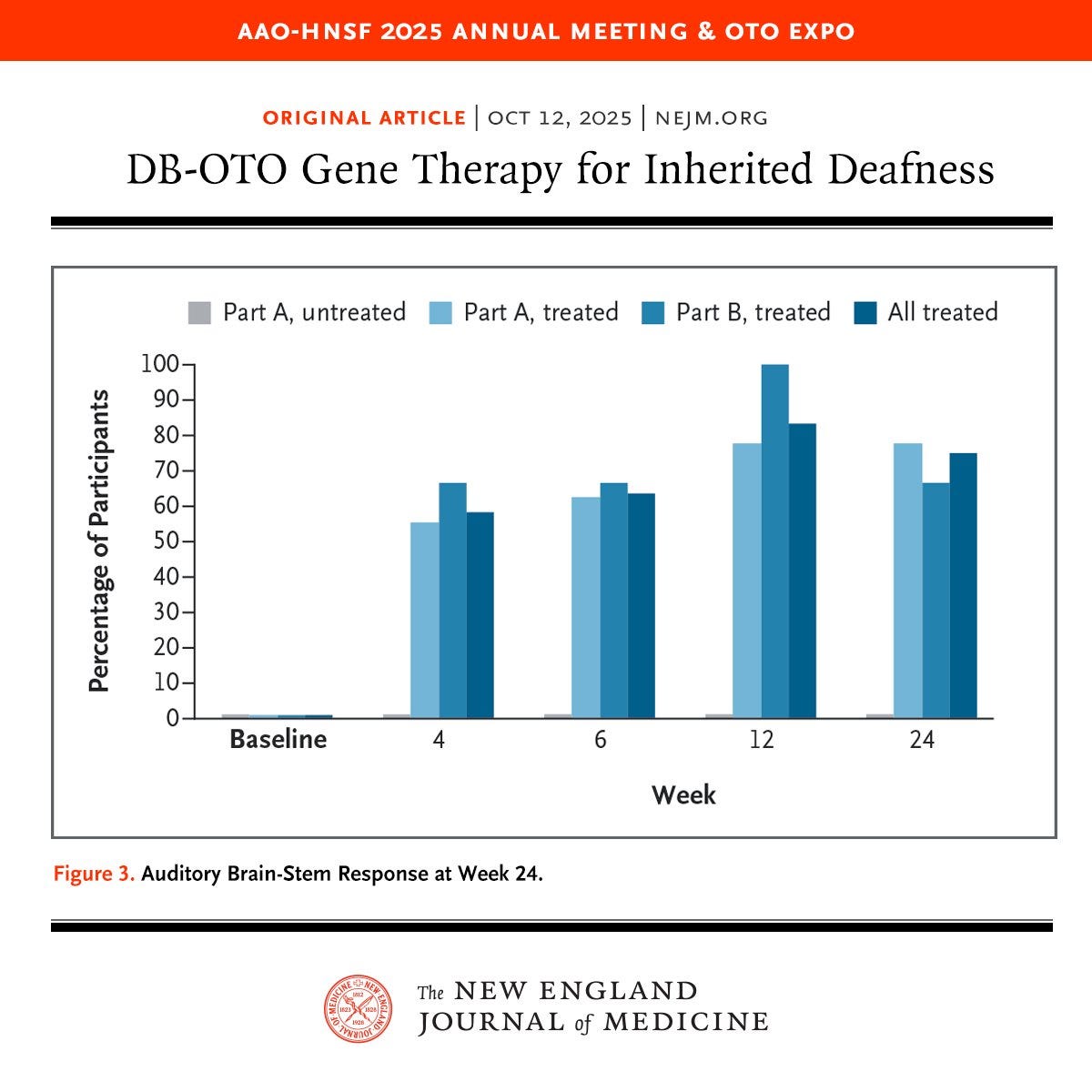
In this trial, 12 children with otoferlin deficiency were recruited, all of whom had profound deafness — equivalent to inability to hear a lawn mower. They had surgery to replace the faulty gene (the gene, OTOF, is huge, so it’s delivered in two separate vectors, and recombines inside the ear).
9 of the patients gained enough hearing to avoid cochlear implantation, 6 developed ability to hear soft speech, and 3 reached normal hearing.
This is life-changing for the patients: they started to interact with friends, and could communicate with their parents. This approach could also be used to treat other genetic causes of deafness: they’ll be tested next.
3. A stem cell treatment for Parkinson’s
Parkinson’s is caused by age-related loss of dopamine-producing neurons — its prevalence is climbing.
This study uses human embryonic stem cells to produce progenitors of dopamine-producing cells. These were implanted into the brain and allowed to mature into functional dopamine neurons. This led to endogenous dopamine production and improved motor function — there was less tremor, less stiffness, and an easier walk.
This therapy requires neurosurgery (the cells are injected directly into the putamen on both sides of the brain) and immunosuppression — so it’s by no means a small task.
This isn’t the first time stem cells have been used to treat Parkinson’s: earlier this year, there were promising results using induced pluripotent stem cells for Parkinson’s.
Bigger clinical trials are next!

4. Boosting BCG responses in bladder cancer
The tuberculosis vaccine, BCG, isn’t particularly good at preventing TB infection… but it is quite effective in bladder cancer. When instilled into the bladder, it stimulates a local immune reaction that helps prevent recurrence of bladder cancer after surgery — it’s been used in this way since the early 1990s.
