


1. Fish oil prevents heart related death in renal dialysis patients
Patients requiring kidney replacement therapy such as haemodialysis generally have a background of hypertension, diabetes or other underlying diseases. This, combined with consequences of poor kidney function, vastly increases the risk of cardiovascular disease such as heart attacks, strokes and more.
In the general population, statins, blood pressure control and other medical interventions have been successful in reducing such events. However, preventing these in patients undergoing haemodialysis is a lot more difficult.
A randomised controlled trial published in the New England Journal of Medicine now shows that fish-oil supplements greatly reduce the risk of cardiovascular events compared to placebo. The graph below showing the incidence of several cardiovascular events speaks for itself.
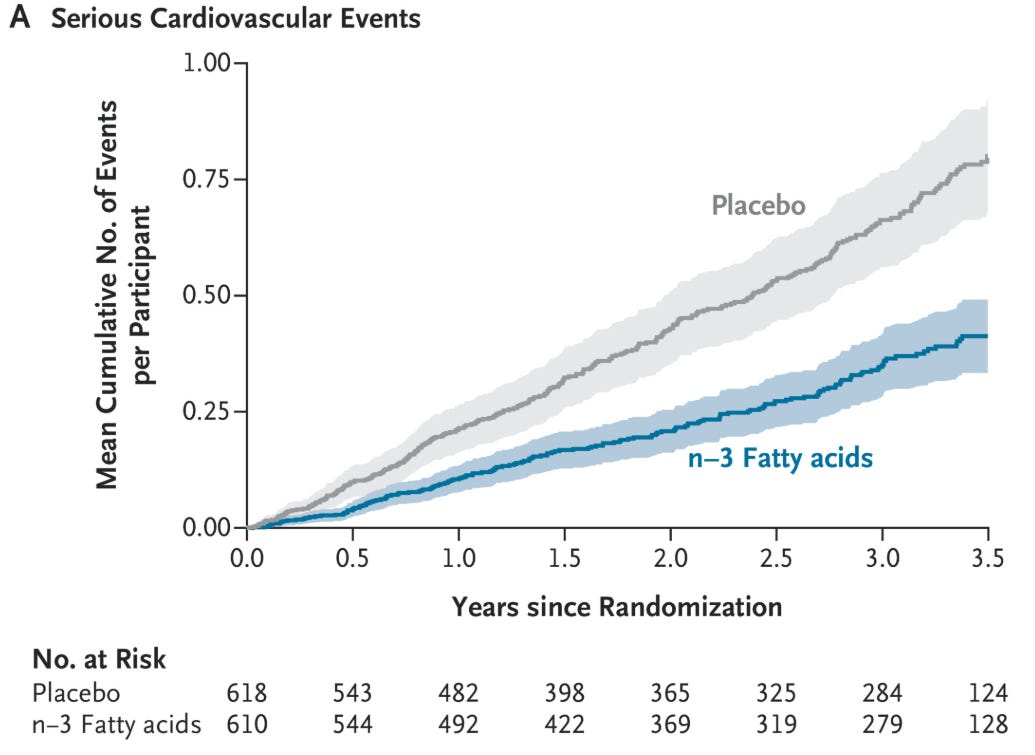
In an editorial published in NEJM, two nephrologists express the need for interventions effective in kidney dialysis patients, and while we should be enthusiastic about these results, it would be important to confirm these results with further trials.
2. New treatment for a common kidney disease succeeds in phase 3 trial
Glomerulonephritis is a syndrome caused by several distinct diseases. IgA glomerulonephritis is the most common variant. It presents with bloody urine, edema and when examined, blood pressure is often elevated. Sometimes, symptoms are missed though. When it is diagnosed, treatment usually includes long courses of corticosteroids, immunosuppressants with many, often metabolic, side effects.
Now, a new treatment may come available. As IgA nephropathy is driven by B-cells producing harmful antibodies which accumulate in the kidney, stopping those B-cells may halt the disease from progressing.
Atitacept is a new drug, it has a receptor domain serving as a type of decoy receptor combined with the tail of an antibody, providing stability. The decoy receptor binds APRIL and BAFF proteins. APRIL stands for “A proliferation-inducing ligand”, and BAFF “B-cell Activating Factor”. Immunologists are not famed for their creative naming skills.
Working as a hoover for APRIL and BAFF, atitacept starves B-cells of these proteins, which they require to proliferate and survive. B-cells die off, IgA production reduces and the pathological processes driving IgA nephropathy grind to a halt.
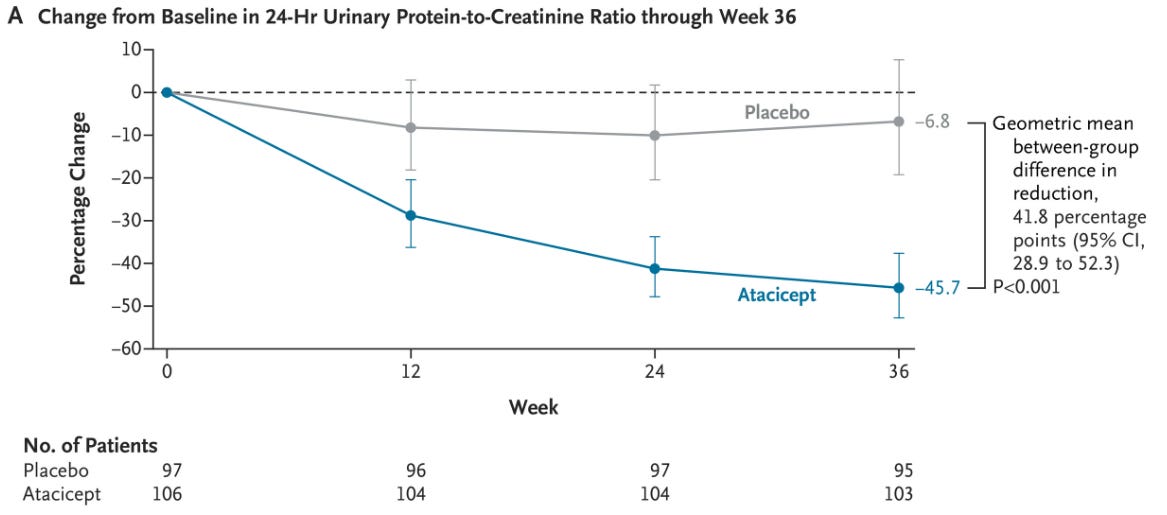
The treatment, compared to placebo, halves proteinuria. Adverse events did occur slightly more often in the treated group but appear modest. Infections were approximately as common in both groups. To establish atitacept as standard care, head-to-head trials against corticosteroids would be informative. Nonetheless, results are impressive.
3. Improved insights in lymphatic vessels
The lymphatic system is essential for proper functioning of the immune system and vascular system. Approximately 10 liters per day of fluid leak from our blood vessels and become interstitial fluid. This fluid is taken up by lymph vessels and routed via lymph nodes and lymph vessels back to the main circulatory system.
Dysfunction of this system is common though. Imagine a breast cancer patient, where the tumour is excised, and, to prevent cancer cells in tumour draining lymph nodes to cause disease recurrence, axillary lymph nodes are taken out as well. This is a common scenario leading to reduced drainage of said interstitial fluid and thus swelling of the arm. This can become so extensive that it heavily impacts functionality and quality of life.
Lymph edema, as this phenomenon is known, is common and hard to treat. Understanding the lymphatic system better may provide us with more insights and options to treat lymphedema and other lymphatics disorders.
Recently, Swiss researchers published one of the most comprehensive analyses of the lymphatic system to date. The team used single-cell transcriptomics and 3D imaging to map the structure and function of lymphatic vessels across tissues.
The video below shows a bit of skin stained green for podoplanin (PDPN), a marker for lymphatic vessels, and red for αSMA, which stains blood vessels, showing the interaction between the lymphatic and vascular system.
This publication deepens our understanding of the lymphatic system. While it does not offer new treatment opportunities for disorders related to the lymphatic system, it puts the spotlight on this overlooked part of the human body and informs future research.
