


1. Huntington’s treated for the first time
Huntington’s is a progressive genetic condition that causes movement difficulties, depression, and dementia. There’s no treatment, and patients typically live for 15-20 years after the onset of symptoms: it is a serious unmet need.
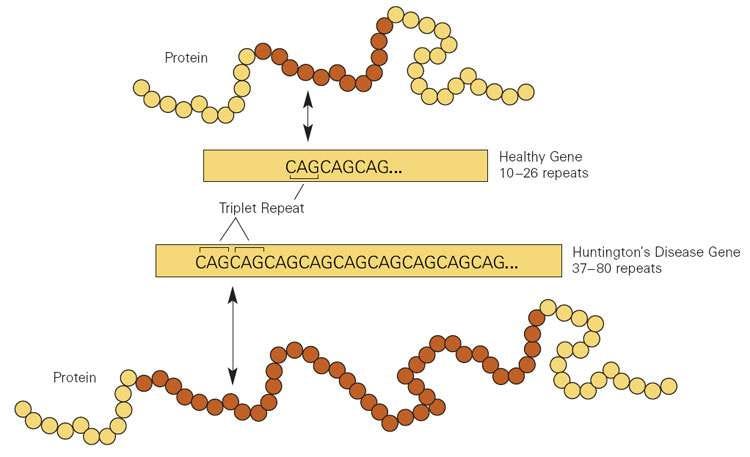
The causative gene (Huntingtin) has a series of glutamine repeats, encoded by the CAG codon — healthy people have ≤26 of these repeats. If someone inherits ≥40 repeats, from either parent, this is usually sufficient to cause Huntington’s. These repeats expand throughout life, too — so affected children tend to get symptoms sooner than their parents, and their children get symptoms sooner still.
UniQure just announced phase 1/2 results for their treatment, a gene therapy that encodes a Huntingtin-targeting miRNA. This means Huntingtin mRNA is depleted and the mutant protein doesn’t get produced — so it can’t misfold, aggregate, or kill neurons. It's directly infused into the brain under MRI guidance (by no means non-invasive!).
In patients with early symptomatic Huntington’s, this delayed progression of symptoms — cognition, motor function, daily activities — by 75%. This translates to many extra years of independence:
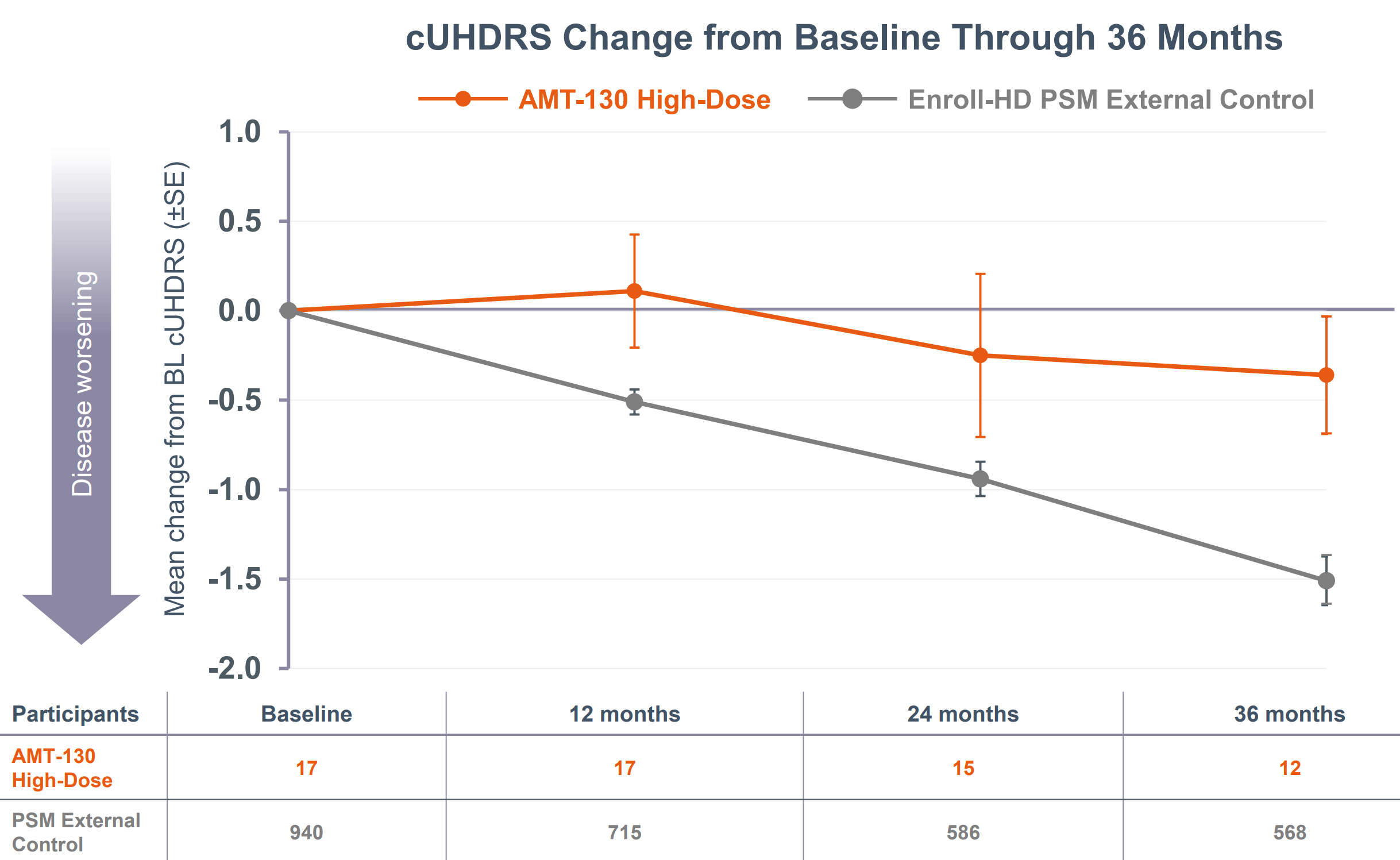
As you can see in the chart, this is not a cure — treated patients still got slightly worse over the 3 years. It’s also not a randomized-controlled study (the comparator is an external control), only tested in 29 patients, and efficacy beyond 3 years isn’t known. But this is really the first time families with Huntington’s can feel some hope.
2. Ulcerative colitis treated with CAR T cells
Ulcerative colitis is an immune-mediated condition that causes inflammation of the colon — symptoms include frequent bowel movements (in the day and at night) with increased urgency — and often bloody stools.
This is a case report of a 21-year old woman whose ulcerative colitis was resistant to every line of medical treatment. Steroids didn’t work; mesalamine didn’t work; biologics didn’t work, S1P1/5 receptor modulators didn’t work, JAK inhibitors didn’t work; cyclosporine didn’t work.
As a last resort, CD19 CAR T-cells were tried. These are T cells taken from patients, edited to have a ‘chimeric antigen receptor’ (a CAR) — with specificity for any antigen. CD19 was chosen because it’s on B cells, which often drive inflammatory conditions, and — unlike CD20 — CD19 is expressed right across the B cell lineage, from very early cells to antibody-producing plasma cells.
This induced rapid disease remission:
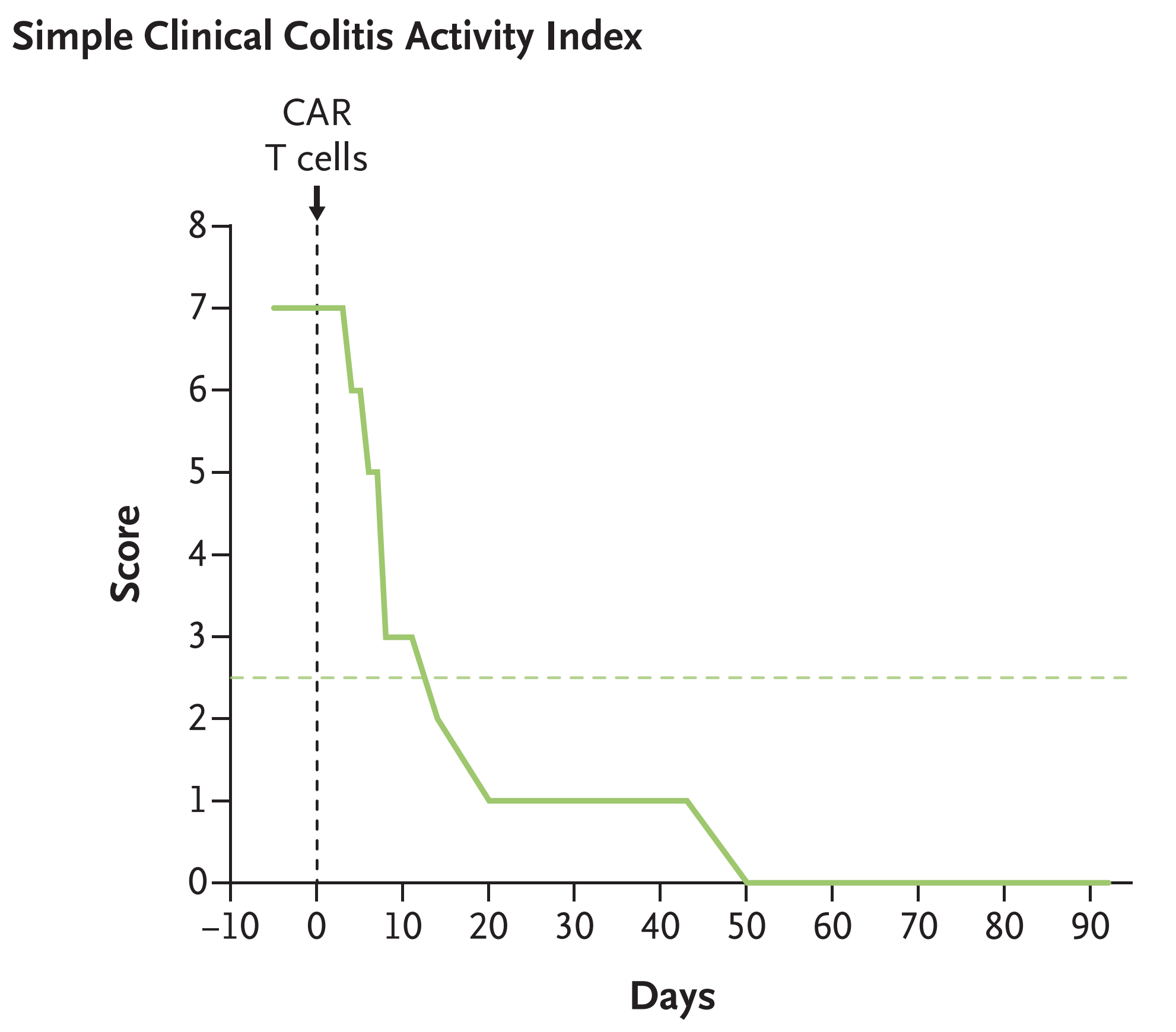
This is the first time this has ever been done for ulcerative colitis — and adds to the growing list of other autoimmune conditions successfully treated with CD19 CAR T-cells.
It’s just one patient for now, but CAR T cells could emerge as a colon-preserving alternative to surgery.
3. Immunotherapy can induce remission in a broadening range of cancers
About 3% of tumours are deficient in a DNA repair pathway called mismatch repair — which means cells accumulate mutations when they replicate DNA. This makes the cells very attractive to the immune system (‘immune hot’), and the cancer is more amenable to immune-activating therapies like pembrolizumab (a PD1-blocking immunotherapy).
This year there was a major breakthrough — in some patients with early, mismatch repair-deficient tumours (particularly rectal cancer), PD1-blocking immunotherapy evaporated tumours— sparing the need for surgery:
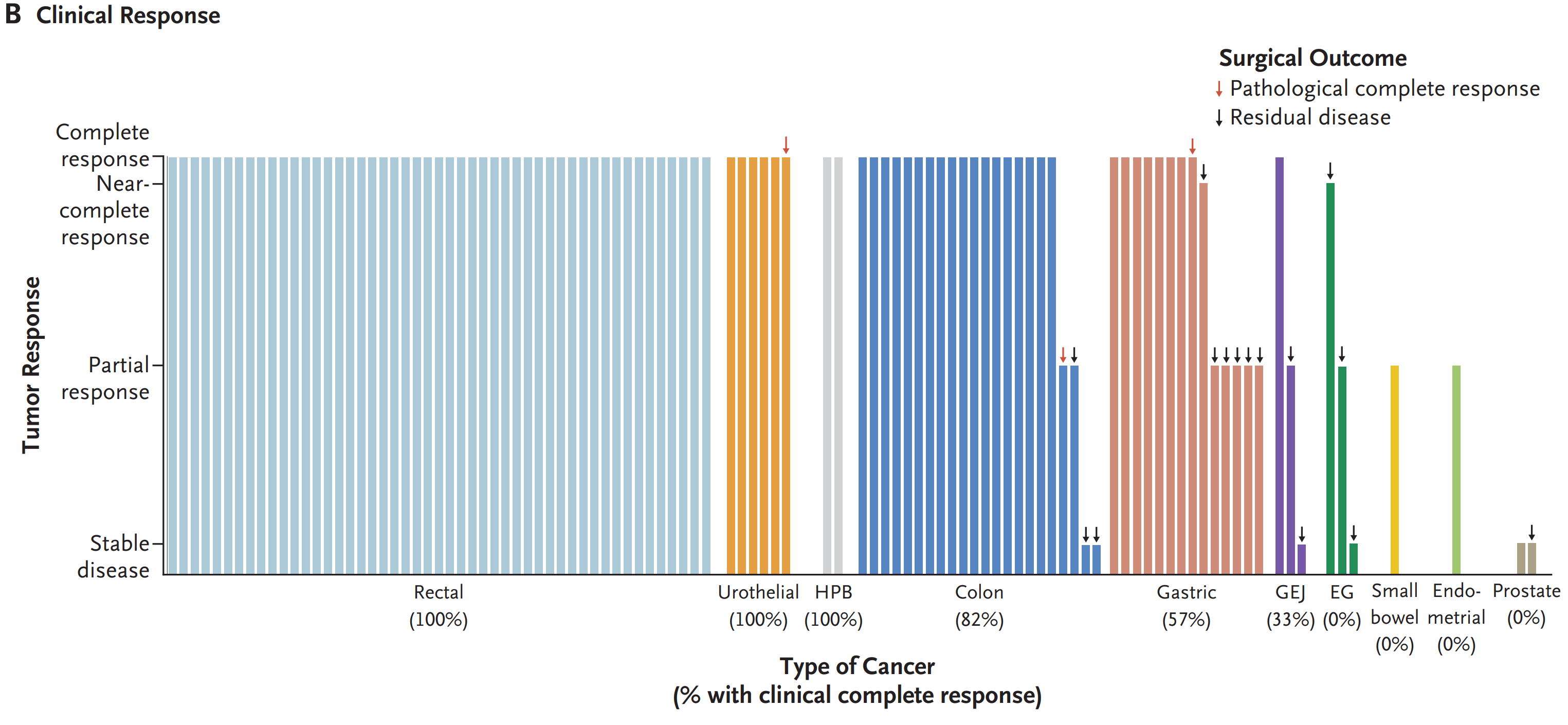
This new report expands that dataset, looking at seven patients with mismatch repair deficient, metastatic, castration-resistant prostate cancer — an extremely tough disease. Pembrolizumab induced remission in four patients (a complete response rate of 57%):
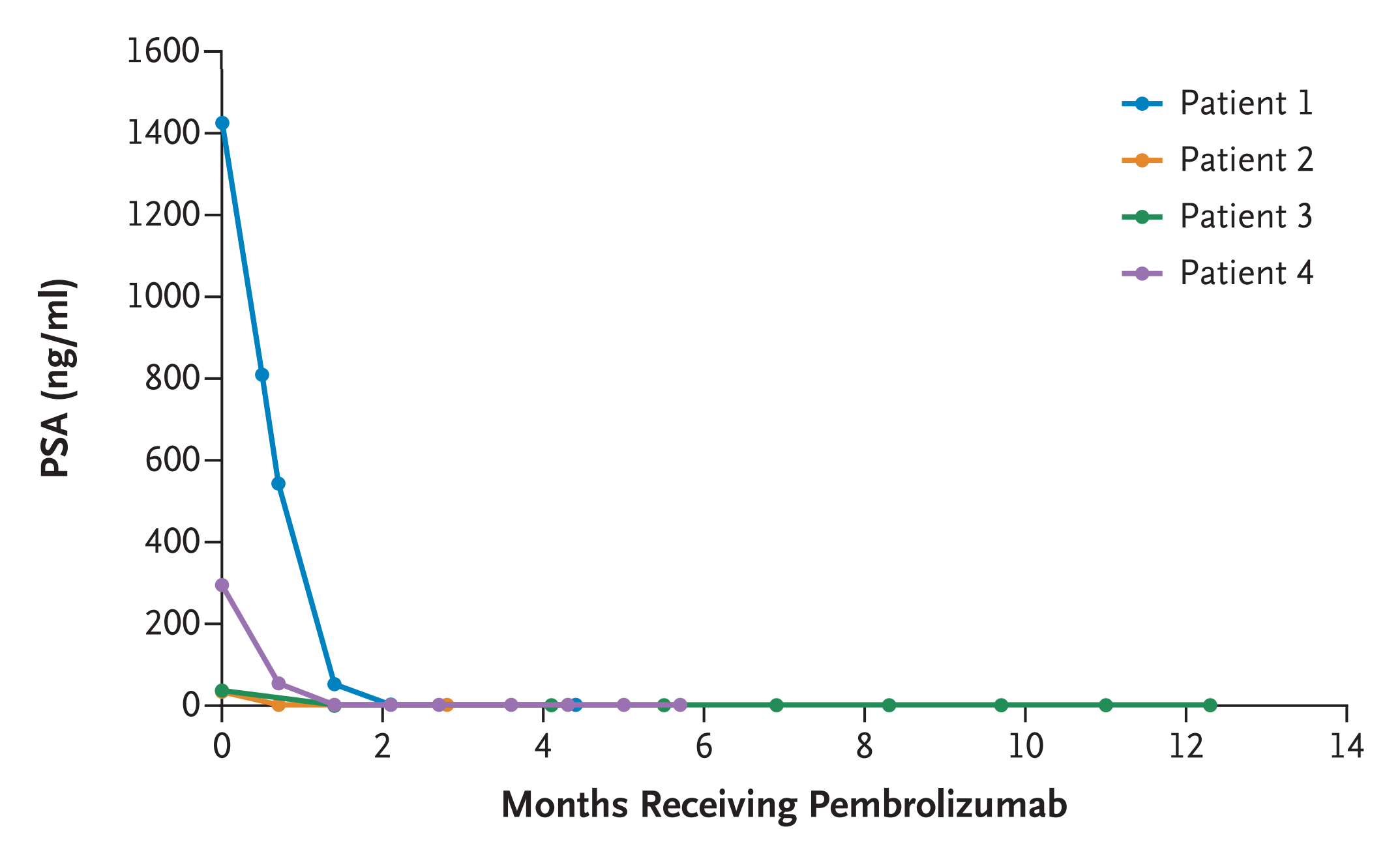
Prostate cancer is renowned for its immune-suppressive microenvironment — but the fact these patients responded so well — despite numerous previous rounds of failed therapy — suggests a real opportunity for immunotherapy in this disease (and adds to other reports of high efficacy in this population). Of course, others didn’t respond at all: the jury’s still out on why that is.
