


1. Targeting triglycerides to prevent pancreatitis
Triglycerides are lipids that come from food, but their levels in the blood are also influenced by genetics — as well as environmental factors, like obesity and insulin resistance. Normal triglyceride levels are <150 mg/dL, but about 1-2% of adults have triglyceride levels above 500 mg/dL (this is called severe hypertriglyceridemia).

Very high triglyceride levels can injure and inflame the pancreas, causing about 5% of pancreatitis cases. Most patients with acute pancreatitis fully recover, but about 10% suffer organ failure (often needing ICU admission), and the total mortality, with all cases considered, is about 5%. Longer-term, there’s a risk of chronic pancreatitis, pancreatic insufficiency, and diabetes.
The best triglyceride-lowering drug we have at the moment is the PPARα agonist, fenofibrate, which reduces triglycerides by an average of about 40%. But none of the approved drugs have been proven to reduce the risk of pancreatitis.
Olezarsen is an antisense oligonucleotide that reduces triglycerides by silencing APOC3 mRNA. This increases the activity of lipoprotein lipase, an enzyme that breaks down triglycerides. This week, in two phase 3 trials in patients with severe hypertriglyceridemia, olezarsen was found to reduce triglycerides and the risk of pancreatitis. Here’s how that looks in context:
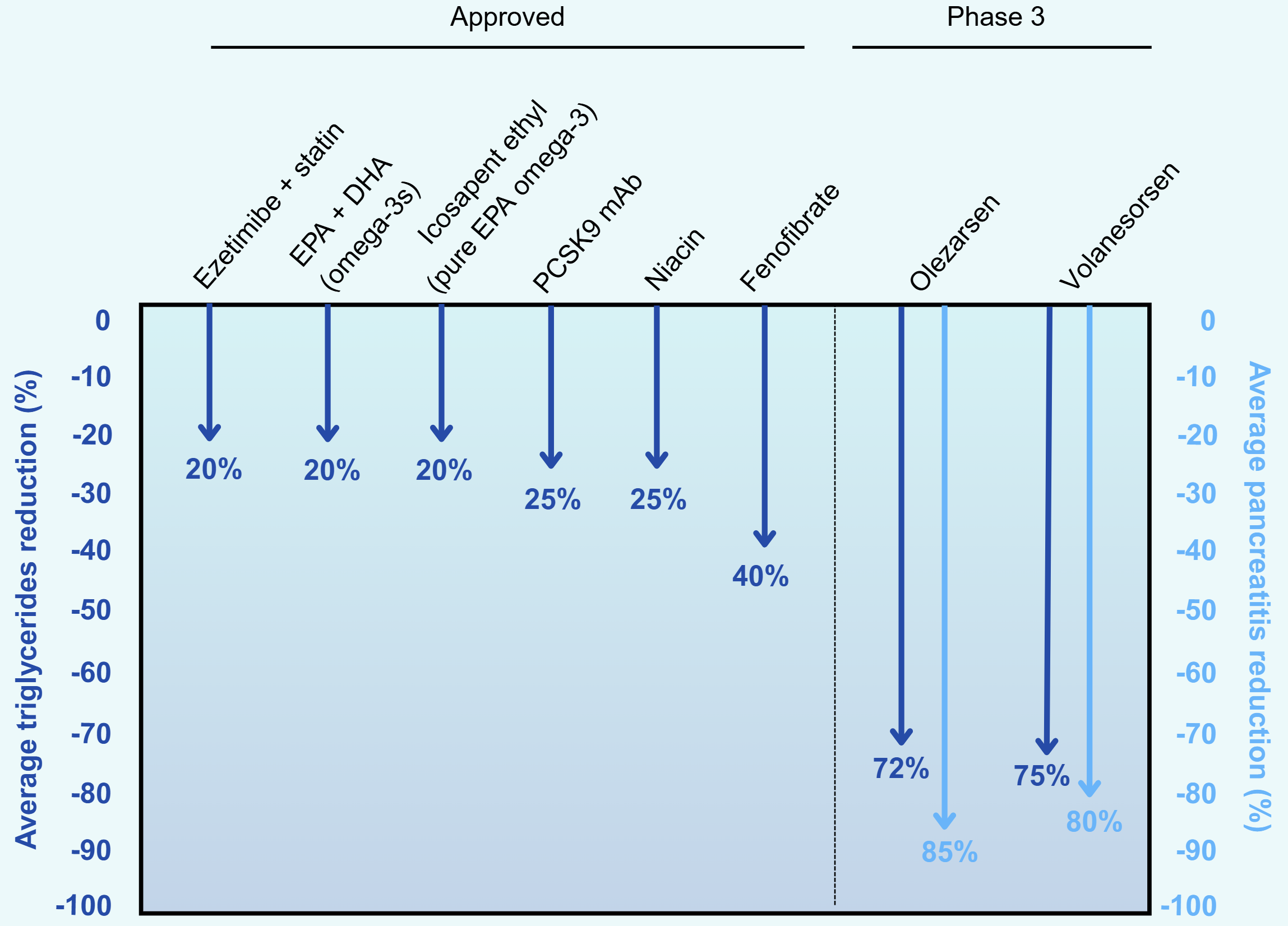
So, olezarsen becomes only the second drug proven to lower pancreatitis risk in severe hypertriglyceridemia (and is the front-runner here — Volanesorsen is being pursued for the ultrarare genetic condition, familial chylomicronemia syndrome, but not, it doesn’t seem, for severe hypertriglyceridemia).
Beyond pancreatitis, high triglycerides also cause plaques in arteries — like LDL cholesterol — so can cause cardiovascular disease: the next question is whether olezarsen reduces cardiovascular risk.
Here’s the published trial (focussed on triglyceride-lowering, but no pancreatitis or cardiovascular data) and the data on pancreatitis (which was just released by the company).
2. Intensive blood pressure control has net benefit
One of the most common causes of preventable disability and death is high blood pressure: hypertension.
Standard blood pressure targets are <140 mm Hg systolic for most people, or <150 in older adults. We know from recent trials that intensive blood pressure control — below 130 or 120 — has benefits: lower risk of heart attack, stroke, heart failure, or death from any of these. But this has risks, too: increased chance of falls, acute kidney injury, and side-effects of the medications.
What we don’t yet know is whether the benefits outweigh the risks. That’s what this study provides. It’s a meta-analysis of the major randomized trials that’ve been done on this question, covering >80,000 people.
Here's what the data say. Compared to standard targets, there is a net benefit to intensive blood pressure control. This was seen in every demographic group, and even in those over 80 (though the net benefit for a systolic blood pressure target of <130 was bigger than for a target <120).
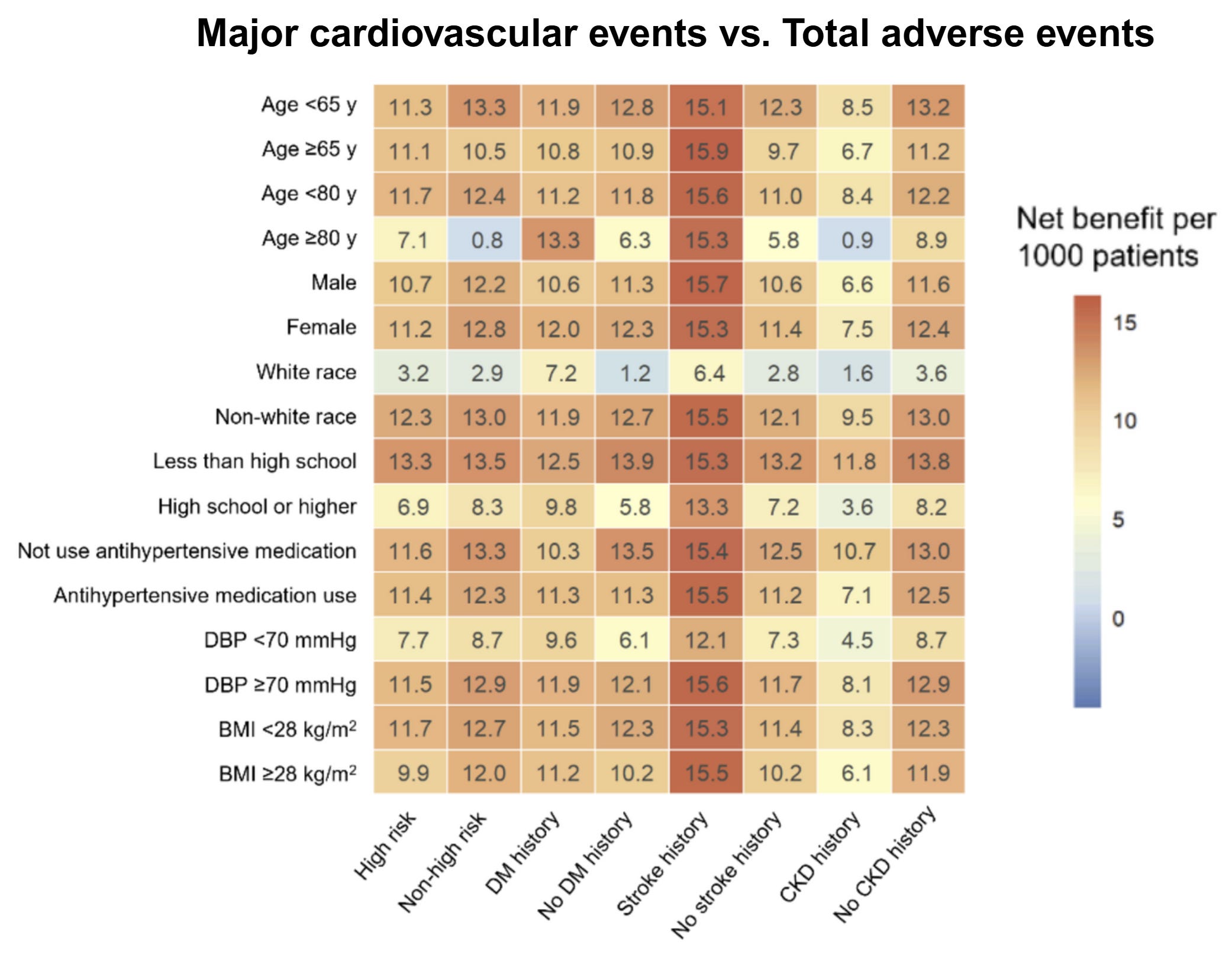
Here’s the study, from the Lancet.
3. Chronic inflammation is a core, targetable cardiovascular risk factor
There are four main cardiovascular risk factors: high blood pressure, high cholesterol, diabetes and smoking. Each, independently of the next, increases the risk of heart attacks and strokes.
Chronic inflammation is a risk factor, too, which we can measure with high-sensitivity C-reactive protein (hsCRP). The causes of this type of inflammation include obesity, chronic infections, autoimmune disorders, chronic kidney disease, and aging itself — and hsCRP is usually higher in women.
What we don’t know is whether people who have high inflammation — but none of the other four risk factors — have raised cardiovascular risk, and whether this risk can be reduced (with medication).
This study finds that 1) those with high hsCRP (in the absence of other risk factors) do have an increased cardiovascular risk — these data are from women only and 2) that the risk can be reduced with a statin (data from both men and women).
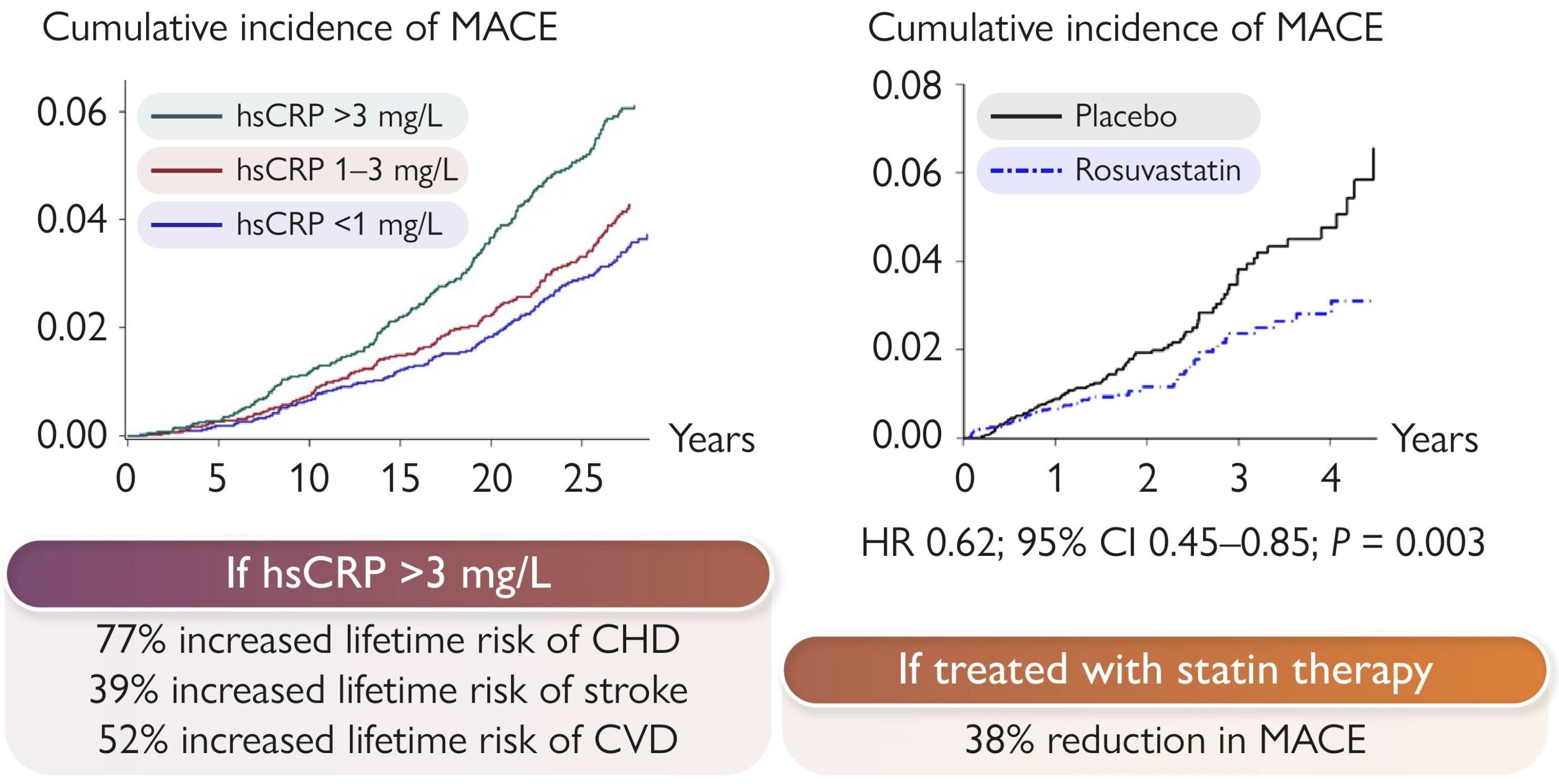
This is pretty profound: it means that low-level, chronic inflammation is a core, independent cardiovascular risk factor — and it’s treatable.
We don’t typically measure hsCRP in the clinic, but, with this discovery — and with new therapies (like IL6 inhibitors) moving through trials —this is an exciting, developing field, and maybe we will soon be routinely measuring hsCRP.
Here’s the study.
4. Air pollution increases dementia risk
12 million people have Parkinson’s disease globally, which is predicted to rise to >25 million by 2050. This is partly due to population growth and aging — but also partly due to increased risk.
