


2025 was an incredible year: the first patient-specific medicine, new antibiotics, transplant breakthroughs I didn’t know were possible — and maybe the first disease-modifying treatment for Huntington’s. Let’s jump in!
1. Breakthroughs in metabolic medicine
To start, 2025 brought new breakthroughs in metabolic medicine, which is good timing: almost 4 billion adults are expected to have overweight or obesity by 2050.
Obesity
Phase 3 trials dropped for obesity drugs with new modes-of-action: the GLP1 + amylin receptor agonist, Cagrisema, the GLP1/glucagon receptor dual agonist, Mazdutide, the triple agonist, Retatrutide, and oral GLP1 receptor agonists — Orforglipron and Semaglutide.
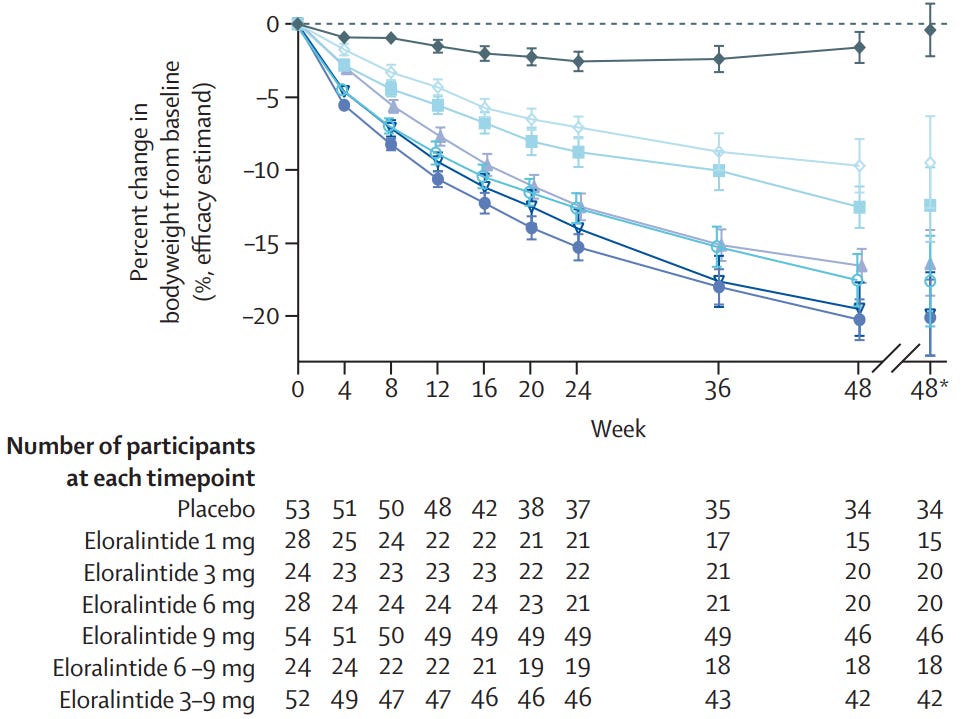
There were results for earlier-stage obesity drugs, too, like Eli Lilly’s single amylin receptor agonist, Eloralintide. This demonstrated, for the first time, a single mode-of-action that might rival GLP1s. GLP1s suppress hunger, but amylin agonists increase satiety.
Fatty liver disease
Semaglutide became the second drug approved to treat severe fatty liver disease (MASH) — probably the most interesting medical condition hardly anyone’s heard of. It’s common (5% of people), progresses in a stepwise (but interruptible) manner, and has potentially serious complications (liver cirrhosis, liver failure, cancer).
The first approval for this condition was only in 2024, but the pipeline is now red hot, with four drugs in phase 3, eight in phase 2, and three combination therapies being trailed, too.
LDL cholesterol
It was a good year for prevention of cardiovascular disease — and particularly for PCSK9 inhibition as a mode-of-action, which stimulates the uptake of LDL cholesterol from the blood (where it can accumulate in plaques) and into the liver (where it can’t).
The PCSK9-inhibiting antibody, Evolocumab, became the first non-statin proven to reduce heart attacks/strokes in people who’ve never had one before, and was approved for primary prevention of cardiovascular disease.
This year were the first-in-human data for (potentially) lifelong cholesterol-lowering in one dose, too. Verve Therapeutics dropped their phase 1 data for a one-and-done base editor targeting PCSK9, which was later followed by another one-and-done genetic editor, targeting ANGPTL3.
Lipoprotein(a)
High levels of lipoprotein(a) (an LDL-like molecule with an added protein component) presents a serious unmet need: it’s a risk factor for heart attacks and strokes, but its levels are controlled by genetics — unaffected by diet, exercise, or statins.
It was a good year for progress towards dedicated therapies, with Eli Lilly releasing data for a new siRNA that can drive down levels of lipoprotein(a) by >90%.
Triglyceride-induced pancreatitis
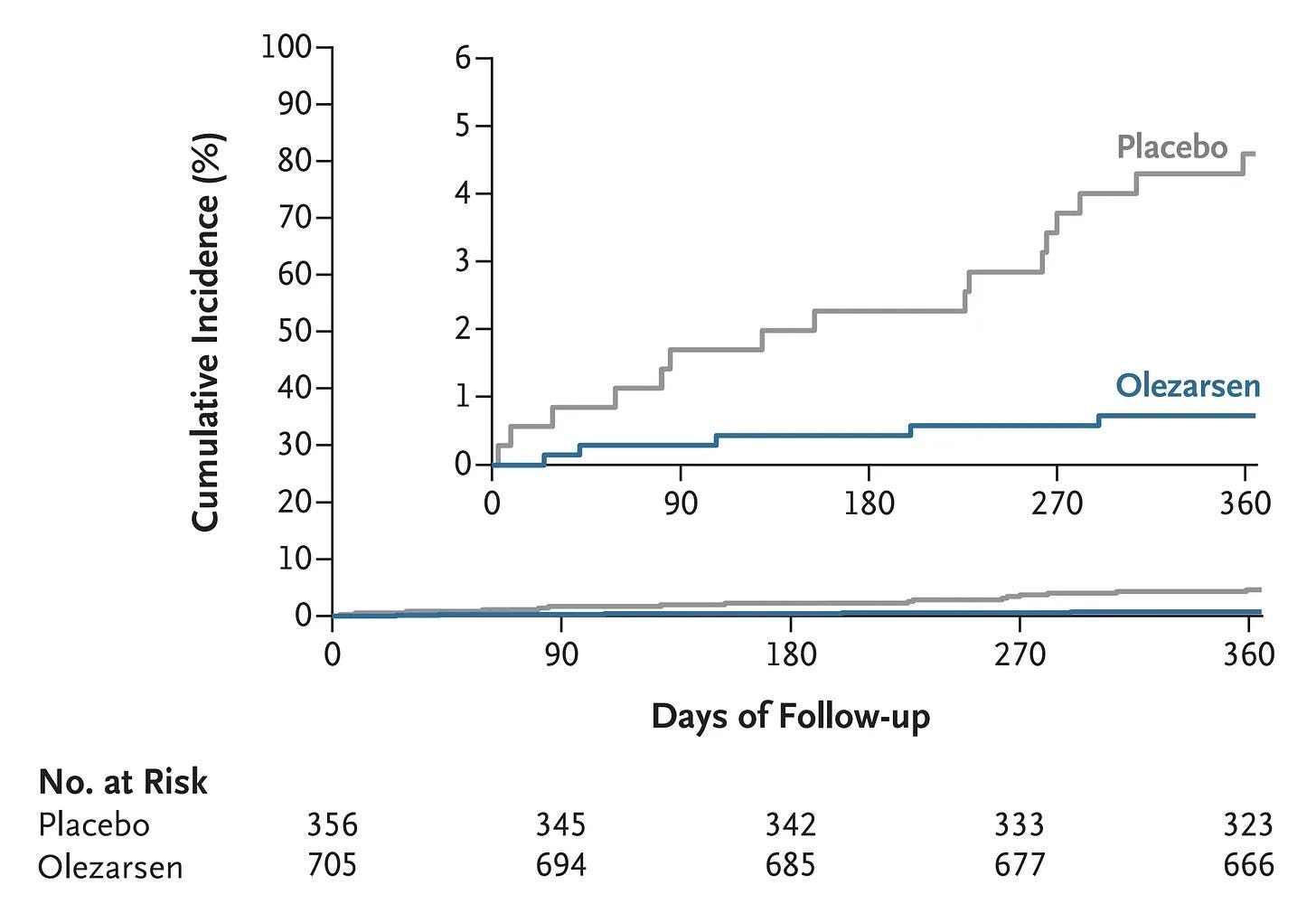
This year we saw the first medicine that not only reduces triglyceride levels (lots of drugs do that) but also cuts the risk of pancreatitis — in the ~1% of the population that has very high triglyceride levels (‘severe hypertriglyceridemia’).
The medicine is called Olezarsen — it’s an APOC3-targeting antisense oligonucleotide:
I can’t leave the metabolic section without mentioning 2025’s new data on GLP1s and cravings. This fMRI study was published: adults with obesity were shown images of high calorie food — you can see the placebo group’s brain light up with food noise, but not in those treated with Tirzepatide:
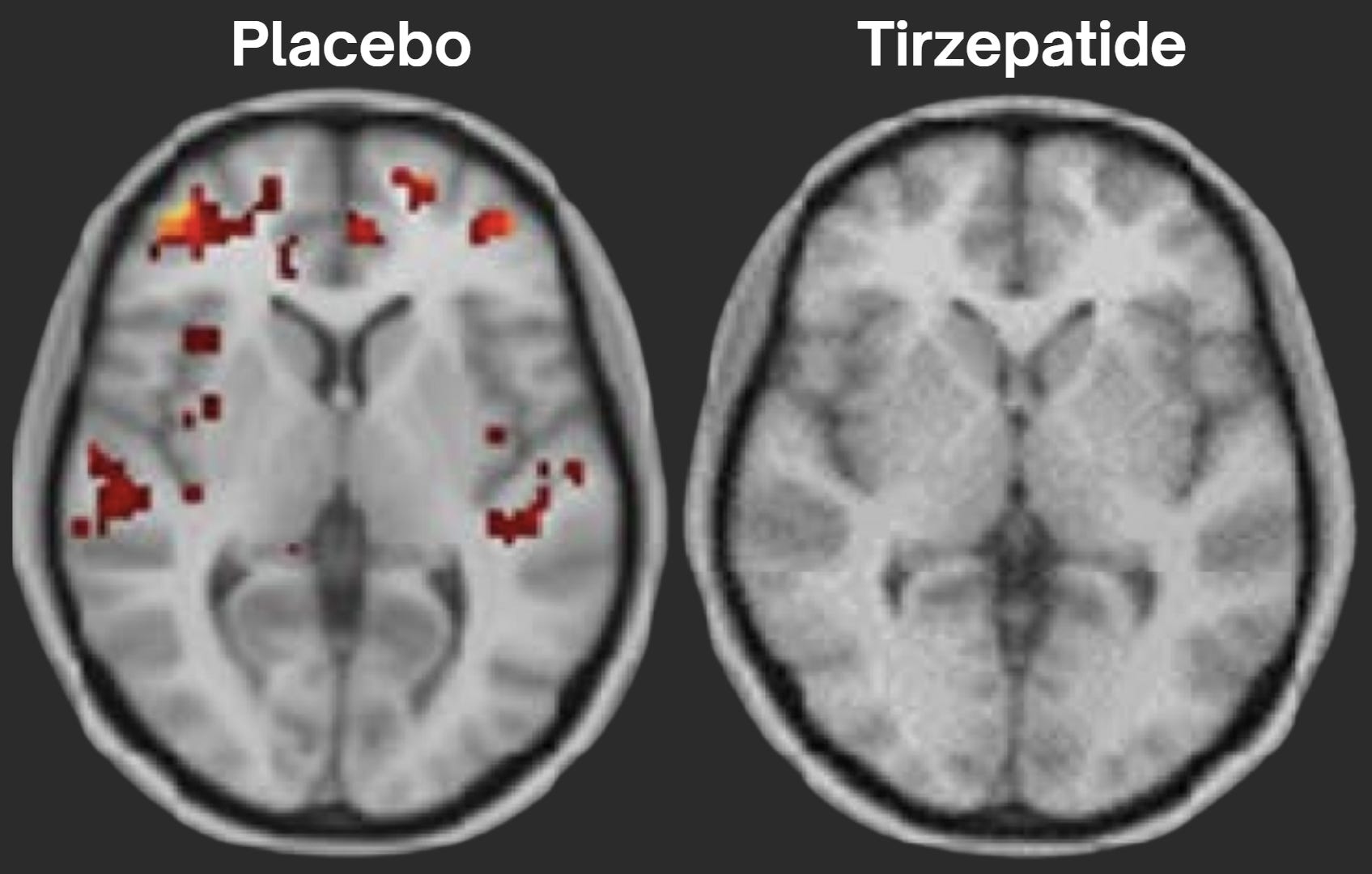
This probably explains why GLP1s seem to be so effective for reducing cravings for alcohol and cigarettes.
2. Progress in infectious diseases
Approval of new antibiotics
About 1,000,000 deaths per year globally are due to antibiotic resistance, a number that’s expected to double by 2050. This highlights the urgent need for antibiotics with new modes-of-action. This year, we got two.
The first was gepotidacin, approved in March 2025 for urinary tract infection, and in December for gonorrhoea. It inhibits bacterial replication through dual inhibition of DNA gyrase and topoisomerase IV, by binding new sites that are unaffected by resistance mechanisms.
The second was Zoliflodacin, which was also FDA-approved for gonorrhoea — it inhibits bacterial DNA gyrase (via a unique binding site).
Discovery of new antibiotics
Nature published the discovery that humans have a previously untapped treasure trove of antibiotics: proteasome-derived peptides. The proteasome is the cell’s dustbin, which breaks down proteins that are no longer needed — but it turns out that some of the peptides it produces are repurposed as antibiotics.
A new broad-spectrum ribosome-targeting antibiotic, Lariocidin, was discovered too, a new antifungal, Mandimycin — and a suite of new antibiotics discovered by generative deep learning.
HIV
Lenacapavir, a twice-yearly injectable medicine that prevents HIV, was approved in 2025, and started to roll out globally. When it was trialled (in women in South Africa and Uganda) it prevented 100% of HIV infections:
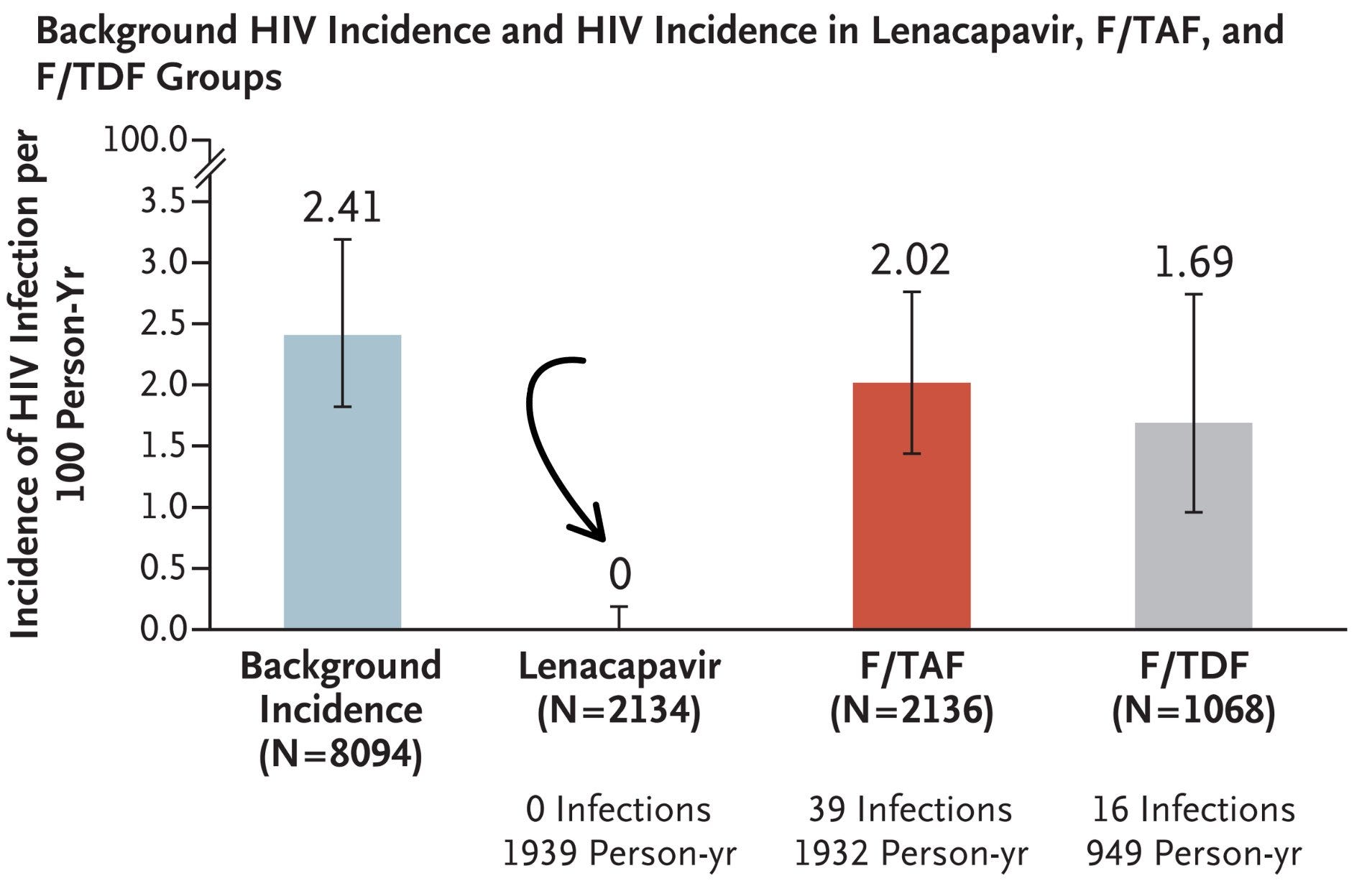
Its price in the US is going to be a steep ~$25,000 annually, but the producer (Gilead) has done deals with generic companies to make much cheaper versions in 120 low income countries — more like $25-40 per person per year. Even more exciting, this year we saw a new formulation of Lenacapavir that might allow it to be dosed just once per year!
In 2025, the 10th person (in history) was cured of HIV — by stem cell transplant.
Malaria
We saw breakthroughs in the treatment of malaria: Novartis released phase 3 data for a new anti-malarial that has 97.4% efficacy for curing malaria — and, unlike the current medicines, it kills resistant malaria parasites too.
There were breakthroughs for malaria prevention: a multistage vaccine, ivermectin, and permethrin-treated baby wraps were all shown to cut malaria transmission in big trials.

There were new approaches, too, to circumvent the resistance that’s arising as a result of insecticide-treated nets: spatial repellents (which repel but not kill mosquitoes) and anti-parasite (not anti-insecticide) nets both showed promise.
And, what about this for the future? Nature reported complete eradication of malaria parasites (in experiments) using genetically-engineered, gene-drive-capable mosquitoes that are resistant to Plasmodium falciparum infection.
3. Firsts in transplant medicine
There were a lot of firsts in transplant medicine.
Islet cells for type 1 diabetes
Islets transplant is sometimes offered for people with uncontrolled type 1 diabetes, but 1) we’re limited by the supply of islets from donors and 2) this approach requires lifelong immunosuppression.
Aiming to solve the first issue, 2025 brought early experiments for stem cell-derived islet transplants. And, aiming to solve the second issue, this year there was the first ever islet transplant for type 1 diabetes... with no immunosuppression! The islets were edited to avoid immune attack and — to prove the concept — they were transplanted into the patient’s forearm, where they started making insulin.
Kidney
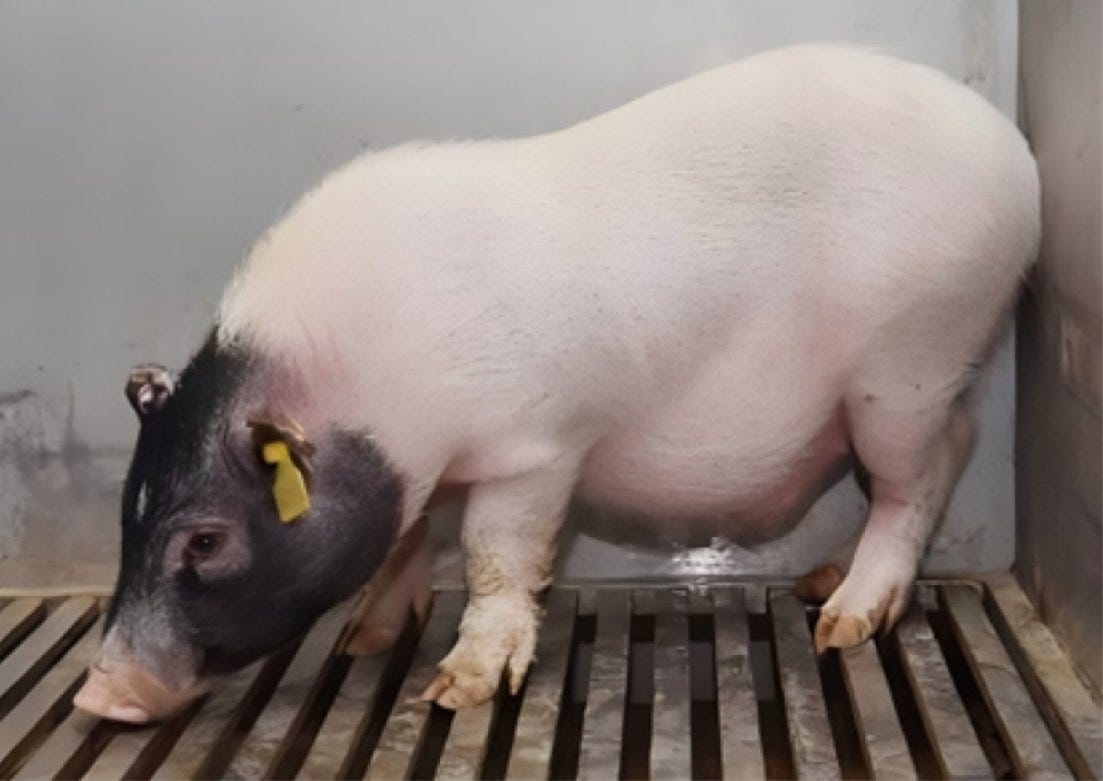
Using pig organs could help broaden the supply of kidneys available for transplant, and this year results came out for the first ever pig-to-human kidney transplant. To reduce the risk of rejection, 69 CRISPR-mediated edits were made to the pig’s genome!
Liver
Transplanting the liver is much more difficult, but that was achieved too. In proof-of-concept experiments, a gene-modified liver was transplanted into a human patient who was brain-dead. The liver functioned throughout, produced bile and albumin, and maintained blood flow without hyperacute rejection!
Lung
This year was also the first time a lung transplant’s been done from pig to human. It’s an experimental study, so the lung was transplanted into a human who was brain-dead. This was a scientific breakthrough but not yet a clinical success: despite an aggressive immunosuppression regimen, the lung suffered antibody-mediated rejection.
4. New gene therapies
Personalized genetic editing
Severe carbamoyl-phosphate synthetase 1 deficiency is an ultra-rare genetic condition that causes accumulation of toxic ammonia — and, very sadly, usually causes death in childhood.
In what was probably breakthrough of the year, researchers made a genetic diagnosis in a new-born (baby KJ), developed a patient-specific cell line, tested a genetic editing (base editing) approach personalized to KJ, tested it in a mouse model, a primate model, and then dosed it into the patient… in 7 months.
Baby KJ is now 16 months old — and up and walking!

Versatile genetic editing in patients
Most gene editing approaches introduce double-strand DNA breaks as they edit the DNA, risking mutations and genome rearrangements. There are two genetic editing approaches that do not produce double strand breaks, though: the first is base editing (as above) and the second is prime editing.
Prime editing is more versatile: it can make any single base change, and fix small insertions or deletions — this year we saw its first use to treat two patients with chronic granulomatous disease, published in the New England Journal of Medicine.
Lasting cures with gene therapies
Often a criticism of new gene therapies is that we don’t know about long-term safety and efficacy — so I’ll also highlight some of the long-term gene therapy data that were released this year.
Severe combined immunodeficiency (SCID) used to be called “bubble boy disease”, because patients had to live inside sterile plastic bubbles to avoid infection. These are long-term follow-up results for adenosine deaminase-deficient patients treated with gene-corrected autologous haematopoietic stem cell transplants. Survival was 100%: this is a curative therapy for a condition whose life expectancy used to be <2 years.

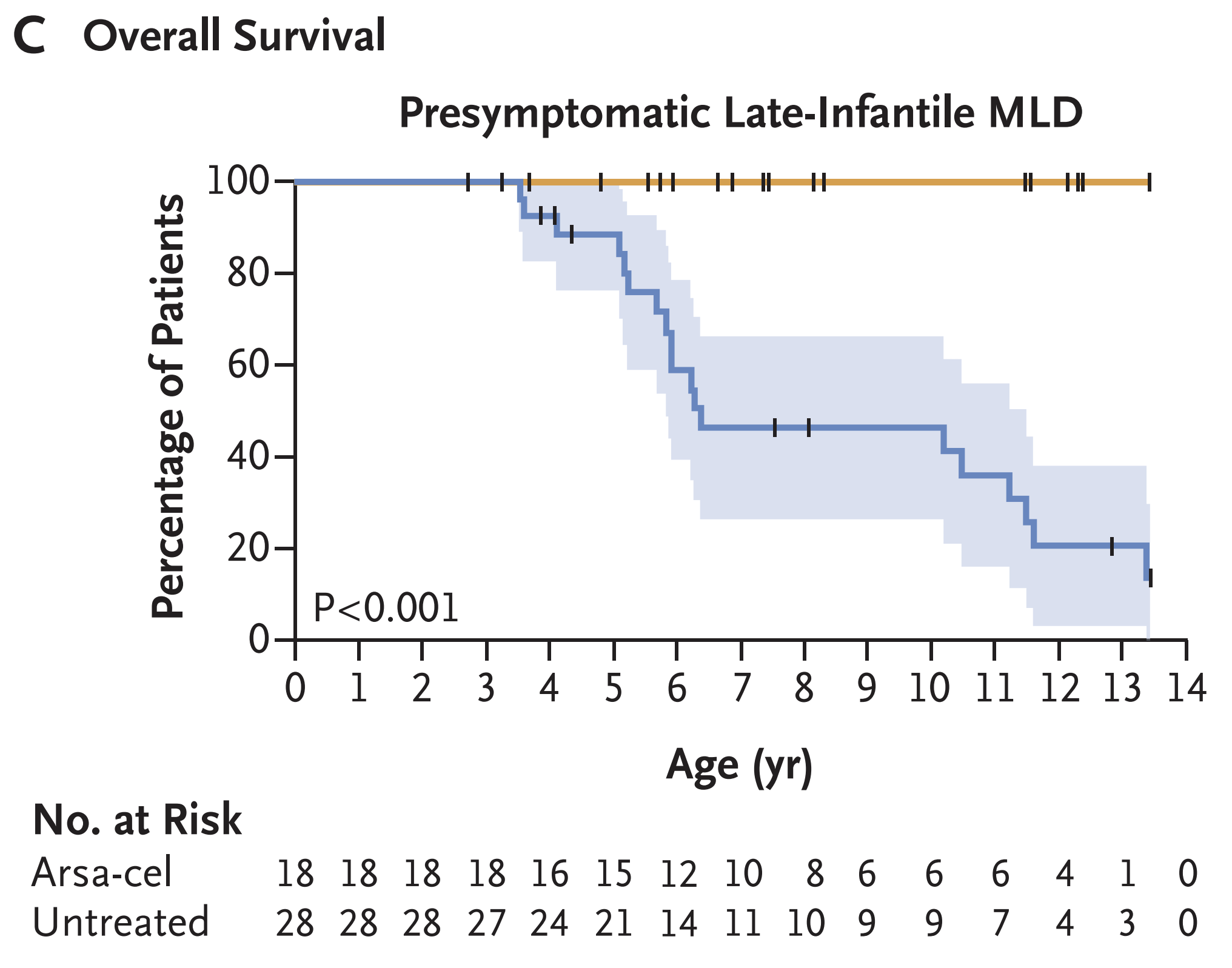
And, coming in with Kaplan-Meier of the year, is this: the blue line shows the natural progression of patients with the rare genetic syndrome, metachromatic leukodystrophy; the orange line shows survival of patients treated with a hematopoietic stem-cell–based gene therapy that replaces the faulty gene:
Finally, there were follow-up data that proved the long-term efficacy and safety of gene therapy in severe haemophilia B, with two different approaches.
